
24/7 Customer Support

Free returns

Same-day & Next-day Delivery

Quality Guaranteed

Unlock Your Welcome Offers: FREE Delivery | Up to 80% OFF | Free 30-day JoyPlus trial
Download the APP
Living in a compact UK home, whether it's a city flat, a student dorm or a starter house, means every square centimetre of countertop space is precious. Equipping your kitchen can feel like a puzzle. The market is flooded with kitchen appliances promising to make life easier, but many end up as clutter. As a Joybuy Product Recommendation Officer, my role is to help you see past the marketing jargon and choose items that genuinely add value to your daily routine.
Before you buy, be aware of these common pitfalls that lead to wasted money and frustration:
To make a smart purchase, focus on a few core specifications rather than a long list of features you may never use. These are the non-negotiables for any modern kitchen appliance.
Higher wattage doesn't automatically mean better performance. For countertop appliances, it's about the balance between power consumption and effective output. For instance, a 700W compact microwave with inverter technology can provide more even and gentle heating than a basic 900W model, making it ideal for defrosting or slow cooking. Always ensure any appliance has a compliant BS 1363 UK plug and look for energy-saving features like automatic shut-off to manage running costs.
The materials that come into contact with your food matter. Look for kitchen essentials for home made from food-grade materials like 304 stainless steel for blades, bowls and inner pots, as it is durable and resists corrosion. For plastic components, check for BPA-free certification. When it comes to non-stick surfaces, a quality coating that is easy to clean and applied correctly will significantly extend the life of your bakeware sets and electric pots.
Ignore vague size descriptions and focus on the numbers. Measure your available space and compare it to the product's dimensions (Length x Width x Height). Equally important is the usable capacity. A 1.2L rice cooker is perfect for one or two people, whereas a family of four might need a 5L multi-functional cooker. Choosing the right capacity prevents you from wasting energy and space on an appliance that is too large for your needs.
Instead of a generic list, we've matched some practical kitchen gadgets and appliances to specific living situations common in the UK.
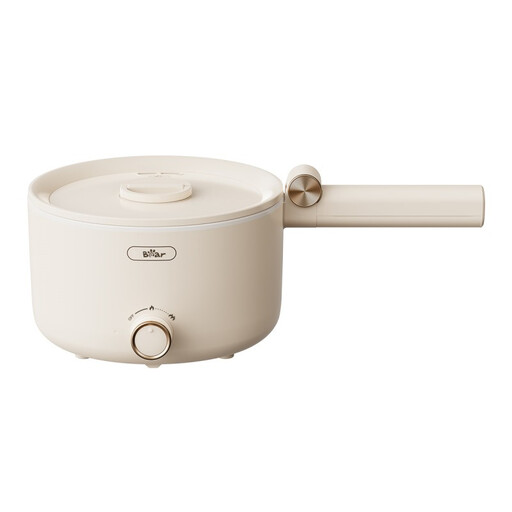
Why This Fits Their Persona: This 1.6L electric pot is ideal for preparing simple meals for one or two. It's perfect for making noodles, soups or steaming vegetables without needing a full hob, saving energy and space in a small kitchen or student accommodation.
It focuses on doing a few things well (boiling, stewing) rather than over-promising. Its foldable handle directly addresses the "compact" deception by minimising storage footprint, and the non-stick interior tackles the cleaning hassle.
Features two power levels for cooking flexibility and includes boil-dry protection for safety. The foldable handle is a standout feature for truly compact storage.
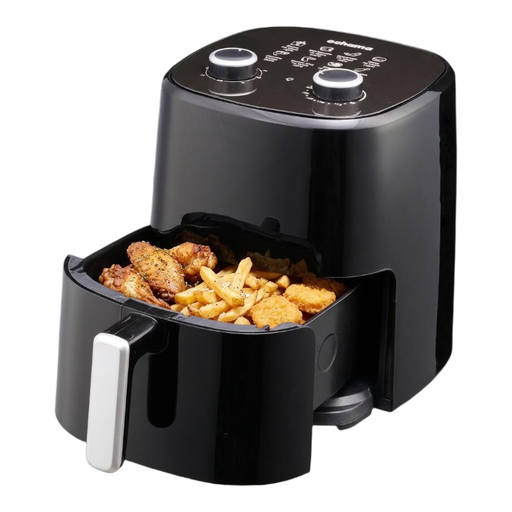
Why This Fits Their Persona: An air fryer is a game-changer for quick, healthier family meals. This 3.2L model is a great size for 2-3 people, perfect for making crispy chips, chicken or roasted vegetables with minimal oil and fuss after a busy day.
This is a dedicated air fryer, designed to excel at hot air roasting. Its 3.2L capacity is clearly stated and suitable for small families, avoiding the oversized "compact" issue. The non-stick inner chamber simplifies cleanup.
Precise timer and temperature controls give you consistent results. The 1250W power provides efficient cooking, and the basket size is practical for everyday family use.
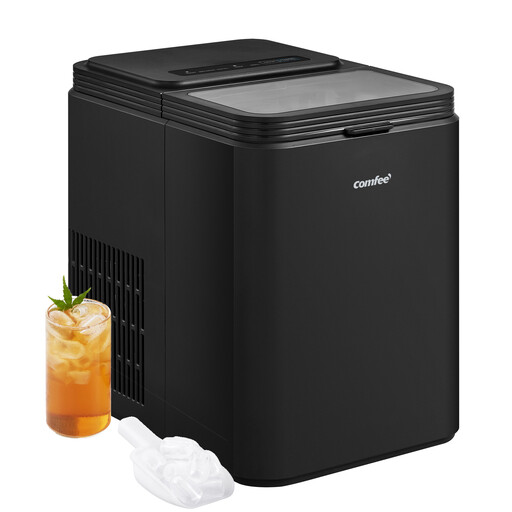
Why This Fits Their Persona: For those who love hosting or enjoying a well-made drink, this countertop ice maker is a fantastic specific-use gadget. It produces ice on demand, freeing up valuable freezer space and ensuring you never run out during a gathering.
This is a single-purpose appliance that does its one job exceptionally well, avoiding the "master of none" trap. Its dimensions are clearly stated, and the self-cleaning function is a direct solution to the cleaning pitfall.
It can produce the first batch of ice in as little as 6-9 minutes. The ability to choose between two ice cube sizes adds a layer of useful customisation for different drinks.
We have compiled a complete, real-time list of products that fully satisfy these strict selection criteria and UK safety regulations.
The running cost of small kitchen appliances depends on their wattage and how long you use them. To estimate the cost, find the appliance's wattage (e.g., 1000W is 1 kilowatt or kW). If you run a 1kW appliance for one hour, it uses 1 kilowatt-hour (kWh) of energy. You can check your latest utility bill for the price you pay per kWh. Appliances with energy-saving modes or inverter technology can help reduce consumption during operation or standby.
The lifespan of countertop appliances varies based on build quality, brand and frequency of use, but you can typically expect them to last between 3 and 7 years. You can significantly extend an appliance's life with proper care. This includes using wooden or silicone cooking utensils on non-stick surfaces, cleaning the appliance after each use once it has cooled and never immersing a motorised base in water.
They can be an excellent investment if you choose wisely. The key is to find a multi-functional cooker that excels at the 2-3 functions you will use most often, such as a model that is great for rice, steaming and slow-cooking. This is more valuable than a device that claims to do fifteen things but does them all poorly. Match the appliance's functions to your actual cooking habits to ensure it becomes a helpful tool rather than another piece of clutter.