Small-kitchen batch cook
If you make several portions at once, start with the available height, width and depth. Check where the door will swing and whether you can reach the drawers in that position.


For batches of cooled lentil stew, start with a freezer that fits the measured kitchen space, has room for the door to open and meets its installation requirements. A freestanding under-counter model is one option; a built-under model needs compatible cabinetry. Then compare space for your usual portions and the defrosting routine you are willing to manage, rather than choosing by capacity alone.
If you make several portions at once, start with the available height, width and depth. Check where the door will swing and whether you can reach the drawers in that position.
If you regularly add cooked portions, consider the space your usual batch occupies, how the compartments are arranged and the model's published freezing capacity where available.
If defrosting is a chore you want to avoid, distinguish Frost Free from Low Frost or manual defrost. Whichever you choose, keep a routine for cooling food and checking freezer temperature.
Check installation fit before comparing storage space; once you know where the freezer can go, decide how much defrosting work you will accept.
| Concern | What to check | Who this matters to |
|---|---|---|
| Fit and door clearance | Measure the space and access route; check installation clearances, full door opening and whether the position needs a freestanding or built-under model. | In a tight kitchen, I need to open the freezer and reach its drawers without blocking nearby units. Around 40% of consumers would put physical fit first. |
| Room for new batches | Compare stated frozen volume with compartment layout and your usual portions; check freezing capacity in kg/24 h where published. | If I freeze stew regularly, I need space for the next batch without losing track of earlier portions. For around 40% of consumers, batch storage is the primary concern. |
| Defrosting and food handling | Check whether the model is Frost Free, Low Frost or manual-defrost. Plan how you will cool portions promptly and check freezer temperature. | I want a manageable defrosting routine while keeping cooked portions properly frozen. That would be the leading concern for around 20% of consumers. |
Under-counter freezers vary in width and depth, and a built-under appliance also needs compatible housing. A capacity figure cannot tell you whether the door will open in your kitchen.
Measure the proposed position and access route, then check the exact model's ventilation and door-clearance instructions before comparing volumes.
According to Beko, Frost Free removes the manual-defrost task on its qualifying models; Hotpoint describes Low Frost as reducing ice build-up. A Low Frost or manual-defrost choice still calls for maintenance.
Check the exact frost-management designation and choose a defrosting routine you are prepared to follow.
Freezer features do not replace safe handling of cooked food. NHS batch-cooking guidance recommends cooling food ideally within 1 to 2 hours before refrigerating or freezing it.
Divide the stew into manageable, sealed portions, cool it promptly and label the containers before freezing.
Ambient-temperature suitability depends on the model. Beko states that its UFF4584 FreezerGuard feature permits operation down to -15°C; that claim does not apply to other under-counter freezers.
If the freezer will go in a garage or outbuilding, check the exact model's stated operating conditions. For an indoor kitchen, focus on the conditions of that installation instead.
The UFF4584 is a freestanding under-counter option for a kitchen where its stated 84 × 54 × 59 cm dimensions and door movement work.
The freestanding under-counter GTV15NWEBG offers published figures for comparing storage and new-food loads.
The freestanding under-counter H55Z1 112W UK is worth assessing when the arrangement of a stated 95 L frozen compartment suits your portions.
These choices include one built-under freezer for compatible fitted cabinetry and two freestanding under-counter models. Check the installation type before comparing their storage arrangements for cooled stew portions.
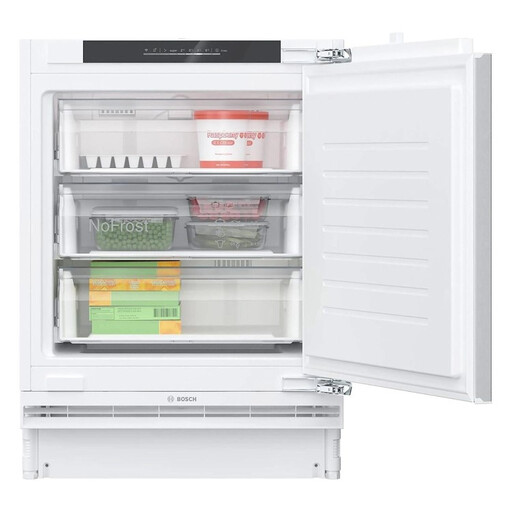 Image unavailable
Consider this built-under model if your kitchen has compatible fitted cabinetry and you want to avoid manual defrosting. Check the housing, ventilation and furniture-door requirements before choosing it for batch storage.
 Image unavailable
Consider this freestanding model if its space and door arrangement suit your kitchen and you are prepared to defrost it manually. Its stated capacity is 85 L and its title gives a 55 cm width; check the full installation dimensions before buying.
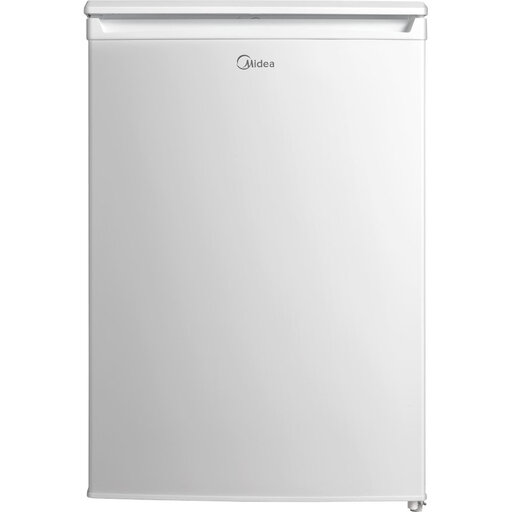 Image unavailable
Consider this freestanding under-counter model if you want separate drawers for organising portions and can accommodate manual defrosting. Confirm its capacity for your usual batches before choosing: the product title gives 83 L, while the accompanying descriptions give 86 L.
Yes. NHS batch-cooking guidance recommends cooling food ideally within 1 to 2 hours before freezing or refrigerating it. Divide the stew into clean, sealed portions so it can cool promptly, rather than leaving the whole pot at room temperature.
Cambridge University Hospitals NHS Foundation Trust advises a freezer temperature at or below -18°C in its food-safety guidance for people at increased risk of infection. Check the appliance's operating instructions and use a suitable thermometer if you need to confirm its temperature.
Thaw frozen stew thoroughly before reheating it. NHS guidance advises thawing in the fridge or using a microwave defrost setting rather than leaving food at room temperature; once defrosted, eat it within 24 hours and reheat until steaming hot throughout.
Only if the exact model is stated to suit the garage's ambient conditions. Beko says its UFF4584 FreezerGuard feature allows operation down to -15°C, but that model-specific claim does not establish suitability for other under-counter freezers.