Small-kitchen batch freezers
If you blanch and freeze vegetables regularly, you need an appliance that fits the kitchen and freezer drawers that accommodate your usual bags or containers.


Choose a fridge-freezer that fits the measured space, including ventilation and room to open the door, before comparing storage capacity. If you regularly freeze blanched green beans, check the freezer compartment and drawer layout against your usual portions; frost-free operation can reduce defrosting work, but it does not tell you how much usable freezer space you will have.
If you blanch and freeze vegetables regularly, you need an appliance that fits the kitchen and freezer drawers that accommodate your usual bags or containers.
If you are replacing an appliance in a tight gap, measure the available height, width and depth, then check ventilation and door clearance before comparing capacities.
If you prefer to avoid routine manual defrosting, compare frost-free models while still checking freezer litres and the arrangement of their compartments.
Start with the space the installed appliance and its open door will occupy. Then compare freezer storage for your usual batches and decide how much defrosting work you are willing to do.
| Concern | What to check | Who this matters to |
|---|---|---|
| Fit and access | Measure the available height, width and depth. Check the model's ventilation instructions and whether its door can open fully. | If my kitchen gap is tight, I need space for airflow and a door I can open without obstructing the room; around 40% of consumers put fit and access first. |
| Freezer organisation | Compare the stated freezer litres and check whether the drawers fit your usual bags or containers. | When I freeze green beans in batches, I want to separate portions without displacing other food; for around 30% of consumers, usable freezer storage is the primary need. |
| Defrosting and energy information | Check the exact model's defrost system, then compare its energy label with appliances of a suitable size and capacity. | I use the freezer regularly and would rather limit manual defrosting while understanding its energy information; around 30% of consumers place this need first. |
A narrow fridge-freezer may still project into a walkway or leave too little room to open its door. Cabinet dimensions alone do not account for every installation allowance.
Measure the gap and door-opening path, then follow the shortlisted model's installation instructions for ventilation and clearance.
Overall capacity includes chilled storage and does not show how many portions of green beans will fit in the freezer drawers.
Compare frozen-compartment litres and inspect the drawer layout against the containers you use.
Frost-free describes an approach to ice build-up; it does not establish a model's energy consumption, freezer volume or suitability for a particular batch.
Check the exact model's defrost feature separately from its freezer specifications and A-to-G energy label. AMDEA explains that current energy labels use the A-to-G scale.
Beko lists narrow fridge-freezers, including the 54 cm-wide CNE4552, for kitchens where width is a constraint.
The freestanding RB327N4BCE offers a narrow 50/50 layout: Hisense lists it at 550 mm wide, and an 85-litre freezer is listed.
Bosch lists the KGN36NWEAG with an 89-litre frozen compartment for kitchens that can accommodate its dimensions.
These freestanding fridge-freezers are options to compare when kitchen width or height is limited. Check each model's freezer storage, full installation space and door-opening path against your own kitchen and the portions you freeze.
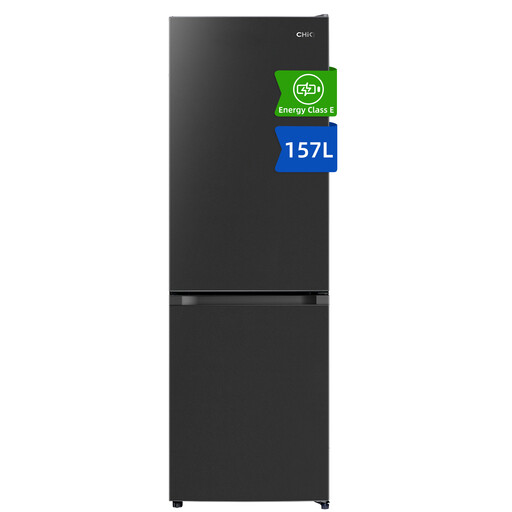 No image available
Consider this model if a particularly narrow opening limits your choice. It is listed as 47 cm wide and 144 cm tall, with a 157 L capacity and an E energy rating.
Low Frost is not the same as frost-free; check the defrosting instructions, freezer drawer space and required installation clearances.
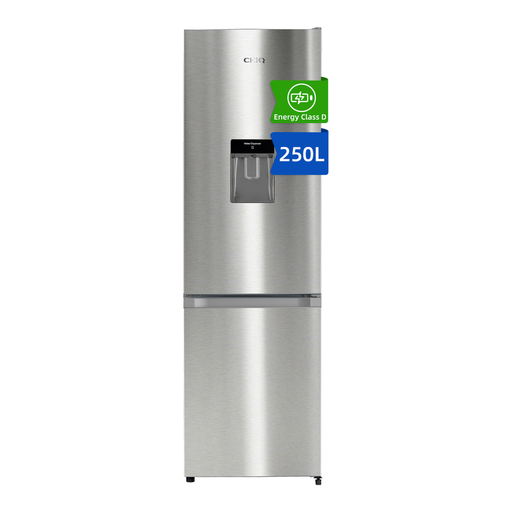 No image available
Consider this model if you can accommodate a taller appliance while keeping its stated width to 54 cm. It is listed as 181 cm tall with a 250 L capacity, Total No Frost and a water dispenser.
Check the freezer drawers against your usual portions, and confirm the door-opening arrangement and installation clearances before buying.
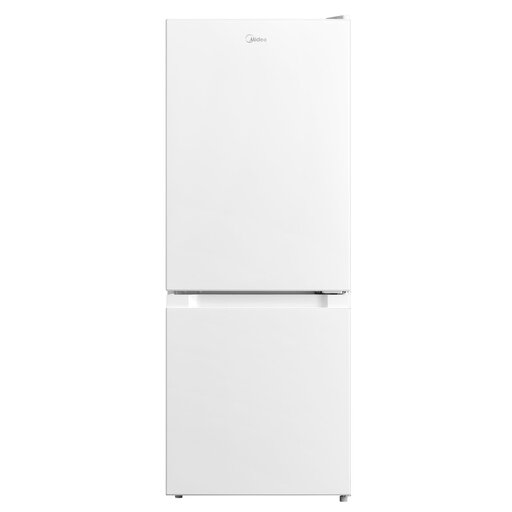 No image available
Consider this model when available height is a constraint. Its name lists a 123 cm height, Low Frost operation and an E energy rating.
Check whether its freezer layout fits your batches and allow for the defrosting and installation requirements of the exact model.
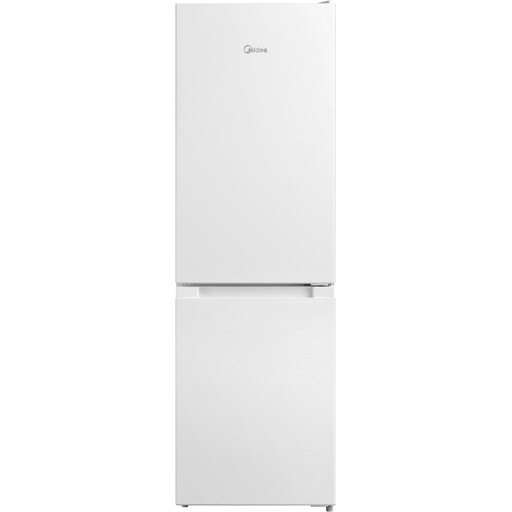 No image available
Consider this model if a 50 cm-wide appliance suits your kitchen opening. It is listed with a 173 L capacity and an E energy rating.
Before deciding, confirm the exact defrost system, freezer drawer dimensions, installation clearances and full door-opening path.
Measure the available height, width and depth, noting sockets, pipework and the space needed to open the door fully. General guidance suggests around 5 cm behind an appliance for rear obstructions; follow the installation instructions for the model you choose.
No: a 50/50 description does not tell you the exact freezer volume or whether your containers will fit its drawers. Compare the frozen-compartment litres and layout of each model that fits your kitchen.
No. Frost-free operation addresses ice build-up and defrosting work, not the room available for portions of blanched green beans. Check freezer litres, drawer layout and appliance dimensions separately.
Compare the energy label for each exact model alongside the capacity and dimensions you need. AMDEA explains that current labels use an A-to-G scale, so do not treat older A+, A++ or A+++ grades as directly equivalent.