Small-kitchen batch cook
You regularly freeze portions of lentil stew or other leftovers, but the appliance must fit a compact floor position or a suitable under-worktop opening. Drawer access matters as much as whether the exterior fits.


Limited worktop surface does not, by itself, call for an under-counter fridge-freezer: a freestanding model can stand beside the worktop if there is a suitable floor position. If you regularly freeze portions of cooled lentil stew, compare usable freezer storage before choosing between an under-counter, narrow or taller model. Then check the exact appliance's dimensions, ventilation and door clearance, energy label and freezing information.
You regularly freeze portions of lentil stew or other leftovers, but the appliance must fit a compact floor position or a suitable under-worktop opening. Drawer access matters as much as whether the exterior fits.
Batch-cooked meals take up a meaningful share of your food storage, so you need to compare freezer space and layout rather than choose by the appliance's total capacity alone. Bosch UK's descriptions of 50/50, 60/40 and 70/30 layouts provide a starting point for checking the actual compartments.
You are replacing an appliance that stays on continuously and want to weigh annual energy use against the chilled and frozen space you need. Energy Saving Trust advises looking beyond the A–G rating when comparing appliances.
Start with the space the appliance can occupy, then check whether its freezer holds your usual batch of containers. A narrow freestanding model may suit a floor position beside the worktop; an under-counter model needs a suitable opening, while a taller model needs adequate height and access.
| Concern | What to check | Who this matters to |
|---|---|---|
| Usable freezer space | Compare the freezer compartment and drawer layout with your containers; seek model-specific freezing information if adding several portions at once. | I freeze several portions together and need the containers to fit without stopping the drawers from closing. Roughly 39% of consumers put usable freezer space first. |
| Fit and access | Measure available height, width and depth; check the exact model's ventilation requirements and room for doors and drawers to open. | A narrow kitchen position is useful only if I can install the appliance and still open it properly. For around 38% of consumers, physical fit and access are the primary concern. |
| Energy and everyday use | Compare annual energy use, chilled and frozen capacities, and noise on labels for appliances of a similar size and format. | With the appliance running continuously, I want storage that meets my needs without judging electricity use by the rating letter alone. About 23% of consumers prioritise this comparison. |
Worktop surface and installation space are different measurements. For a tight position, Allow for sockets or pipework behind the appliance as well as ventilation and door opening; follow the selected model's installation instructions for its required clearances. A larger freezer share may help with batch meals, but check the actual freezer compartment rather than assuming a 50/50 label tells you how many containers will fit.
A fridge-freezer can fit the available width yet project too far forward or leave too little room for a door to open.
Measure the installation position in three dimensions and check hinges, nearby cabinets, rear services and the clearances in the exact model's manual. An under-counter opening and a floor position beside a worktop are different options.
An under-counter format can solve a space problem while leaving too little accessible freezer storage for your usual batch of stew.
Count the portions you normally freeze, note your containers' dimensions and compare them with the selected model's freezer compartment and drawer layout.
Energy Saving Trust notes that larger appliances can use more energy even when they carry the same rating. The letter also does not tell you whether the freezer holds your meals.
Compare annual energy use alongside chilled and frozen capacity on the exact models' labels, preferably between appliances of similar size and format.
Which? includes freezing speed among the factors it tests, so appliance format alone does not establish how a model performs when food is added.
If you regularly add several cooled portions, look for model-specific freezing information rather than treating a freezer feature name as a performance result.
These brands' ranges illustrate formats and layouts worth comparing; the right fit and freezer storage still depend on the exact model.
A reference for comparing freestanding, built-in and under-counter formats in a smaller kitchen.
A reference for comparing full-height freestanding and integrated layouts.
A reference for thinking about appliance width, capacity and the balance of fresh and frozen food.
These models offer narrow freestanding or full-height integrated options for kitchens where space needs checking carefully. None should be chosen on width alone: compare your available position, container fit and the exact installation requirements before ordering.
 No image available
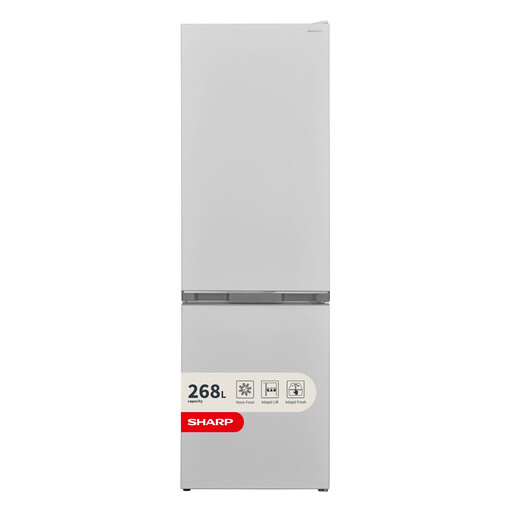
Consider this 54 cm-wide model if you have a floor position beside the worktop and want a 60/40 layout. Its stated height is 170 cm and its energy class is E. Check the freezer drawers against your stew containers, and confirm installation clearance and door access for your position.
 No image available
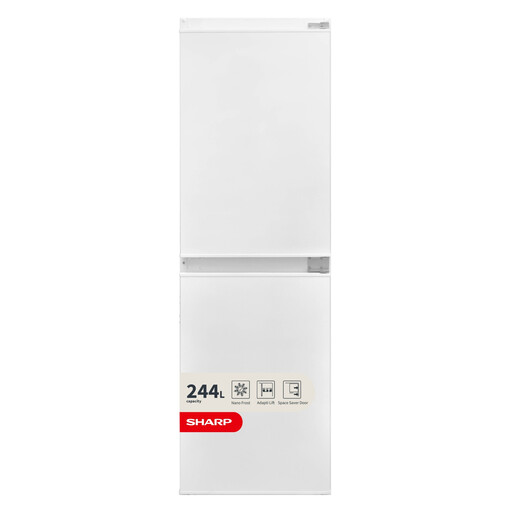
Consider this model if you have a compatible full-height integrated cabinet and want a 50/50 layout. It is stated as 177 cm high and 54 cm wide, with an E energy rating. Check cabinet compatibility, installation requirements and whether the freezer storage fits your portions.
 No image available
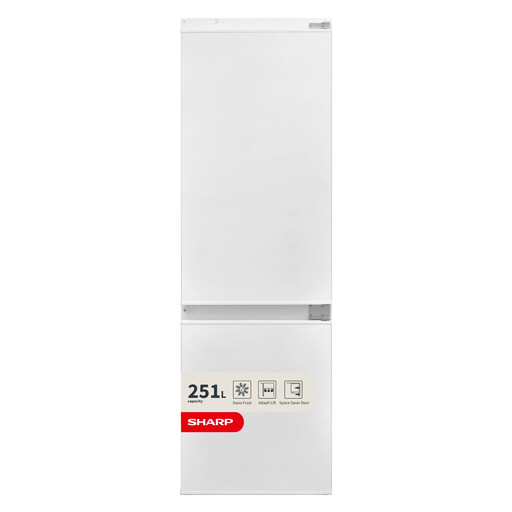
Consider this model if you have a compatible full-height integrated cabinet and need a 70/30 layout with more space allocated to refrigeration. It is stated as 177 cm high and 54 cm wide, with an E energy rating. Compare its usable freezer storage with your batch containers and check the cabinet and door requirements.
 No image available
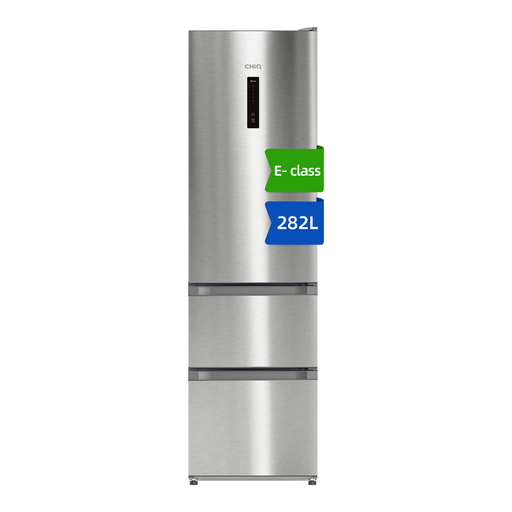
Consider this 54 cm-wide, E-rated model if you want a fridge-freezer with drawers and have a suitable floor position. The stated 282 L is the appliance capacity, not a measure of freezer space: check the freezer compartment and drawer dimensions for your portions. Confirm ventilation and door access, plus the exact model and warranty details, before ordering.
No. An under-counter fridge-freezer needs a suitable opening beneath the worktop, whereas a freestanding model can stand beside it if there is enough floor space, ventilation clearance and room to open its doors and drawers. Measure the position rather than choosing a format from the amount of free worktop surface.
Measure the available height, width and depth, then compare them with the exact fridge-freezer's dimensions and installation instructions. Allow for hinges, rear sockets or pipework, ventilation and the space needed to open doors and pull out freezer drawers. General guidance suggests around 5 cm behind and 2 cm at each side, but use the selected model's requirements where they differ.
No. Compare annual energy use, chilled and frozen capacity, and noise as well as the rating, preferably between models of similar size and format. Energy Saving Trust notes that larger appliances can use more energy even when they have the same letter rating.
No. Freezer capacity helps you decide whether your portions will fit; it does not establish that food has been cooled and handled safely. Follow current Food Standards Agency guidance on chilling and food storage, and check that your closed containers fit without preventing the freezer drawers from closing.