Sauce reheaters with limited worktop space
You usually warm a small portion of sauce and need to account for the appliance’s full dimensions, ventilation space and the room your bowl needs inside.


For mainly reheating tomato sauce, start with a freestanding solo microwave if you have suitable worktop space; its heating and defrosting functions match the task without requiring grill or convection modes. Measure the appliance and allow the clearance specified in its manual, then check whether your usual bowl fits and rotates: a 17-litre model can suit smaller portions, while a 20-litre cavity offers more stated capacity but does not, by itself, establish bowl or worktop fit.
You usually warm a small portion of sauce and need to account for the appliance’s full dimensions, ventilation space and the room your bowl needs inside.
You heat sauce and other leftovers regularly, so straightforward controls, selectable power and a turntable you can clean matter alongside size.
You have limited counter space but sometimes heat a larger bowl or dinner plate. Cavity capacity helps narrow the choice, provided you also check the turntable and usable clearance.
Check worktop and bowl fit before deciding how much cavity space or which controls you need for regular sauce reheating.
| Concern | What to check | Who this matters to |
|---|---|---|
| Worktop and bowl fit | Compare external height, width and depth with the available space and required ventilation clearance. Check that your usual bowl fits and can rotate. | When counter space is tight, I need room for the microwave without squeezing in a bowl that cannot turn; around 42% of consumers put worktop and vessel fit first. |
| Everyday reheating and cleaning | Try the timer and power controls, and check whether the turntable can be removed for cleaning. | If sauce is a regular leftover, I want controls I can set comfortably and parts I can clean after splashes; roughly 33% of consumers prioritise reheating simplicity and cleaning. |
| Room for larger portions | Compare cavity capacity with turntable diameter and usable clearance; check rated microwave output separately. | If I also heat larger servings, my usual plate needs to fit rather than merely matching a litre figure; around 25% of consumers put room for larger portions first. |
A cavity rating does not tell you whether the microwave fits the counter or whether your sauce bowl clears the door and rotates. The cited 17-litre and 20-litre models also differ in their external dimensions.
Measure the installation space and your usual dish, then compare external dimensions, turntable diameter and the clearance required by the appliance manual.
The product information describes solo microwaves as suitable for straightforward heating and defrosting; grill and combination models add cooking functions beyond that routine.
If reheating sauce and leftovers is the main task, compare solo models first. Consider additional modes only if you expect to use them.
Microwave-heated sauce can be hotter around the edges than in the middle, and splashes add to cleaning.
Use a microwave-safe container, cover it where appropriate, stir part-way through and check that the sauce is steaming hot throughout before serving. GOV.UK food-business guidance advises reheating cooked food only once.
Leicestershire Fire and Rescue Service advises against extension leads for high-powered kitchen appliances and recommends keeping electrical items away from water.
Check that the planned position has an appropriate wall socket, a dry worktop and the space required by the microwave’s positioning instructions.
The RHMM715 illustrates a 17-litre manual solo microwave for smaller reheating portions where space is limited.
The MOC20100BFB illustrates a 20-litre solo option for buyers who need to compare cavity room with a limited worktop area.
The Series 2 FFL020MS2B illustrates a 20-litre freestanding option with a stated 800W maximum microwave output.
These solo microwaves offer different approaches to reheating in a small kitchen. Compare each appliance with your available space and usual sauce bowl; confirm installation details before choosing the Midea model.
 No image available
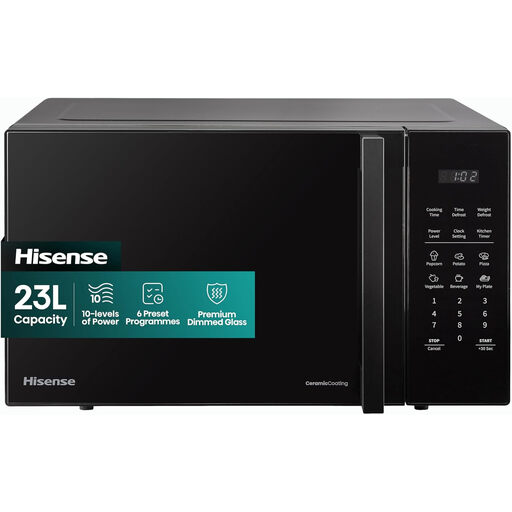
For sauce portions and other reheating tasks, check that this model and your usual bowl fit the space available. It is listed at 800W with touch controls and auto defrost; allow the ventilation clearance required by its manual.
 No image available
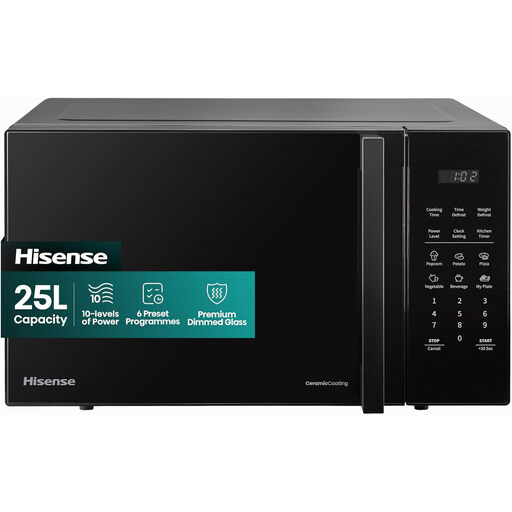
If you prefer digital controls for routine reheating, check this model’s worktop fit and whether your usual bowl can rotate. Auto defrost is listed; confirm the capacity and rated output for this exact variant before using either figure to make your choice.
 No image available
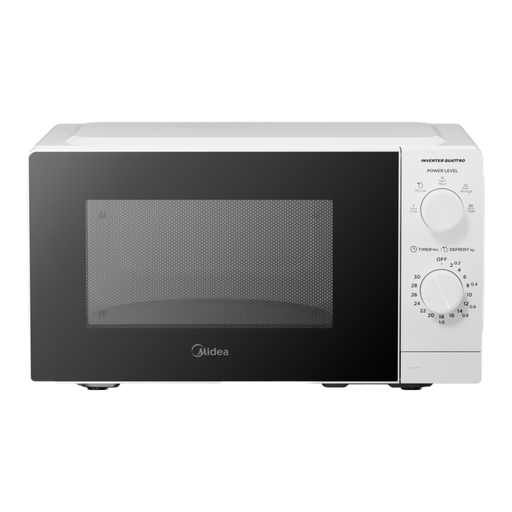
For straightforward sauce reheating, confirm that this 700W model is intended for your planned worktop position. Check its control layout, timer and turntable diameter against how you will use it and the bowl you normally heat.
Yes, if heating and defrosting are your main uses. The product information describes solo models as suitable for those tasks; choose grill or combination functions only if you also want their additional cooking modes.
Measure the available width, depth and height, then compare them with the microwave’s full external dimensions and the clearance required in its manual. Also check that the door can open and your usual bowl can rotate; cavity litres alone cannot answer either question.
Stir the sauce part-way through microwave heating and check that it is steaming hot throughout before serving. Guy’s and St Thomas’ NHS Foundation Trust advises stirring halfway through in its food-safety guidance for people receiving chemotherapy; GOV.UK food-business guidance advises reheating cooked food only once.
Check the guarantee and service terms for the exact model you intend to buy, alongside access to its instruction manual. Those details help you understand the manufacturer’s cover and how to use and position the appliance.