Space-limited regular cake baker
You want hands-free mixing for ginger cake, but the mixer must fit a narrow worktop or a measured storage space. Check its operating clearance as well as its stored dimensions.


For ginger cake batter in a small kitchen, start with a mixer that fits both its storage spot and the space needed to use it, then check for a suitable beater and a bowl matched to your usual batch. A compact stand mixer is worth considering when you want hands-free mixing; a larger bowl-lift model makes more sense if frequent large batches or heavy dough matter more than saving space. Do not choose by motor wattage alone: Which? identifies mixing time, ease of use and bowl-side reach as differences between mixers.
You want hands-free mixing for ginger cake, but the mixer must fit a narrow worktop or a measured storage space. Check its operating clearance as well as its stored dimensions.
You usually make one cake at a time and value access to the bowl when adding ingredients or scraping its sides. Maximum bowl capacity may matter less than a comfortable place to use the mixer.
You mainly need a mixer for cake batter now, but may use it for dough later. Compare the exact model’s supplied tools and bowl capacity without letting possible future tasks override your current space limit.
Measure where the stand mixer will be stored and used, then check its cake-mixing tools and the batch size you normally make.
| Concern | What to check | Who this matters to |
|---|---|---|
| Storage and clearance | Measure height, width and depth in both storage and working positions; allow room to open the head and remove the bowl. | If cupboard space is tight, I need to know I can put the mixer away and still use it comfortably. Around 42% of consumers put storage and clearance first. |
| Cake-batter mixing | Check for an included flat beater or equivalent tool and a controllable starting speed; consult independent model-level tests for bowl-side reach where available. | When I add flour and other ingredients in stages, I want control without repeatedly stopping to scrape the bowl. Around 33% of consumers prioritise batter mixing. |
| Batch size and future use | Match bowl capacity to your usual recipe, then confirm which whisk, beater and dough tools come with the exact model. | If I expect to make larger cakes or try bread later, I need the bowl and tools to suit those tasks. Around 25% of consumers put capacity and future use first. |
A motor rating does not tell you how well a beater reaches the bowl sides. Which? identifies mixing time, usability and the need to stop and scrape as meaningful differences between stand mixers.
Check the supplied batter-mixing tool and speed controls, and use independent tests of the particular model when available.
A mixer can fit beneath a cupboard while leaving too little room to raise its head, add ingredients or lift out the bowl.
Measure the intended worktop as well as the storage spot, allowing for the mixer’s access mechanism and any splashguard you plan to use.
Electrical Safety First advises checking for a UK three-pin plug and fuse. GOV.UK also advises buyers to check appropriate product marking and the manufacturer’s name and address.
Check those details and the supplied instructions for the exact appliance before buying; do not rely on marketplace reviews alone.
An attachment range does not establish what comes in a particular mixer’s box or which accessories fit that model.
Confirm the included beater, whisk and dough tool individually, and check exact-model compatibility before planning future uses around an optional attachment.
These product lines offer different ways to balance storage, bowl access and capacity; the brand name alone cannot establish which mixer fits your kitchen.
Kenwood presents the Go KZM35.000RD as a space-conscious stand mixer, specifying a 30 cm height, 4 L bowl, carry handle and front-facing controls.
Bosch lists the Series 2 MUMS2VM40G at 266 × 266 × 277 mm, with a 3.8 L bowl, seven speed settings and pulse.
KitchenAid offers a 3.3 L tilt-head Mini and distinguishes its tilt-head range from bowl-lift mixers intended for larger batches and heavier mixtures.
These stand mixers are choices to assess for ginger cake batter against your measured kitchen space. Their listed bowl sizes and model details differ, so check the exact variant and its working clearance rather than treating them as interchangeable compact mixers.
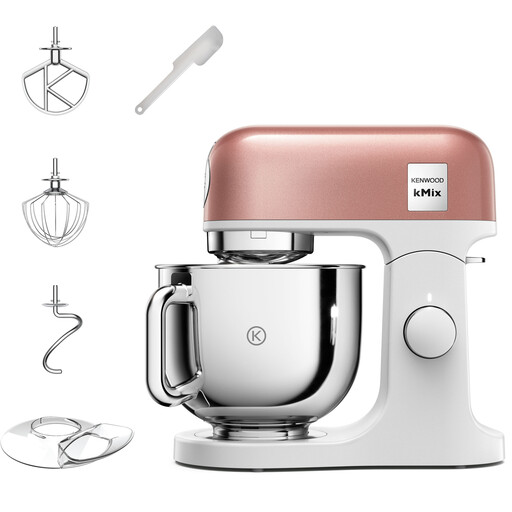 No image available
Consider this model for ginger cake if its supplied mixing tool suits your batter and it fits your measured worktop.
Check the space needed to open the head and confirm the exact box contents before choosing it.
 No image available
The 4.3 L bowl is a capacity to compare with your usual ginger cake recipe, provided the mixer fits the space where you will use it.
The product title states a 1000 W motor rating and three bowl tools; confirm which tools are included and allow room to add ingredients.
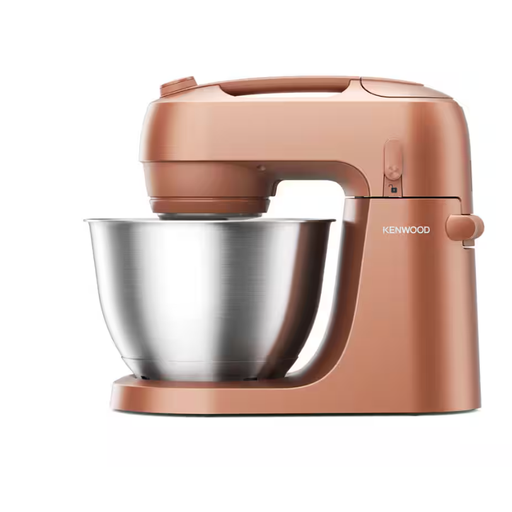 No image available
This model is worth measuring for a height-limited kitchen: Kenwood states that it is 30 cm high and has a 4 L bowl.
Kenwood lists a supplied K-Beater for mixing tasks; check the additional clearance needed to raise the head and use the mixer beneath cupboards.
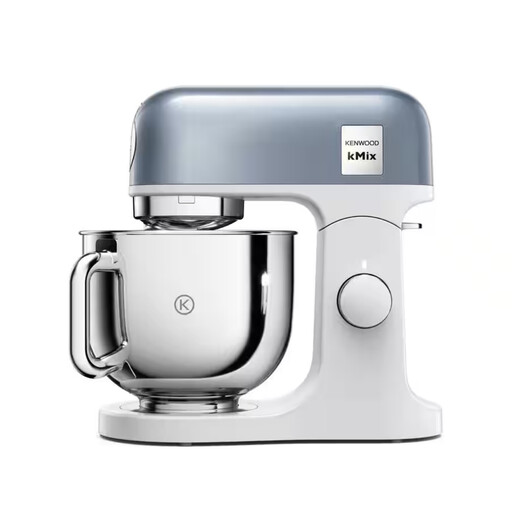 No image available
Consider this variant for ginger cake only after matching its bowl and supplied beater to your normal recipe.
Measure the available counter and cupboard space, including room to access the bowl while mixing.
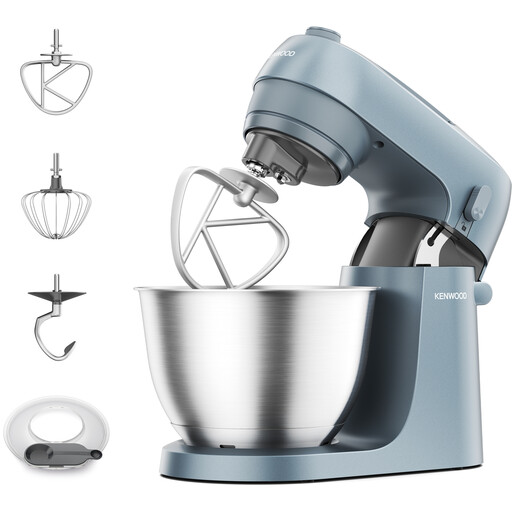 No image available
If you are considering this Go variant for cake batter, check its own bowl capacity and included beater against your recipe.
Measure working clearance for this exact model; do not assume that dimensions or accessories stated for another Kenwood Go variant apply to it.
Choose a bowl that accommodates your usual recipe rather than buying the largest capacity by default. As compact examples, Bosch lists a 3.8 L bowl for its Series 2 MUMS2VM40G, while Kenwood lists 4 L for the Go KZM35.000RD; check your recipe quantity and the space each mixer needs.
A tilt-head mixer is a practical choice when you want easy bowl access and have room to raise its head. KitchenAid positions its larger bowl-lift mixers for bigger batches and heavier mixtures, so make space and batch size the deciding conditions rather than assuming either format always suits a small kitchen.
Check that the exact mixer includes a flat beater, paddle or equivalent general mixing tool. Confirm the contents of the particular variant’s box; a whisk or dough hook serves a different task and should not be taken as confirmation that a batter beater is included.
Unplug the stand mixer before cleaning it, as Electrical Safety First advises. Follow the manufacturer’s instructions for cleaning the motor unit and for determining which removable parts, if any, can go in a dishwasher.
Check the plug, product marking and manufacturer details for the appliance you intend to buy. Electrical Safety First advises a UK three-pin plug and fuse; GOV.UK advises checking appropriate marking and the manufacturer’s name and address. Product-marking rules differ between Great Britain and Northern Ireland, so check the guidance applicable where the mixer will be supplied.