Viewers short on floor space
If a rear shelf or a cable run across the lounge is impractical, consider short-throw and ultra-short-throw placement. Measure the proposed lens position and check the image size the exact model can produce there.


Choose a projector only after checking the distance available between its lens and the wall or screen. If there is no practical position behind the seating, short throw or ultra-short throw is worth considering; then weigh native resolution, daylight control and how you will stream your programmes against the space and equipment each setup requires.
If a rear shelf or a cable run across the lounge is impractical, consider short-throw and ultra-short-throw placement. Measure the proposed lens position and check the image size the exact model can produce there.
If landscapes and architecture are the reason for a larger picture, compare native resolution and the planned image size rather than treating 4K input support as 4K projection.
If you regularly switch on a programme without other equipment, check whether the projector offers your preferred services. Otherwise, plan where an HDMI streaming device and any separate audio equipment would go.
Consider it when: the projector needs to sit on a cabinet close to the wall.
Allow for: cabinet depth and wall or screen suitability; Epson’s EH-LS670W illustrates this placement approach, but its features do not apply to every ultra-short-throw model.
Consider it when: there is space in front of the seating, but not enough for a rear projector position.
Allow for: a measured position away from the wall. Optoma specifies a 100-inch image from just over a metre for the GT2000HDR; that figure is specific to that model.
Consider it when: a rear shelf or suitable mounting position leaves enough clear projection distance.
Allow for: the space and cable route that position requires. Check the chosen model’s throw data rather than assuming it will fit because it is a home-cinema projector.
| Concern | What to check | Who this matters to |
|---|---|---|
| Room fit | Measure from the proposed lens position to the wall or screen; check the exact model’s throw and image-size ranges. | If I cannot put a projector behind the sofa, the picture must fit from a position that leaves the seating and walkway usable. Around 50% of consumers would put room fit first. |
| Picture detail | Compare native resolution, planned image size and source quality; distinguish displayed resolution from accepted input. | I want landscapes and buildings to retain detail on the size of picture I intend to watch. For around 30% of consumers, picture detail would be the primary concern. |
| Everyday playback | Check your preferred apps or HDMI source, then confirm the available audio connections. | I want to start a travel programme without rearranging devices or discovering that my usual service will not play. Playback simplicity would come first for around 20% of consumers. |
A quoted maximum does not tell you what image the projector will make from the position available in your lounge. ProjectorCentral and Optoma caution that projection-distance calculator figures are estimates.
Measure the lens-to-screen distance, check the exact model’s image-size range and test the position before fixing a mount.
A poorly placed image may mean changing the furniture arrangement or installation.
Optoma specifies the GT2000HDR as native 1080p despite its support for 4K UHD input; BenQ describes the X3000i as true 4K UHD. Those are different specifications.
Read the native-resolution specification and judge it against your programme sources, intended image size and seating position.
App support varies by model and may change, so a smart-projector label alone does not establish access to the programmes you watch.
Check your services on the exact model and confirm its HDMI and audio connections if you may use an external streamer.
An external streaming device or separate audio equipment may be needed for your setup.
Product-marking requirements depend on the market in which a product is placed. Great Britain guidance should not be taken as a complete answer for a Northern Ireland delivery.
For delivery to Northern Ireland, check the applicable marking requirements and product documentation with the seller.
Epson’s UK range includes different approaches to placement and programme playback.
The GT2000HDR is an example to examine when a short-throw position may fit but an ultra-short-throw cabinet setup is not required.
The X3000i is relevant to viewers considering true 4K UHD for scenic footage when a suitable projector position is available.
These projectors offer different approaches to home viewing, from rotating compact designs to a carry-case bundle. Check the image size each one can produce at your available distance before treating it as a fit for a small living room.
 No image available
Consider this model if native Full HD and a built-in Android system suit your viewing plans, subject to checking your preferred apps and the image size at your available distance.
The product name specifies native 1080p, 8K input support, 900 ANSI lumens, Android 14, automatic keystone correction and 180° rotation.
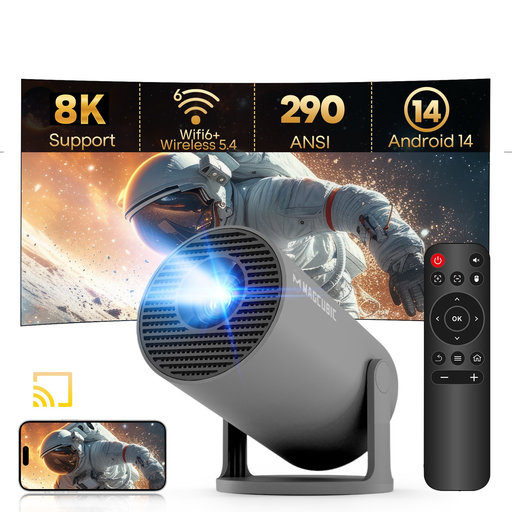 No image available
The compact, rotating design may suit a flexible position, but check the planned image size and consider whether native 720p meets your expectations for scenic detail.
The product name specifies native 720p with 1080p input support, Android 14, automatic keystone correction and a 180° rotating stand.
 No image available
Its rotating design offers a way to consider different projection directions; confirm the distance needed for your intended picture and whether your preferred UK apps work on it.
The product name lists Full HD 1080p, 360° rotation, automatic keystone correction and Wi-Fi, Bluetooth and HDMI connectivity.
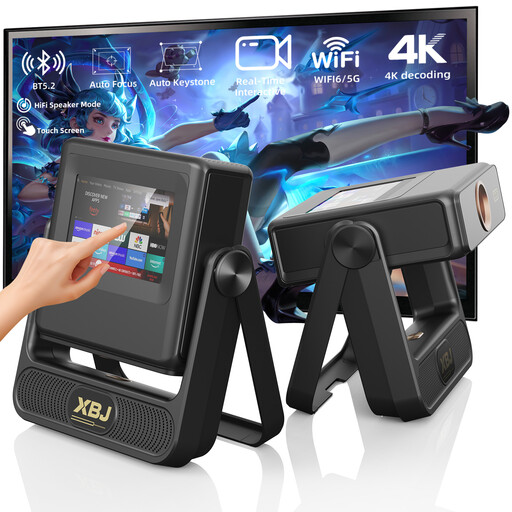 No image available
This is a native Full HD option with automatic image adjustments; check its throw distance for your intended image size and confirm access to the services you watch.
The product name specifies native 1080p with 4K input support, 900 ANSI lumens, Android, automatic focus and automatic keystone correction.
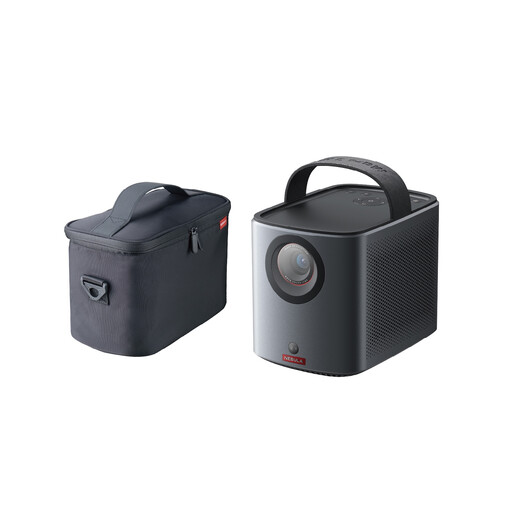 No image available
The carry-case bundle may appeal if you want to move your projector between positions. Before choosing it for the lounge, confirm the picture size at your available distance and whether its playback arrangement suits your programmes.
Not necessarily: ultra-short throw suits a position very close to the wall, while short throw may fit if you have space farther forward in the room. Measure your proposed lens position and check the exact model’s image-size range; ProjectorCentral and Optoma caution that distance-calculator results are estimates.
Full HD may meet your needs if the source programmes and planned image size do not make finer detail a priority. If a very large picture is central to the choice, compare native resolution carefully: Which? notes that a large Full HD image can sometimes look soft, while 4K offers greater detail potential.
No: some have an integrated platform, while others can use an HDMI-connected streaming device. Epson lists Google TV for the EH-LS670W, but you should check the exact projector’s current support for your preferred UK services and any external device you intend to connect.
Check that the seller supplies product documentation and conformity information applicable to your delivery market. GOV.UK guidance recognises CE marking alongside UKCA marking for products placed on the Great Britain market where the applicable conditions are met; for Northern Ireland, check the requirements that apply there rather than relying on Great Britain guidance alone.