
24/7 Customer Support

Free returns

Same-day & Next-day Delivery

Quality Guaranteed

Unlock Your Welcome Offers: FREE Delivery | Up to 80% OFF | Free 30-day JoyPlus trial
Download the APP
A small pedal bin can solve a space problem neatly, but the wrong design may create new frustrations. A lid that bangs shut, a narrow opening that makes disposal awkward, or a liner that slips into the bin can quickly make an apparently useful purchase inconvenient.
For UK homes, rented flats and offices, the most suitable option depends on more than capacity. You need to consider the available floor space, how often the bin will be emptied, whether odour control matters and how easily the inside can be cleaned.
A 10 litre pedal bin may sound compact, but dimensions vary considerably. A bin can fit its advertised capacity into a tall, narrow body, or take up more floor space with a wider shape. Measure the intended position, including the clearance required for the lid and pedal.
This is particularly important when looking for bins for under desks, a bathroom bin for a narrow corner or a kitchen pedal bin placed beside a cabinet.
“Soft close” and “silent close” describe useful mechanisms, but they are not interchangeable with a simple hinged lid. A basic lid may close noisily, while a push top may require more hand contact. Consider whether hands-free operation, noise reduction or quick access is most important for your room.
A lidded bin can help keep waste out of sight, but the interior still needs regular cleaning. Lids and rims can collect residue if the bin is overfilled.
A liner that bunches, slips or leaves excess plastic around the rim can make a compact rubbish bin look untidy and complicate emptying. Check whether the bin has a removable inner bucket, liner-retaining features or a recommended bag size. Standard carrier bags may work with some bins, but their fit is not guaranteed.
For light waste such as tissues, cotton wool, packaging and paper, a 10 litre pedal bin is often a practical size for a bedroom, office or bathroom. An 11-litre plastic lidded bin provides a similar amount of space, while a larger kitchen model may be more suitable for food packaging and everyday household waste.
Always compare the listed height, width and depth. A slim pedal bin can save floor space, but it may have a smaller opening or need to be positioned carefully to prevent tipping. Leave enough room for the pedal and lid to operate fully.
A stainless steel pedal bin offers a wipe-clean outer surface and a structured appearance. It may suit kitchens or contemporary bathrooms, although abrasive cleaners can mark the finish. A plastic pedal bin is generally lightweight and does not rust, making it suitable for bedrooms, rented accommodation and offices.
Look for a removable inner bucket where possible. This can make liner changes easier and lets you clean spills without moving the entire bin. Whichever material you select, regular wiping and prompt removal of wet waste help reduce odour build-up.
A pedal-operated bin allows hands-free disposal, which is useful in kitchens and bathrooms. Check for a stable base, non-slip pads and a pedal that does not require the bin to be held in place. Push top designs offer quick access but are not pedal bins, so they may be more suitable for dry paper waste than messy kitchen rubbish.
For a soft close bin, check whether the product description specifies a controlled closing mechanism. Keep the unit on a flat surface and avoid overloading it, as excess weight can affect stability and lid operation.
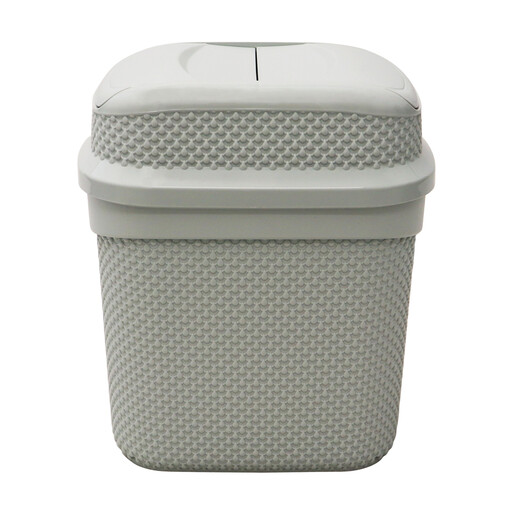
Why This Fits Their Persona: Its 11-litre capacity and approximately H34 x W29 x D22cm dimensions suit renters, students and households needing a practical bathroom, bedroom or under-desk bin.
The stated dimensions make space planning easier, while the push top keeps everyday paper and small waste contained without relying on a loose lid.
Plastic construction is described as rust-free and BPA-free; the ice grey finish can be wiped with a damp cloth.

Why This Fits Their Persona: The slim profile suits compact bathrooms, home offices and under-desk spaces where a neat appearance and controlled lid movement matter.
The specified silent-close mechanism addresses the problem of a noisy lid, while the removable inner bucket supports easier liner changes and cleaning.
Brushed stainless steel body; H35.2 x W39 x L16.8cm dimensions; non-skid base with rubber pads.
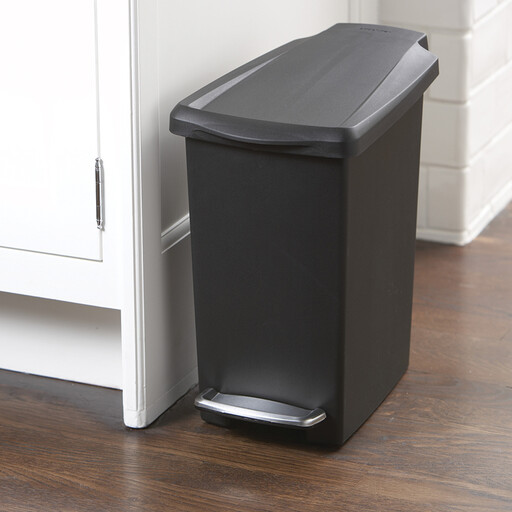
Why This Fits Their Persona: The H34.3 x W32.5 x L19.6cm shape is designed for bathrooms, offices and under desks where a narrow footprint is useful.
Its slim format provides a defined footprint rather than relying on vague space-saving wording. The pedal also avoids touching the lid for routine disposal.
Black plastic body with a steel pedal; compatible with the specified code R liners and most plastic carrier bags.
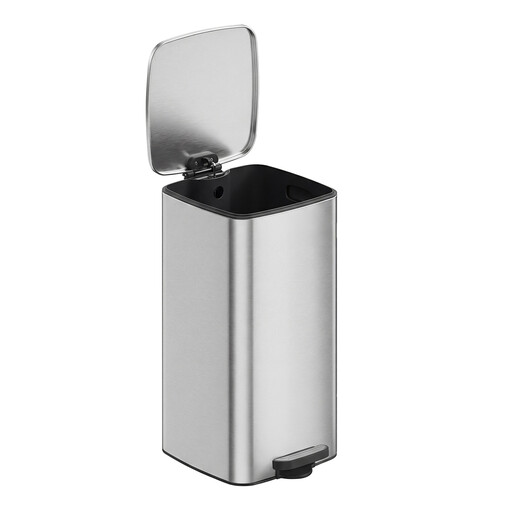
Why This Fits Their Persona: Its 34 x 28.5 x 54.4cm dimensions and kitchen-focused features suit busy households handling more frequent everyday waste.
The inner bucket and bag-fixing hole address messy liner changes, while the soft-close lid avoids the repeated noise of a hard-closing lid.
Stainless steel and PP plastic construction; non-slip pads; lid can stay open when needed for hands-free kitchen disposal.
We have compiled a complete, real-time list of products that fully satisfy these strict selection criteria and UK safety regulations.
A 10-litre model is generally suited to light bathroom waste, tissues and personal-care packaging. If several people use the room or the bin is emptied less often, an 11-litre lidded bin may provide slightly more capacity. Check the physical dimensions before buying, as capacity alone does not show how much floor space the bin requires.
Use a correctly sized liner, avoid placing liquid waste directly inside the bin and empty it regularly. Wipe the inner bucket and lid area with a suitable household cleaner, following the product’s care instructions. Do not use abrasive cleaners on stainless steel surfaces.