
24/7 Customer Support

Free returns

Same-day & Next-day Delivery

Quality Guaranteed

Unlock Your Welcome Offers: FREE Delivery | Up to 80% OFF | Free 30-day JoyPlus trial
Download the APP
A smart body composition scale can do more than display your weight. Depending on the model, it may estimate body fat percentage, BMI, muscle mass, body water and other measurements, then send the results to a mobile app for trend tracking.
However, buying one based only on the number of advertised metrics can lead to disappointment. A useful scale needs to suit your household, flooring, phone and monitoring habits. Here are the main buying traps to avoid, followed by practical product recommendations for different UK households.
Most digital body fat scales use bio-electrical impedance analysis (BIA). A small electrical signal passes through the body, and the scale uses the result alongside information such as height, age and sex to estimate body composition.
These readings can vary with hydration, meals, exercise, skin contact and time of day. They should therefore be treated as trend indicators, rather than medical measurements or a diagnosis. For more consistent comparisons, weigh yourself under similar conditions each time.
An app-connected smart scale is useful only if you intend to review measurements over time. Check whether the scale uses Bluetooth, which app is required and whether it works with your smartphone. Some models also synchronise with platforms such as Apple Health, Google Fit, Samsung Health or Fitbit.
If you only want occasional weight readings, a connected smart bathroom scale with numerous charts may add unnecessary complexity.
A scale can give inconsistent results if it is placed on carpet, an uneven floor or a damp bathroom surface. Glass platforms can also become slippery when wet. Check the maximum capacity, platform size, user memory and battery requirements before ordering.
For a family, automatic profile recognition or multiple-user storage can prevent measurements being saved to the wrong account.
A digital body fat scale may display weight, BMI, body fat percentage, muscle mass, bone mass, body water and visceral fat estimates. More metrics do not automatically mean more useful information. Prioritise the measurements you are likely to monitor and confirm how they are accessed: on the scale display, through an app or both.
A BMI scale can calculate BMI when height and other personal details are entered. BMI is a general screening calculation and does not distinguish between muscle and fat, so it should be considered alongside other information.
Look for the scale’s maximum supported weight and smallest measurement increment. Several options below support capacities up to 180 kg, while the Xiaomi model listed here supports up to 150 kg. The Xiaomi Smart Scale S200 and Sparoma ADL-26Blue list increments of 0.05 kg, which may help users observe smaller changes in weight, although normal day-to-day fluctuations still apply.
Bluetooth pairing is convenient for app-based records, but check whether the app is compatible with your device and whether location permissions are needed during setup. A multi-user bathroom scale should offer separate profiles or automatic recognition.
Also check the battery type and whether batteries are included. For example, the Sparoma model requires two AAA batteries that are not included, while the RENPHO Elis Chrome description states that three AAA batteries are included.
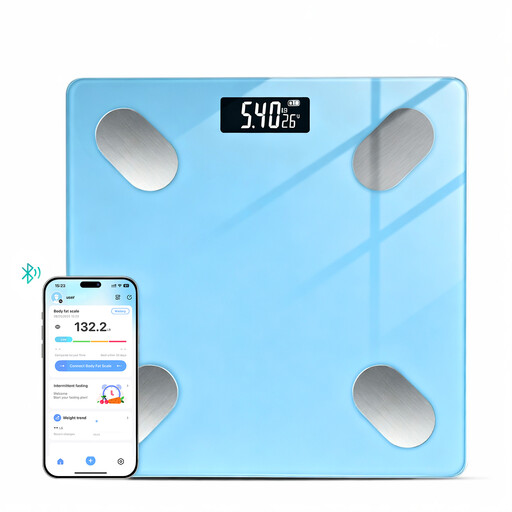
Why This Fits Their Persona: A straightforward option for adults beginning home weight and body-composition tracking through a Bluetooth connection and the OKOK app.
The product information clearly states the 180 kg capacity and required two AAA batteries, so running costs are easier to plan.
Tracks 13 metrics, supports multiple users and lists a 0.05 kg measurement increment. Batteries are not included.
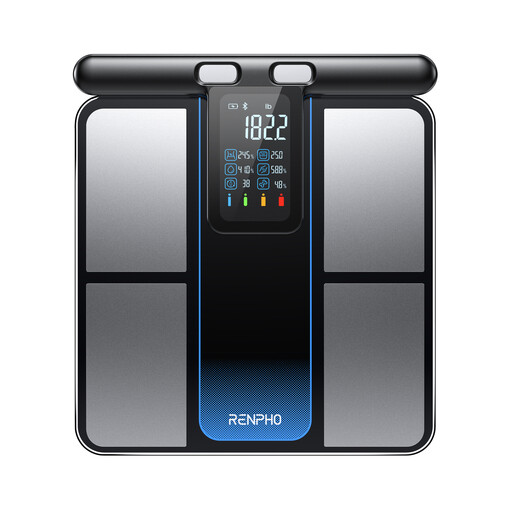
Why This Fits Their Persona: Suitable for users who want detailed app records, upper-body analysis and integration with several established fitness platforms.
Its listed Bluetooth app connection and data synchronisation details make the digital tracking function more transparent than a scale with unspecified connectivity.
Uses eight electrodes, lists a 180 kg capacity and supports unlimited user profiles according to the product description.
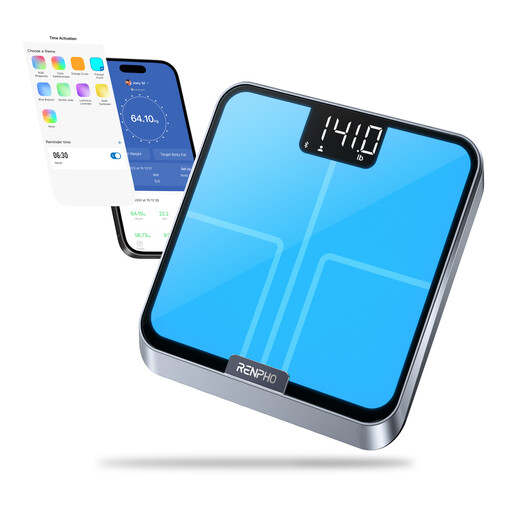
Why This Fits Their Persona: A practical fit for larger households, app-focused users and anyone who wants a dedicated mode for recording babies or pets.
The product details specify the 180 kg limit, included batteries, weight-only mode and the need for a solid, flat surface.
Provides 13 listed metrics, unlimited users, Bluetooth connectivity and Baby Mode. BIA should not be used by people with certain medical implants or during pregnancy.
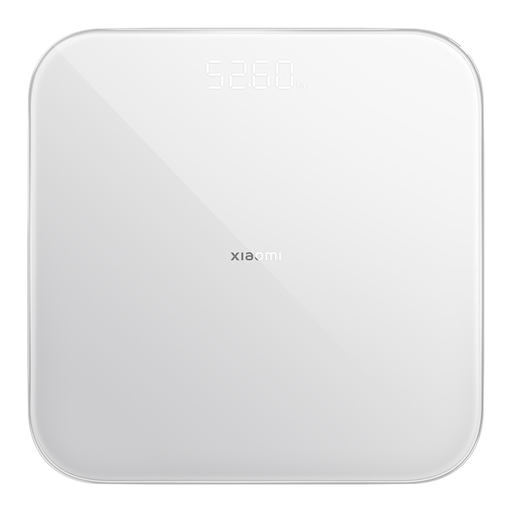
Why This Fits Their Persona: Its compact design, Bluetooth 5.4 connection and support for up to 36 users suit busy family homes with separate app records.
The stated 150 kg weighing range and 0.05 kg increment help buyers match the scale to household requirements before purchase.
Offers BMI and balance-test functions through the Xiaomi Home app, with batteries required but not included.
We have compiled a complete, real-time list of products that fully satisfy these strict selection criteria and UK safety regulations.
A smart scale’s body fat percentage is an estimate produced using BIA and can change with hydration, food intake, exercise and foot contact. Use the same routine each time and focus on longer-term patterns rather than a single reading.
Not always. Many models use Bluetooth to send data to a phone when the app is open or synchronised. Check the individual product description, as Bluetooth range and app requirements vary.
Lifespan depends on battery care, frequency of use, surface conditions and whether the glass platform is protected from impacts. Keep the scale dry, avoid dropping it and replace batteries when required. A model with a clear app history and suitable user capacity is more likely to remain useful as your tracking habits develop.