
24/7 Customer Support

Free returns

Same-day & Next-day Delivery

Quality Guaranteed

Unlock Your Welcome Offers: FREE Delivery | Up to 80% OFF | Free 30-day JoyPlus trial
Download the APP
A smart body composition scale can do more than display your weight. Depending on the model, it may estimate body fat percentage, BMI, muscle mass, visceral fat and other measurements, then transfer the results to a mobile app.
However, the number of features on the box does not automatically make a scale suitable for your routine. The useful question is whether it offers the right combination of measurement method, capacity, app support and everyday practicality.
Most body fat scales use bio-electrical impedance analysis (BIA). A small electrical signal passes through the body, and the scale uses that reading alongside information such as height, age and sex to estimate body composition.
These figures can vary according to hydration, food intake, exercise, skin contact and time of day. They are more useful for observing trends under consistent conditions than for treating one reading as a definitive health result.
A body composition monitor should therefore support regular tracking rather than replace professional medical advice.
Bluetooth body scales and scales with app connectivity can record measurements automatically, but the app still needs to be set up and used consistently. Check:
If you only want a quick daily weight reading, a straightforward digital weighing scale may be more convenient than a multi-metric model.
Many household scales require a solid, flat, dry floor. Carpets and uneven bathroom flooring can affect readings. BIA models generally require bare, dry feet placed on the conductive sections of the platform.
Also check the power details. Some models include batteries, while others require separate AAA batteries. This small detail can prevent an inconvenient first-use delay.
For a family home, a scale with a capacity of 180kg can provide broader suitability than a lower-capacity model. Resolution is also worth distinguishing from accuracy. A display that changes in 0.05kg increments shows smaller weight differences, but it does not guarantee that every reading is exact.
For more consistent comparisons, weigh yourself:
Some body fat scales use conductive glass, while others include several electrodes and a retractable handle. More contact points can allow readings from different parts of the body, but the results remain estimates.
Consider which metrics you are likely to review. Common options include:
A smaller set of clearly presented measurements may be more useful than a long list that you never open in the app.
Tempered glass platforms are easy to wipe and fit many modern bathrooms, but they should be handled carefully and checked for cracks. A clear LCD or LED display is helpful if you want to read your weight without immediately opening your phone.
Do not place a scale on a wet or slippery surface, immerse it in water or use abrasive cleaning products. These are practical considerations for UK bathrooms, where moisture and limited floor space are common.
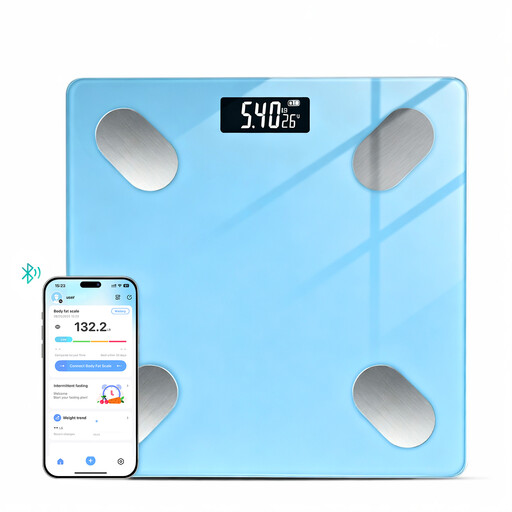
Why This Fits Their Persona: A practical starting point for adults who want Bluetooth app tracking, body composition estimates and a 180kg capacity without choosing a more feature-heavy design.
The listing specifies OKOK app connectivity, multi-user recognition and 0.05kg display increments, while also clearly stating that two AAA batteries are not included.
Tracks 13 listed metrics, supports iOS and Android app use, and has a 180kg maximum capacity.
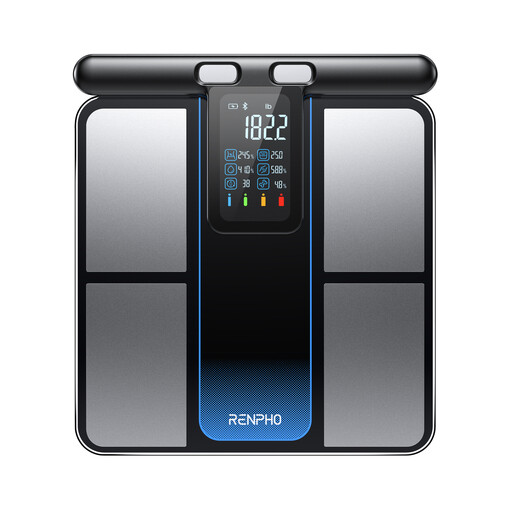
Why This Fits Their Persona: Suits fitness-focused users who want a broader dashboard and are comfortable taking additional steps for app-based progress tracking.
Its description identifies BIA, eight electrodes, Bluetooth app connectivity and a retractable handle, rather than presenting app access as the only feature.
Offers 13 stated metrics, unlimited user profiles and synchronisation with Apple Health, Google Fit and Samsung Health.
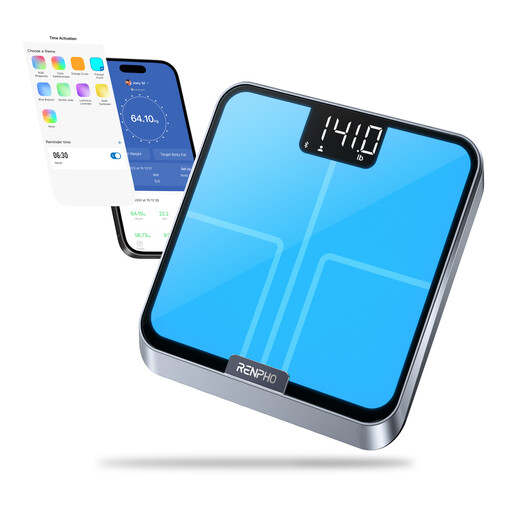
Why This Fits Their Persona: Designed for households sharing one set of smart bathroom scales, with multiple profiles and a mode for recording babies or pets.
The product information states the 180kg limit, included AAA batteries, Bluetooth pairing process and the need for a hard, dry surface.
Lists 13 metrics, unlimited users, Baby Mode and compatibility with Apple Health, Google Fit, Fitbit and Samsung Health.
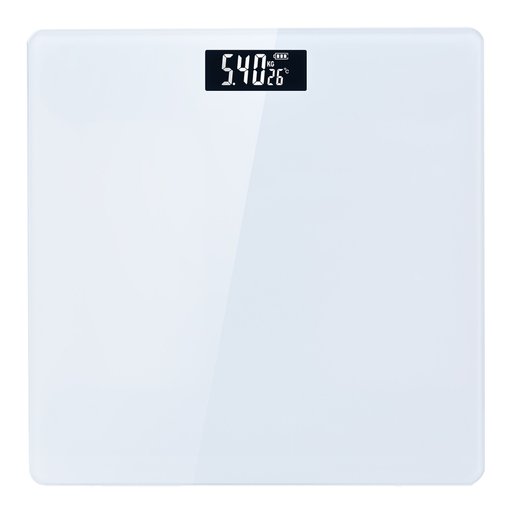
Why This Fits Their Persona: A sensible option for users who prioritise weight readings, a higher capacity and simple operation over Bluetooth or body composition reports.
It avoids unnecessary app subscriptions and pairing steps, while stating its 180kg limit, 0.05kg increments and requirement for two AAA batteries, which are not included.
Provides KG/LB switching, a clear LCD display, 4mm tempered glass and a compact 26cm by 26cm footprint.
Place the scale on a hard, level floor rather than a bath mat or carpet. For body composition readings, stand barefoot with dry feet and remain still for the period specified in the instructions.
Create separate profiles if your household shares the device. This prevents one person’s readings from being assigned to another account. If the scale has been moved, follow its recalibration process before weighing.
People with a pacemaker or another implanted medical device should not use the BIA function unless advised otherwise by an appropriate healthcare professional. Pregnant users should also follow the manufacturer’s instructions and use weight-only mode where stated. Weight-only mode normally requires bypassing the body composition measurement, such as weighing with shoes on, but check the individual manual.
We have compiled a complete, real-time list of products that fully satisfy these strict selection criteria and UK safety regulations.
Not always. The models listed here use Bluetooth to connect with a smartphone app. The phone may need Bluetooth enabled, and some Android devices may also request location permissions during setup. A phone is generally needed to view saved trends, while the scale’s display can show weight directly.
Lifespan depends on battery condition, frequency of use, floor placement and how the glass platform is handled. To support reliable everyday use, keep the scale dry, avoid dropping or overloading it, and replace batteries when the display becomes faint or readings behave inconsistently. Do not use a platform that is cracked.
They can be useful if you want to monitor weight and estimated composition trends in one place. They may be less suitable if you only need a quick weight reading or do not want to maintain an app profile. Before buying, compare the capacity, measurement method, user support, battery requirements and the metrics you will genuinely use.