
24/7 Customer Support

Free returns

Same-day & Next-day Delivery

Quality Guaranteed

Unlock Your Welcome Offers: FREE Delivery | Up to 80% OFF | Free 30-day JoyPlus trial
Download the APP
Buying smart body composition scales can make weight and body-composition tracking more convenient, but product listings often make similar devices appear more capable than they are. A low price may hide extra battery costs, limited app support or measurements that are difficult to interpret consistently.
This guide explains the practical specifications to check before buying, then matches several smart body fat scales to different household needs.
Many BIA scales advertise 13, 50 or more body metrics. These can include weight, BMI, body fat percentage, muscle mass, bone mass, visceral fat and metabolic indicators. However, most figures are estimates calculated from electrical impedance, height, age and other profile details.
Treat these readings as progress-tracking indicators, not medical diagnoses. Changes can also be affected by hydration, meals, exercise, skin temperature and the time of day. A scale with fewer metrics may be more suitable if its app is easier to use and its readings are recorded consistently.
A Bluetooth bathroom scale is only useful if it connects to the phone and health platform you already use. Check whether the required app supports your iPhone or Android device, and whether it can synchronise with services such as Apple Health, Google Fit, Fitbit or Samsung Health.
Families should also check the number of supported profiles and how automatic recognition works. Some scales with app tracking require each user to select a profile manually, while others can identify household members based on previous readings.
A display that shows readings to 0.05 kg or 0.1 lb does not mean every body-composition result has that level of accuracy. The resolution describes how the number is displayed, while measurement consistency depends on the sensors, placement and user conditions.
For reliable home tracking, use the scale on a hard, flat and dry floor, stand still with dry bare feet and weigh yourself under similar conditions each time.
Bio-electrical Impedance Analysis (BIA) sends a low-level electrical signal through the body to estimate selected composition values. Scales with foot electrodes generally provide lower-body readings, while models with hand grips or additional electrodes may collect readings from more contact points.
If you want basic weight-loss tracking, a digital body fat scale measuring weight, BMI and body fat may be sufficient. Fitness-focused users may prefer body weight and muscle mass scales that also record skeletal muscle, visceral fat or resting metabolism. Remember that trends are generally more useful than one isolated result.
Do not use BIA functions if the product instructions exclude users with pacemakers or other implanted medical devices. Some manufacturers also advise pregnant users to use weight-only mode. Always follow the supplied instructions.
Check the maximum load before ordering. Several models in this guide support up to 180 kg, or approximately 396–400 lb. A tempered-glass platform is easy to wipe clean, but it must be checked for cracks or damage and should not be used on wet surfaces.
Bathroom scales should sit fully on a stable floor rather than carpet, uneven tiles or a surface close to a step. Wet feet and damp flooring create a slipping risk. These precautions matter particularly in busy UK bathrooms where condensation and splashes are common.
Battery-powered models are convenient because they do not need a charging cable, but check whether AAA batteries are included. The Sparoma ADL-26 models require two AAA batteries that are not included, while the RENPHO Elis Chrome listing specifies three AAA batteries included.
Bluetooth normally connects the scale to a nearby smartphone rather than providing independent internet access. Before purchasing, check app permissions, account requirements and whether measurements can still be viewed on the scale without a phone. Built-in memory is useful when your phone is not nearby; the Omron VIVA stores up to 30 readings according to its product information.
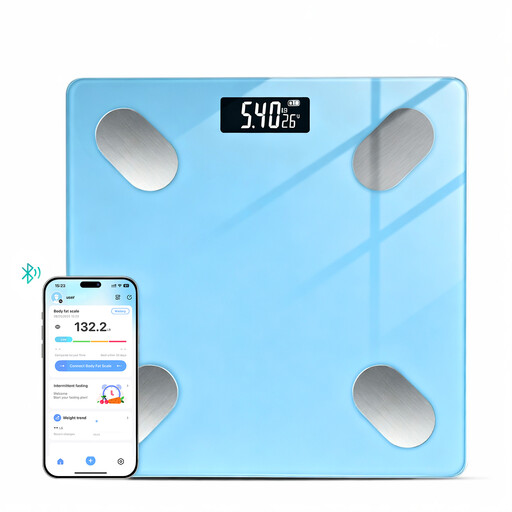
Why This Fits Their Persona: A straightforward option for UK shoppers wanting Bluetooth tracking, family profiles and everyday weight monitoring without a complex setup.
The listing clearly identifies OKOK app connectivity, multiple user profiles and the need for two AAA batteries, so running requirements are easier to plan.
Tracks 13 body metrics, supports iOS and Android and has a 180 kg capacity with a clear LCD display.
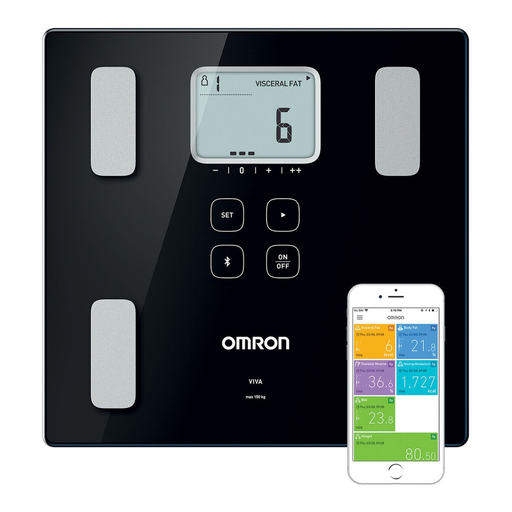
Why This Fits Their Persona: Suitable for users who prefer a recognised health-device format, a larger display and a focused set of composition readings rather than a long metric list.
Its product information specifies six tracked metrics and up to 30 stored readings, helping buyers understand what they are actually receiving.
Measures weight, BMI, body fat, visceral fat, skeletal muscle and resting metabolism; connects with the OMRON connect app.
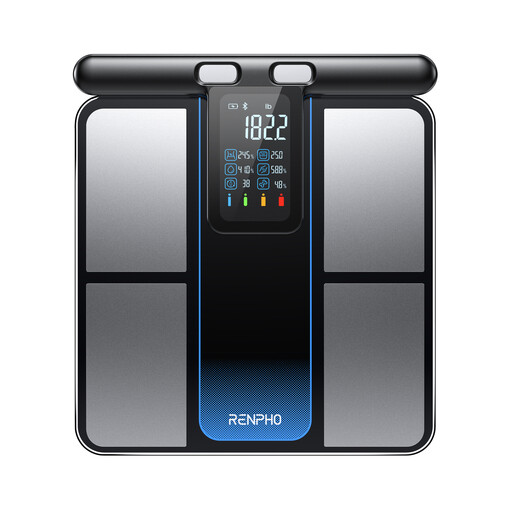
Why This Fits Their Persona: Designed for users wanting broader body-composition tracking, upper-body analysis and app-based trend monitoring alongside weight measurement.
The product specification identifies eight electrodes, a retractable handle, Bluetooth app use and a defined 180 kg capacity rather than relying only on vague precision wording.
Provides upper-body analysis, app charts and synchronisation with Apple Health, Google Fit and Samsung Health, according to the listing.
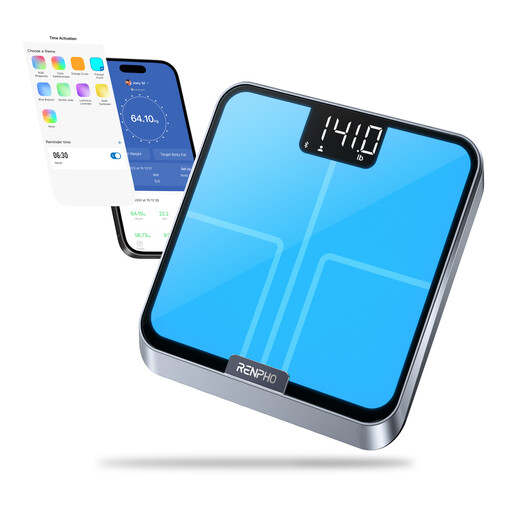
Why This Fits Their Persona: A practical choice for households sharing one scale or users who want extra app features such as reminders and weight-only mode.
The listing states the maximum capacity, battery requirement, multiple-user support and the conditions for bypassing BIA measurements.
Tracks 13 metrics, supports unlimited users and Baby Mode, and works with Apple Health, Google Fit, Fitbit and Samsung Health.
We have compiled a complete, real-time list of products that fully satisfy these strict selection criteria and UK safety regulations.
Use the following routine with any smart body composition scale:
A scale can record data, but it cannot explain every change. Body-composition readings should not replace advice from a qualified healthcare professional.
Most Bluetooth bathroom scales connect directly to a nearby smartphone. Wi-Fi is not usually required for the measurement itself, but the companion app may need internet access for account setup, cloud synchronisation or software updates. Check the app requirements before buying.
Lifespan depends on battery condition, floor placement, moisture exposure and physical handling. Keep the scale dry, avoid dropping heavy objects on the glass and do not exceed its stated capacity. Replacing batteries when readings become inconsistent can also help maintain normal operation.
They can be worthwhile if you want stored trends, multiple profiles or synchronisation with a wider health platform. If you only need occasional weight readings, a basic bathroom scale may be more practical. Choose the features you will use regularly rather than paying for a long list of estimated metrics.