
24/7 Customer Support

Free returns

Same-day & Next-day Delivery

Quality Guaranteed

Unlock Your Welcome Offers: FREE Delivery | Up to 80% OFF | Free 30-day JoyPlus trial
Download the APP
Smart body composition scales can do more than display your weight. Depending on the model, they may estimate body fat percentage, muscle mass, BMI, bone mass, body water and other measurements, then save the results in an app for long-term comparison.
However, not every feature listed on the box adds practical value. For UK households, the most suitable choice depends on how consistently you will use the scale, whether several people need separate profiles and whether app connectivity is genuinely useful for your routine.
Most body fat scales use Bio-electrical Impedance Analysis (BIA). A small electrical current passes through the body, and the scale uses an algorithm to estimate various measurements. Results can vary with hydration, food intake, exercise, skin contact and time of day.
This means body composition analysis is more useful for observing general trends under consistent conditions than for treating one reading as a definitive health assessment. A scale should not replace advice from a qualified healthcare professional.
Bluetooth bathroom scales can offer charts, user profiles and synchronisation with platforms such as Apple Health or Google Fit. These features are useful if you regularly review trends. If you only want a quick morning weight reading, a connected model may add unnecessary setup and battery dependence.
Check whether the app is compatible with your phone, whether several users can be stored and how easily data can be exported or synchronised before buying.
Even high-precision digital scales can produce inconsistent readings on carpet, uneven flooring or damp surfaces. Moving a scale between rooms may also require recalibration. For repeatable results, place it on a hard, flat floor and measure at a similar time of day, ideally with dry, bare feet when using body composition functions.
Check the maximum capacity first, particularly for family use or heavier users. The RENPHO models and Sparoma AD-26 listed below support up to 180 kg, while the exact capacity of other models should be confirmed on their product listing or manual.
A display increment such as 0.05 kg can make small changes easier to observe, but this does not automatically mean every body composition measurement has the same precision. Weight resolution and estimated body fat resolution are separate considerations.
Common measurements include:
More metrics are not always more useful. If your priority is weight management, weight and BMI may be sufficient. Fitness enthusiasts may prefer muscle and body fat trend data, while households may value automatic user recognition and multiple profiles.
Tempered glass platforms are easy to wipe clean, but they should be removed from use if cracked or damaged. Stainless steel or conductive glass electrodes require direct contact with dry, bare feet for BIA readings.
Look for clear instructions, overload protection and automatic switch-off. You should also check the packaging and documentation for the appropriate conformity marking and UK safety information. People with pacemakers or other implanted electronic medical devices, and those who are pregnant, should follow the manufacturer’s safety guidance and avoid BIA functions where advised.
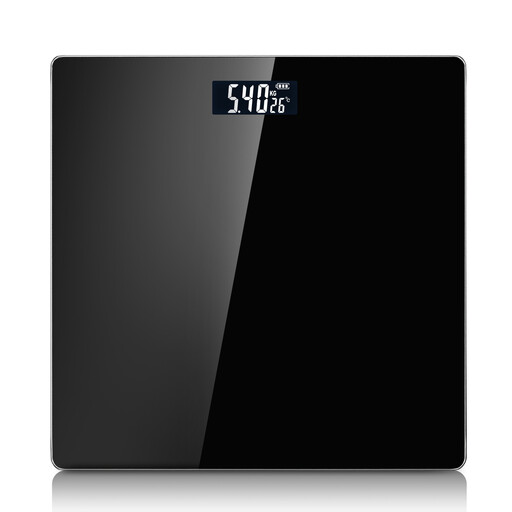
Why This Fits Their Persona: A straightforward option for UK shoppers who want a daily weight reading without an app, user profiles or body composition estimates.
It does not suggest that extra metrics or connectivity are necessary. The listing states 0.05 kg precision and a 180 kg capacity, while batteries are required but not included.
Large LCD display, kg/lb readings and a compact tempered-glass design for everyday weight checks.
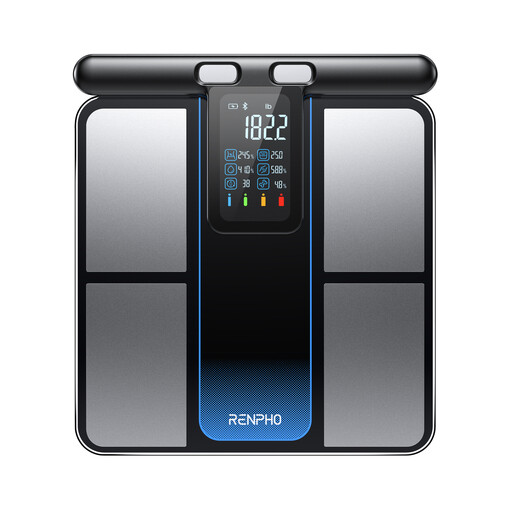
Why This Fits Their Persona: Suits users who want detailed trend tracking and a connected routine across a phone and compatible fitness platforms.
The product information specifies Bluetooth app connectivity, multiple user profiles and an 180 kg capacity, making its connected features practical for regular household use.
Uses BIA and tracks 13 listed metrics, with synchronisation options including Apple Health, Google Fit and Samsung Health.
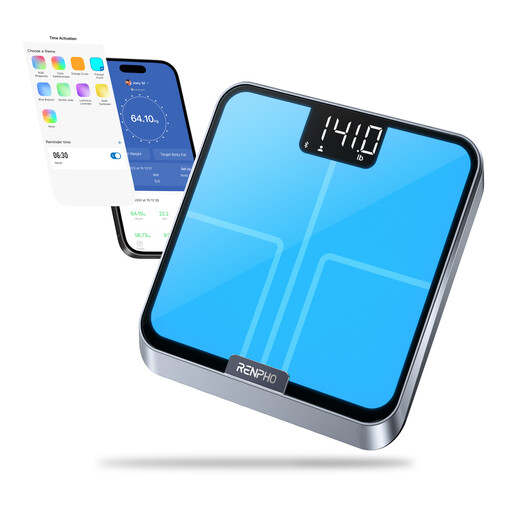
Why This Fits Their Persona: Appropriate for active households that want app history, several profiles and additional tracking modes for everyday family use.
Its listing clearly identifies Bluetooth as the connection method and states that body composition requires bare, dry feet, helping buyers understand the setup rather than assuming instant readings.
Offers 13 listed metrics, unlimited user profiles, Baby Mode and a stated 180 kg capacity.
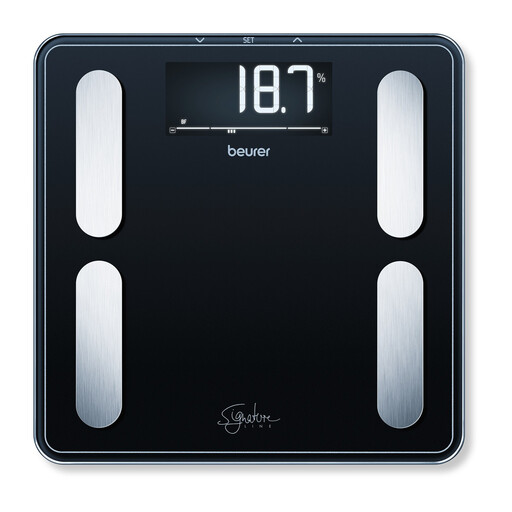
Why This Fits Their Persona: A sensible match for families who want body composition information displayed directly on the scale, without relying entirely on a Bluetooth connection.
The specifications state its display, measurement categories and memory capacity clearly, so buyers can compare practical functions rather than relying on vague precision claims.
Tracks weight, body fat, body water, muscle percentage, bone mass, BMI and AMR/BMR readings, with memory for up to 10 users.
We have compiled a complete, real-time list of products that fully satisfy these strict selection criteria and UK safety regulations.
For more useful comparisons between readings:
If you only need weight, some models allow weight-only use. Check the relevant instructions before stepping on with footwear.
They can provide consistent weight readings when used correctly, while body fat and other composition figures are estimates based on BIA and personal data. Hydration, foot position and timing can affect results. Use the same routine each time and focus on longer-term trends.
Many Bluetooth bathroom scales connect directly to a smartphone rather than to home Wi-Fi. The phone may need Bluetooth enabled and, depending on the app and operating system, location permissions. Check compatibility before purchase.
Lifespan depends on battery condition, frequency of use, floor placement and care. Keep the scale dry, avoid dropping or overloading it, and stop using it if the glass is cracked. Battery-powered models can be economical to run, but remember to check whether batteries are included.