
24/7 Customer Support

Free returns

Same-day & Next-day Delivery

Quality Guaranteed

Unlock Your Welcome Offers: FREE Delivery | Up to 80% OFF | Free 30-day JoyPlus trial
Download the APP
Smart body composition scales can do more than display your weight. Depending on the model, they may connect to a smartphone app, estimate body fat percentage, record BMI and muscle-related metrics and support several household users. However, the number of measurements shown on an app does not automatically make a scale suitable for your routine.
For UK shoppers, the practical decision usually comes down to three questions: will it give consistent readings, will the app be useful and will everyone in the household be able to use it safely and comfortably?
A display that changes in 0.05 kg increments looks precise, but this describes the scale’s graduation rather than guaranteed real-world accuracy. Readings can vary with flooring, foot position, hydration and time of day.
For useful tracking, place the scale on the same hard, flat surface and weigh yourself under similar conditions. Avoid comparing readings taken on carpet, uneven tiles or a damp bathroom floor.
Many body fat scales advertise 13, 25 or more measurements. These can include BMI, body water, visceral fat, muscle mass, metabolic age and body score. Most body composition features use bioelectrical impedance analysis (BIA), which provides estimates influenced by factors such as hydration and skin contact.
Treat these figures as trend indicators rather than medical assessments. Weight readings and longer-term patterns may be more useful than reacting to a single change in estimated body fat percentage.
Bluetooth smart scales are only convenient if the app works with your phone and preferred health platform. Before buying, check whether the scale connects through the manufacturer’s app and whether it can synchronise with services such as Apple Health, Google Fit, Fitbit or Samsung Health.
Families should also check user capacity. Some scales store a set number of profiles, while others support unlimited users through the app. Automatic recognition is helpful, but each household member should confirm that their measurements are being saved to the correct profile.
Check the maximum capacity against the needs of every intended user. The products below range from 150 kg to 180 kg, while some also support weighing in kilograms, pounds and stones. A scale that supports stones can be particularly convenient for UK households.
The graduation may be 0.05 kg, although some models use a different increment at higher weights. This is worth checking if you are monitoring small changes.
A scale with app connectivity can turn occasional weighing into a longer-term record. Look for:
A display remains useful when you want a quick reading without opening an app. App-only information may be less convenient for guests or family members who do not want to create an account.
Tempered glass platforms are common on digital weighing scales and are generally easy to wipe clean, but they should not be used if cracked or damaged. Stainless steel or conductive glass electrodes require bare, dry feet for body composition readings.
Always use smart bathroom scales on a firm, level, dry surface. Do not immerse them in water or use abrasive cleaners. People with pacemakers or other implanted electronic medical devices should follow the product instructions and seek appropriate medical advice before using BIA features. Some models advise pregnant users to use weight-only mode.
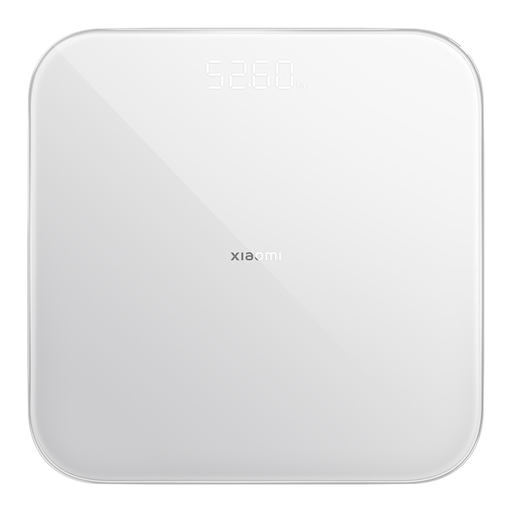
Why This Fits Their Persona: A straightforward choice for people beginning weight tracking, with Bluetooth connection and a compact white design that suits most UK bathrooms.
It provides a visible weight display as well as Xiaomi Home app access, so routine weighing does not depend entirely on app features.
Measures from 0.1 kg to 150 kg, uses Bluetooth 5.4 and supports up to 36 users.
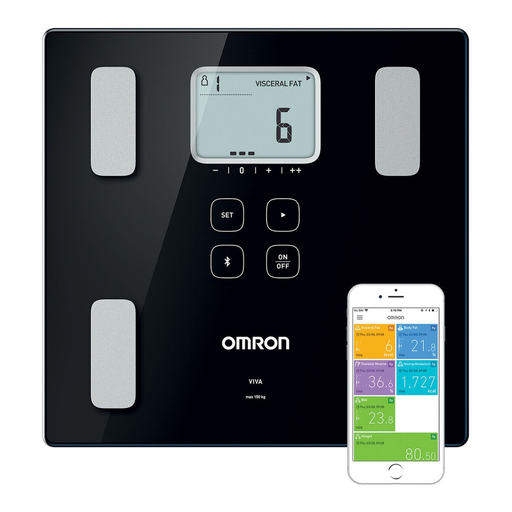
Why This Fits Their Persona: Suitable for users who prefer a recognised app ecosystem, a clear display and a focused selection of body composition measurements.
It concentrates on six named metrics rather than presenting an unnecessarily large list of estimates.
Tracks weight, BMI, body fat, visceral fat, skeletal muscle and resting metabolism, with memory for 30 readings.
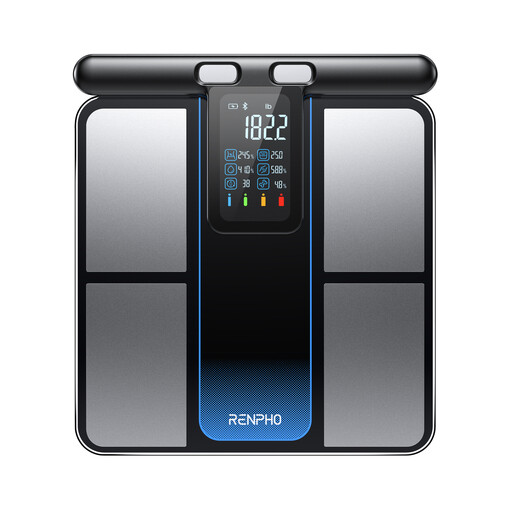
Why This Fits Their Persona: Designed for fitness-focused users who want detailed app records and a higher weight capacity for shared household use.
Its listed 180 kg capacity and app-based profiles address the common mismatch between advertised features and household requirements.
Uses BIA with eight electrodes, records at least 13 metrics and can synchronise with Apple Health, Google Fit and Samsung Health.
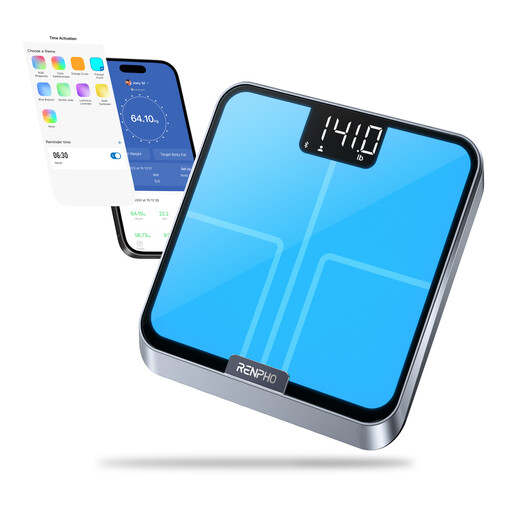
Why This Fits Their Persona: A practical fit for active families wanting multiple profiles, app synchronisation and a dedicated option for recording babies or pets.
It offers weight-only mode, unlimited app profiles and a 180 kg capacity, reducing reliance on a one-size-fits-all setup.
Provides 13 metrics, Bluetooth app connectivity, Baby Mode and compatibility with Apple Health, Google Fit and Fitbit.
We have compiled a complete, real-time list of products that fully satisfy these strict selection criteria and UK safety regulations.
They can be useful if you want regular weight records, app connectivity or multiple household profiles. Body composition readings should be treated as estimates for monitoring trends, not as a substitute for professional assessment. If you only need weight, a simpler digital weighing scale may be more suitable.
Keep the scale on a hard, level floor, use it at a similar time of day and stand still with dry feet. Do not move it between readings and avoid weighing immediately after exercise, eating or drinking if you are comparing results over time.
Most battery-powered smart bathroom scales use AAA batteries and only operate during a weighing session. Battery life depends on the model, frequency of use and Bluetooth activity. Check whether batteries are included and remove them if the scale will be stored for an extended period.