
24/7 Customer Support

Free returns

Same-day & Next-day Delivery

Quality Guaranteed

Unlock Your Welcome Offers: FREE Delivery | Up to 80% OFF | Free 30-day JoyPlus trial
Download the APP
Choosing between smart body scales, simple digital bathroom scales and body composition devices can be surprisingly difficult. Product pages often highlight impressive metric counts, high-precision sensors or app features without explaining what those functions mean for everyday use.
The right choice depends on how you plan to weigh yourself, who will use the scale and whether you need weight-only readings or longer-term tracking. This guide covers the practical specifications to check before buying, common purchasing pitfalls and a selection of products suited to different UK households.
Some body fat scales advertise dozens of measurements, including BMI, muscle mass, visceral fat and metabolic age. These figures are generally estimates produced using bio-electrical impedance analysis (BIA). They can be useful for observing trends, but they should not be treated as medical measurements or used to make health decisions without appropriate professional advice.
For many households, consistent weight readings and a clear display may be more useful than a long list of estimated metrics. Consider whether you will actually use the app and review trends regularly before paying more for additional functions.
Even high-precision bathroom scales can produce inconsistent readings when placed on carpet, rugs, uneven tiles or soft flooring. A hard, level surface such as bathroom tile or wooden flooring is generally more suitable.
Moving the scale can also affect the first reading. Some models require a brief step-on and step-off calibration process after being relocated. Keeping the scale in one fixed position makes daily comparisons more meaningful.
A specification such as 0.05kg precision describes the displayed measurement increments or sensor resolution. It does not mean that every reading will differ from your actual body weight by no more than 0.05kg.
For more consistent weight tracking, weigh yourself at a similar time of day, on the same surface and under similar conditions. Avoid stepping on with wet feet, as glass platforms can become slippery.
Check the maximum load before comparing other features. Several models in this guide support up to 180kg, or approximately 396–400lb. This capacity can suit a wider range of family members, but users should never exceed the manufacturer’s stated limit.
A compact platform measuring around 260 × 260mm is easy to store, although users with larger feet may prefer checking the platform dimensions carefully before ordering.
A bright LED display can be convenient in a darker bathroom, while a high-contrast LCD is usually easy to read from a standing position. If you do not intend to use an app, display quality becomes particularly important because all results need to be read directly from the scale.
Look for a clear display that shows kilograms, and check whether the product supports switching between kg and lb if different members of your household use different units.
Tempered glass platforms are common because they are slim and easy to wipe clean. Thickness varies: the products below use either 4mm or 5mm tempered glass. Glass remains vulnerable to impact, so avoid dropping objects on the platform and stop using any scale that becomes cracked.
Battery requirements also vary. Some scales include AAA batteries, while others require you to purchase them separately. Bluetooth smart scales need a compatible phone and app setup. Check whether the app supports the platforms you already use, such as Apple Health, Google Fit or Fitbit.
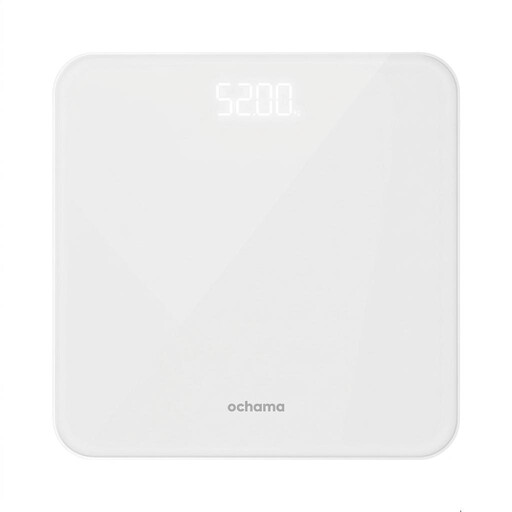
Why This Fits Their Persona: A straightforward option for UK users who want digital weight readings without committing to a detailed body composition app.
Its stated 5–180kg range and LED display make the essential specifications clear, while the instructions highlight the need for a hard, dry floor.
5mm tempered glass, high-contrast LED display and two AAA batteries included. The stated battery life is up to 180 days.
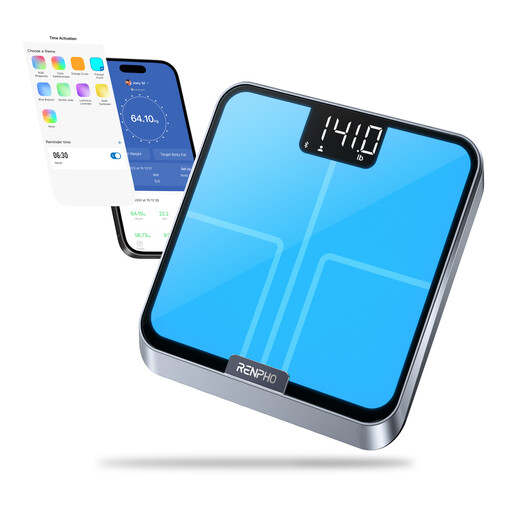
Why This Fits Their Persona: Suitable for users who want Bluetooth scales with app history, multiple profiles and more than weight-only readings.
The product specifies Bluetooth pairing, app storage and weight-only mode, so buyers can choose whether to use BIA features.
Lists 13 body metrics, supports up to 180kg and includes Baby Mode for recording children or pets. It can synchronise with selected fitness platforms.
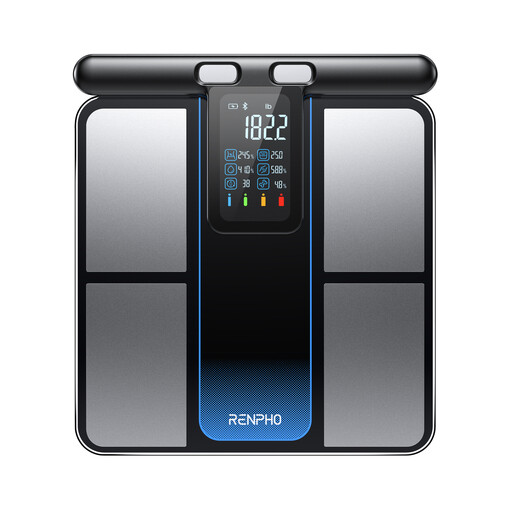
Why This Fits Their Persona: Designed for users seeking broader body composition monitoring and app-based trend charts rather than a basic weigh-in.
Its listed BIA system, retractable handle and eight electrodes provide more hardware detail than a metric count alone.
Supports Bluetooth app connectivity, multiple profiles and an 180kg weight limit, with a tempered glass platform.
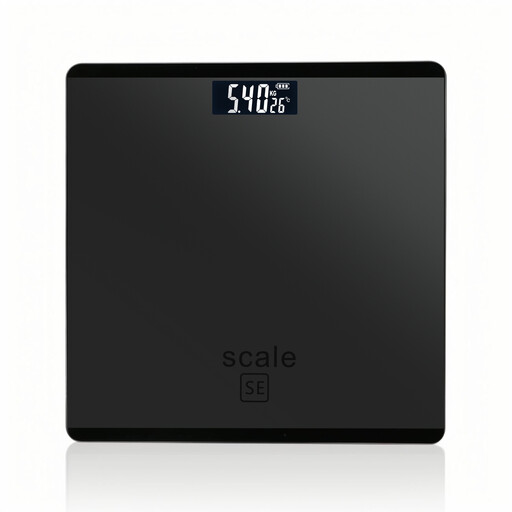
Why This Fits Their Persona: A practical fit for households that prioritise a clear weight reading, 180kg capacity and simple battery operation.
The product gives a defined 0.05kg display precision and 180kg capacity, while its instructions clearly exclude carpet and uneven floors.
4mm tempered glass, LCD display, kg/lb switching and a compact 26 × 26 × 2.5cm format. AAA batteries are required but not included.
Use the scale on a solid, flat and dry surface. Place both feet centrally on the platform and remain still until the display settles. For body composition scales, bare, dry feet are normally required to make contact with the electrodes.
If the scale has been moved, follow its recalibration instructions before recording a result. Keep measurements comparable by weighing at a regular time and avoiding comparisons immediately after eating, exercising or drinking large amounts of fluid.
BIA features are not suitable for everyone. Follow the manufacturer’s safety guidance if you are pregnant or have an implanted medical device. In those situations, weight-only use may be recommended, where supported by the product instructions.
We have compiled a complete, real-time list of products that fully satisfy these strict selection criteria and UK safety regulations.
They can be useful if you want automatic records, multiple user profiles or trend charts in an app. If you only need a daily weight reading, a simpler digital bathroom scale may offer a more direct experience with fewer setup requirements.
Most Bluetooth smart scales connect directly to a smartphone rather than requiring home Wi-Fi. You normally need the relevant app, Bluetooth enabled and, on some Android devices, location permissions during setup. Check compatibility before purchase.