
24/7 Customer Support

Free returns

Same-day & Next-day Delivery

Quality Guaranteed

Unlock Your Welcome Offers: FREE Delivery | Up to 80% OFF | Free 30-day JoyPlus trial
Download the APP
Smart car and home appliances can make driving, travel, food storage and pet care more convenient. However, connected features often attract attention while practical limitations are overlooked. Whether you are comparing a 4K dash cam, a portable car fridge freezer, an under-counter fridge or an automatic self-cleaning cat litter box, the right choice depends on compatibility, capacity, safety and running costs.
A dash cam may include GPS, Wi-Fi and voice control, but installation still depends on your vehicle. Check whether your car uses a 12V or 24V system, whether the rear camera suits your windscreen and whether cables can be routed without interfering with airbag zones.
Similarly, a portable cooler may support both mains and vehicle power, but your accessory socket must provide power when the ignition is off if you need continuous cooling while parked.
An appliance’s litre figure does not always show how much practical storage it offers. Internal baskets, compressor compartments, shelves and cooling zones can reduce usable room.
For example, an 18-litre compressor cooler is suitable for short trips, packed lunches and drinks. Larger units, such as a 49.4-litre compressor cooler, are more appropriate for families, campervans, boats or longer stays away from home.
Smart appliances still need routine care. A self-cleaning litter box requires suitable clumping litter, waste-bag replacement and sensor cleaning. A chest freezer needs sensible defrosting and ventilation. A dash cam needs memory management, and its parking-monitoring function may require an additional hardwire kit.
Convenience is therefore not the same as zero maintenance.
For car accessories, verify the power input before ordering:
For dash cams, the front camera should not obstruct the driver’s view. Rear-camera cables should be routed away from airbag deployment areas. External GPS antennas need a reasonably clear view of the sky, while metallic windscreen coatings may affect signal reception.
A 4K dash cam records more detailed front footage than lower-resolution models, but image quality also depends on lighting, lens positioning, windscreen cleanliness and memory-card performance.
Useful features to compare include:
A mirror dash cam can replace the visual function of the standard rear-view mirror with a screen, while a conventional dual dash cam generally mounts behind the mirror. Choose according to your preferred display, installation space and rear-window layout.
Energy labels provide a useful comparison point, but running cost depends on usage, room temperature, ventilation and temperature settings. The AUCMA 95-litre chest freezer is rated Energy Class E with stated annual consumption of 165kWh, while the EUHOMY 18L and 49.4L compressor coolers are listed as Energy Class D and Energy Class C respectively.
For small homes and rented accommodation, measure:
Noise is also relevant in bedrooms, offices and studio flats. The AUCMA chest freezer is listed at 38dB, while the EUHOMY compressor coolers are listed at approximately 42dB and 40dB.
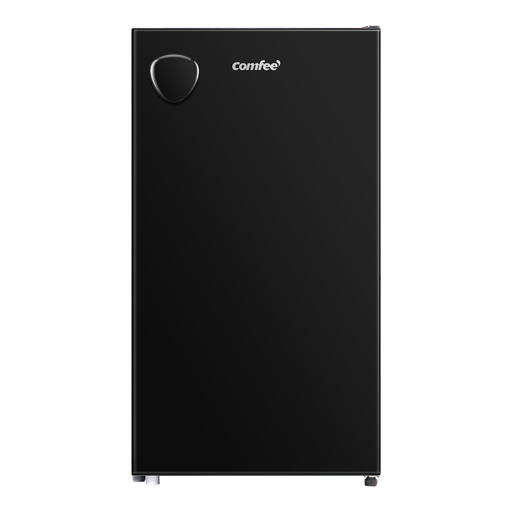
Why This Fits Their Persona: Its compact freestanding format suits renters, office users and studio-flat residents who need everyday chilled storage without a full-size appliance.
The stated 88L capacity and 44.5 × 47 × 82.7cm dimensions make space planning clearer before purchase.
Reversible door, removable glass shelves, interior light and a dedicated crisper drawer.
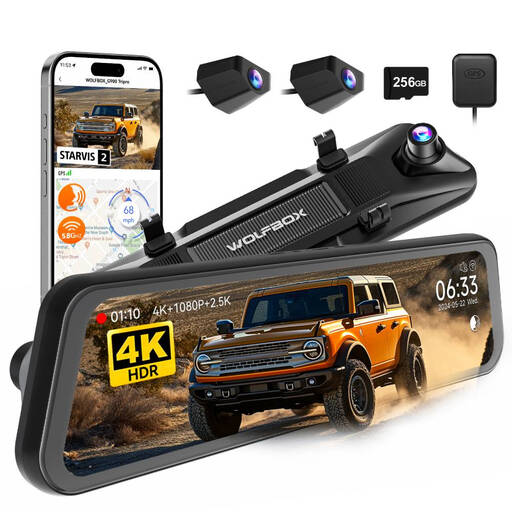
Why This Fits Their Persona: Drivers wanting broader coverage can record the front, cabin and rear bumper using one connected camera system.
The channel layout is specified as front, interior and rear bumper, rather than leaving coverage unclear.
4K front camera, 2.5K interior camera, 1080P rear camera, 5.8GHz Wi-Fi, GPS and a supplied 256GB card.
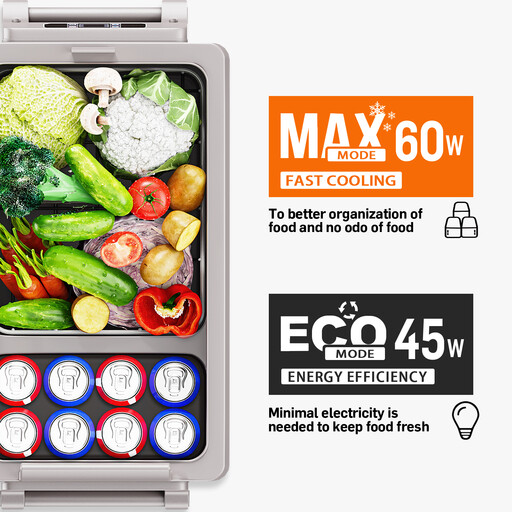
Why This Fits Their Persona: The dual-zone design is suited to campers, RV owners, boat users and families carrying separate chilled and frozen food.
Its 49.4L capacity, two storage areas and three-level battery protection address storage and vehicle-power concerns.
-20°C to 20°C setting range, 12/24V DC and 240V AC operation, app connectivity and stated 40dB noise level.
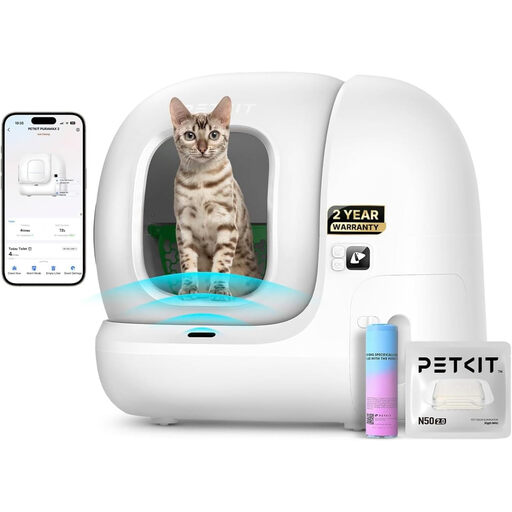
Why This Fits Their Persona: Cat owners seeking app control and less daily scooping can schedule and monitor cleaning through a connected system.
The product information specifies safety sensors, anti-leakage features, 2.4G Wi-Fi and a low entrance, helping clarify setup needs.
Automatic cleaning, app control, safety sensors and a waste container designed for less frequent emptying.
We have compiled a complete, real-time list of products that fully satisfy these strict selection criteria and UK safety regulations.
Not necessarily. Check the product’s voltage, socket type, mounting method and available installation space. A 12V accessory will not automatically suit a 24V vehicle without suitable conversion equipment. For dash cams, also check rear-window shape, tinting and cable-routing requirements.
Their consumption varies with ambient temperature, target temperature, ventilation and operating mode. Compare the stated energy class and wattage, and use battery-protection settings when connected to a vehicle. Keep ventilation openings clear and secure the unit during travel.
No. It can reduce routine scooping, but owners still need to empty the waste bin, replace bags, clean the litter chamber and inspect sensors. Confirm that your cat accepts the design and use the recommended clumping litter.