
24/7 Customer Support

Free returns

Same-day & Next-day Delivery

Quality Guaranteed

Unlock Your Welcome Offers: FREE Delivery | Up to 80% OFF | Free 30-day JoyPlus trial
Download the APP
Upgrading your home's lighting is one of the most effective ways to transform a space. Yet, choosing the right fixture can feel overwhelming. Traditional lights often lack flexibility, while the market for smart lighting is filled with technical jargon. If you're looking for a modern solution that offers convenience, style and better control over your home's atmosphere, a smart ceiling light is an excellent starting point.
This guide is designed to help you understand the key features to look for. We will explore what makes a ceiling light suitable for different rooms and highlight a few recommended models to simplify your decision-making process.
Making an informed choice goes beyond just aesthetics. Here are a few practical points to consider to ensure you find a light that fits your home and lifestyle.
The core appeal of a smart ceiling light is its connectivity. Look for models that integrate with your existing smart home ecosystem, such as Amazon Alexa, Google Home or Samsung SmartThings. This enables voice control light functionality, allowing you to turn lights on or off and adjust settings with simple commands.
Beyond voice control, app-based management is a key feature. A good smart light will allow you to set schedules, create lighting "scenes" for different activities (like reading or watching a film) and control your lights remotely, offering both convenience and potential energy savings. Some models connect directly to your WiFi, while others may require a separate hub.
Not all ceiling lights are suitable for every room. For areas prone to moisture and steam, such as a kitchen ceiling light or bathroom ceiling light, it is crucial to check the Ingress Protection (IP) rating. An IP rating consists of two numbers: the first indicates protection against solids (like dust) and the second against liquids (like water).
For a bathroom or kitchen, look for a light with a rating of at least IP44. This ensures it is protected against splashes of water from any direction. For even greater durability in very humid or dusty environments, a rating of IP54 offers enhanced protection against both dust and water.
Modern LED ceiling light technology offers more than just brightness. Consider these features for a truly customisable experience:
RGB ceiling light provides a spectrum of colours. This is great for entertainment areas or children's rooms.Here are a few options that stand out for their features, design and practicality.
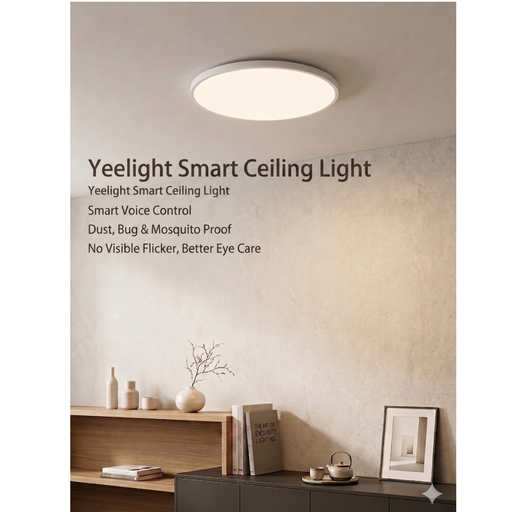
Why It Stands Out: This model is a versatile all-rounder that balances smart features with practical design. Its fully enclosed construction is a significant advantage, preventing dust, insects and moisture from getting inside, which drastically reduces maintenance.
smart ceiling light for a living room, bedroom or even a kitchen, thanks to its sealed body.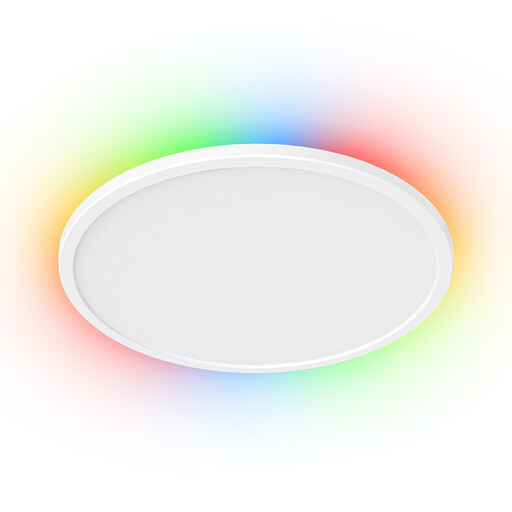
Why It Stands Out: This light combines minimalist aesthetics with powerful functionality. Its exceptionally thin profile of just 0.98 inches gives it a sleek, modern look, while the addition of an RGB ceiling light backlight allows for creative ambient lighting effects.
bathroom ceiling light or kitchen ceiling light, or anyone wanting to add dynamic, colourful ambient lighting to a room.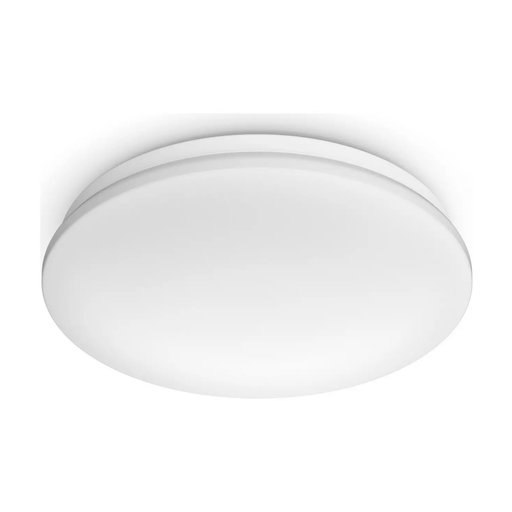
Why It Stands Out: For those who prefer simplicity and reliability over smart connectivity, this Philips Moire light is a strong contender. It focuses on delivering high-quality, uniform light with its Interlaced Optics technology, which diffuses light evenly to reduce glare.
LED ceiling light from a well-known brand.The recommendations above cover a range of needs, but the world of ceiling lighting is vast. If you are specifically interested in low-profile designs that sit close to the ceiling, you may find what you're looking for in a different style.
For those seeking a different aesthetic or a wider selection, explore our full range of flush ceiling light options to find the perfect fit for your home.
1. Can I install a smart ceiling light myself? Many modern ceiling lights, including the smart models listed, come with quick-mount systems designed for straightforward installation. However, you must always turn off the power at the mains before starting any electrical work. If you are not comfortable or experienced with wiring, it is always best to consult a qualified electrician.
2. Do smart ceiling lights use a lot of electricity? Most smart lights use LED ceiling light technology, which is far more energy-efficient than older incandescent or halogen bulbs. Furthermore, smart features like scheduling and dimming can help you manage and reduce your energy consumption even more effectively.
3. Do I need a special hub for a voice control light? This depends on the product. Some smart lights connect directly to your home's WiFi network and can be controlled by voice assistants without any extra hardware. Other systems may require a brand-specific bridge or hub to unlock all features. Always check the product's connectivity requirements before purchasing.