
24/7 Customer Support

Free returns

Same-day & Next-day Delivery

Quality Guaranteed

Unlock Your Welcome Offers: FREE Delivery | Up to 80% OFF | Free 30-day JoyPlus trial
Download the APP
Choosing the right lighting can transform a room, but navigating the world of smart ceiling lights is often confusing. With so many features, technical terms and bold marketing claims, it's easy to end up with a product that underdelivers. As a Product Recommendation Officer at Joybuy, I see where shoppers often go wrong. Many are lured by flashy features, only to find their new light is incompatible with their home, unsafe for its intended room or simply a hassle to use.
This guide cuts through the clutter. We will highlight the common pitfalls that lead to buyer's remorse and break down the essential features you must check before you buy. Our goal is to give you the confidence to select a light that not only looks great but also functions seamlessly for years to come.
Before looking at what to buy, it's crucial to understand what to avoid. Many modern ceiling lights come with hidden compromises that aren't obvious from the product page.
To avoid these pitfalls, focus on a few key technical specifications. Understanding these will help you make a much more informed decision.
How your light connects to your network determines its ease of use and compatibility.
Before buying, always check the product's compatibility list to ensure it works with your preferred system (e.g., Alexa, Google Home, Apple HomeKit or Samsung SmartThings).
The IP rating is a two-digit number that indicates a fixture's resistance to solids (first digit) and liquids (second digit). This is not a "nice-to-have"; it's a critical safety and durability feature.
Good lighting is about more than just being bright.
We have selected a few products that align with these principles, matching them to different user needs and priorities.
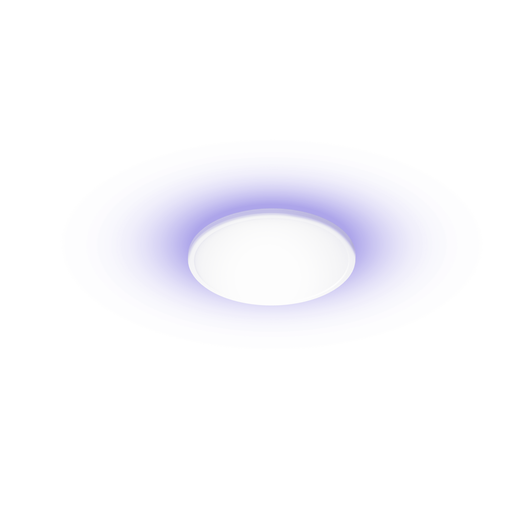
Why This Fits Their Persona: This user wants seamless integration and advanced features. This light connects directly via Wi-Fi, works with Alexa and Google Assistant and offers a 160,000-colour RGB backlight for creating immersive scenes for movies or gaming.
It avoids the isolated ecosystem trap by connecting directly via Wi-Fi without a proprietary hub. Its IP54 rating makes it genuinely suitable for kitchens and bathrooms, avoiding the IP rating illusion.
The combination of an ultra-slim profile, main light and RGB ambient backlight in one unit is a key advantage. The quick-mount base also simplifies installation.
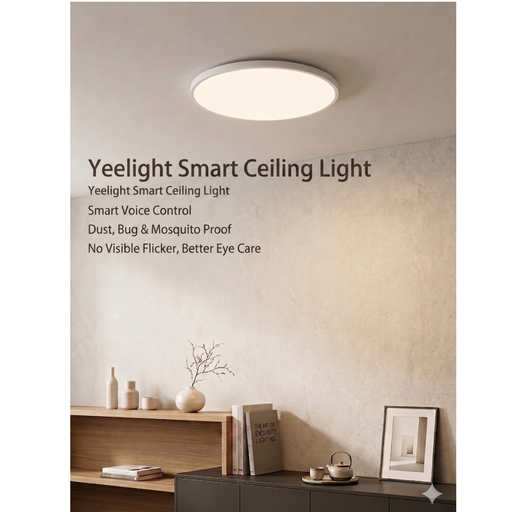
Why This Fits Their Persona: This user prioritises eye comfort and practicality. They want smart features for daily routines, like dimming for the evening or a gentle night light, rather than flashy colours.
It directly counters the poor light quality trap with its RG0 certification, indicating no flicker and low blue-light hazard for better eye comfort. The sealed, anti-dust and anti-steam design ensures long-term durability in practical environments.
The "Moonlight Mode" provides ultra-low, non-disruptive brightness, perfect for nighttime. It also supports major smart home platforms for easy integration.
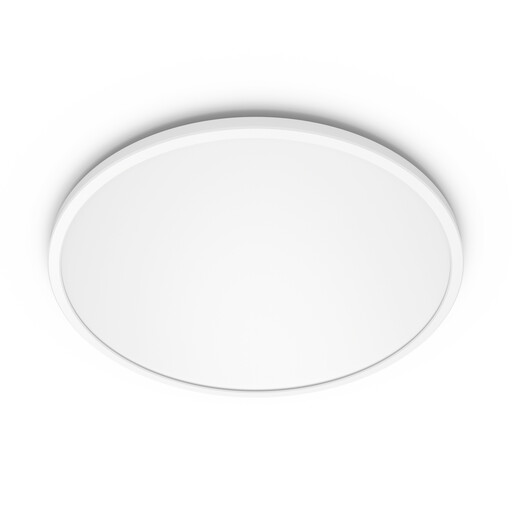
Why This Fits Their Persona: This user values clean aesthetics and has practical constraints, like a low ceiling. They want a simple, reliable light that sits flush and provides good, even illumination without complex smart features.
It avoids feature-bloat by focusing on one thing: being an excellent, slim-profile light. It provides uniform light distribution, countering the glare trap of cheaper alternatives and its simple 3-step dimming works without any app or hub.
Its primary advantage is the super slim design (23mm height), making it ideal for modern interiors and rooms with limited ceiling height. The step-dimming function offers basic brightness control via a standard wall switch.
We have compiled a complete, real-time list of products that fully satisfy these strict selection criteria and UK safety regulations.
No, they do not. Many modern smart lights, particularly those using Wi-Fi, connect directly to your home router and are controlled via a smartphone app or voice assistant. Others that use protocols like Zigbee or Z-Wave will require a compatible smart home hub. Always check the "Connectivity" or "Specifications" section of the product description to see if a hub is required.
LED lights are highly energy-efficient. A typical 18W LED ceiling light, used for 5 hours a day, would consume approximately 33 kilowatt-hours (kWh) per year. Based on current UK electricity prices, this would cost only around ?9-?11 per year to run, making them a very economical choice compared to older halogen or incandescent bulbs.
In the UK, any electrical work in "special locations" like bathrooms must be carried out by a qualified electrician. For other rooms, while a competent DIYer might be able to replace a like-for-like fitting, it is always recommended that any hard-wired electrical fixture be installed by a qualified electrician. This ensures the installation is safe, secure and compliant with UK wiring regulations (BS 7671). Incorrect installation poses a serious risk of electric shock or fire.