
24/7 全天候客户支持

免费退货

当日/次日达

品质保障

开启新人专享福利: 全场免邮 | 低至 2 折 | 免费试用 30 天 JoyPlus 会员
下载 Joybuy
A smart heating and cooling tower fan can reduce the need to switch between separate seasonal appliances, but the wrong model may create more inconvenience than comfort. UK shoppers often focus on app control or wattage while overlooking operating costs, placement requirements and whether the appliance suits the room.
Before choosing an app-controlled tower fan or a portable personal fan, watch for three common buying traps:
A 2000W heater uses up to 2kW of electricity per hour when operating continuously at full power. To estimate the cost, multiply the appliance’s kilowatt rating by your electricity tariff and the number of hours used.
For example:
2kW × electricity price per kWh × hours used = estimated running cost
Actual consumption may be lower when the thermostat cycles the heating element or when a lower setting is selected. Look for adjustable temperature settings, multiple fan speeds and a fan heater with timer function so the appliance is not left running unnecessarily.
A smart fan heater may also allow you to create schedules from a smartphone, which can help avoid heating an empty room. Check whether the app requires a particular operating system, Wi-Fi connection or account before purchase.
An oscillating tower fan distributes air across a wider area than a fixed-direction fan. This is useful in shared rooms, although it does not lower the actual room temperature. It moves air across the skin, creating a cooling sensation.
Check the product dimensions and leave clear space around the air inlet and outlet. Tower models are designed for stable, flat surfaces and should not be placed where they can be knocked over easily. Keep them away from water, curtains and other flammable materials, and never cover a heating appliance while it is operating.
For outdoor use, a portable handheld fan should be judged by weight, grip, power source and carrying options rather than room coverage. A battery-operated handheld fan can be more practical than a mains model for commuting, holidays and sporting events.
Useful details include:
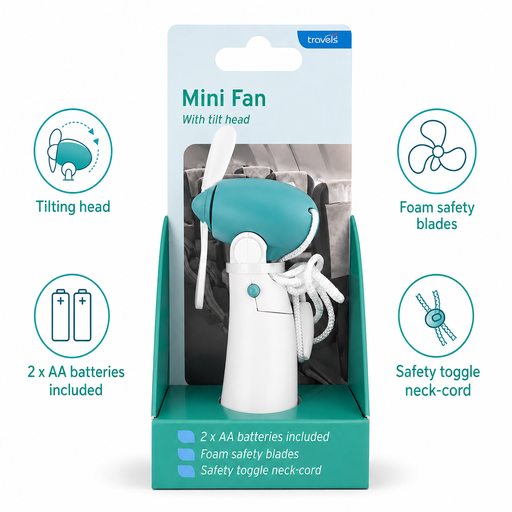
Why This Fits Their Persona: This compact option suits commuters, students and occasional users who want personal airflow without buying a larger mains-powered appliance.
Its use of 2 AA batteries makes the power requirement clear, while the small format avoids paying for room heating or unnecessary smart functions.
Tilting head, soft foam safety blades, ergonomic grip and toggle neck cord. Two AA batteries are included.
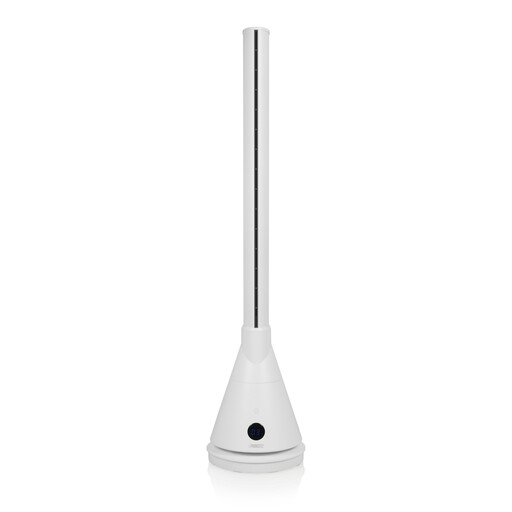
Why This Fits Their Persona: A practical match for homeowners, renters and office workers seeking one upright appliance for seasonal temperature control in a bedroom, living room or home office.
The specification lists heating and cooling separately, with a timer, adjustable temperature and app control rather than relying on a single vague “smart” label.
2000W heating function, multiple fan speeds, oscillation, digital LED display and smartphone app operation.
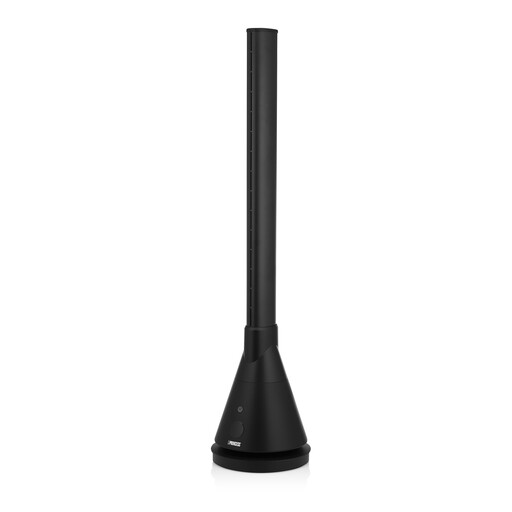
Why This Fits Their Persona: Suitable for frequent users who want scheduled heating or cooling and a darker finish for a home office, living area or bedroom.
Its timer and smartphone operation can help users manage regular usage, while the listed temperature controls make the settings easier to adjust than a basic fan.
Black tower design, 2000W mains-powered heating, multiple speeds, oscillation, LED display and app control.
We have compiled a complete, real-time list of products that fully satisfy these strict selection criteria and UK safety regulations.
Before using a smart fan heater or tower fan:
Clean dust from air vents regularly, but only after switching off and unplugging the unit. A clear airflow path supports normal operation and reduces avoidable strain on the appliance.
It can be useful if you regularly want to adjust settings from a sofa, bed or desk, or if you need scheduling. App control is less important if you only use a fan occasionally and prefer simple physical buttons. Confirm app compatibility and Wi-Fi requirements before ordering.
A 2000W model uses up to 2kWh per hour at full power. Multiply 2 by your electricity tariff to estimate the hourly cost. Thermostat cycling, selected heat level and room insulation can reduce actual consumption.
A tower fan circulates air and may make you feel cooler, but it does not actively remove heat from the room like an air-conditioning system. For personal cooling outdoors, a travel fan, handheld model or neck cord fan offers a more targeted solution than a room appliance.