
24/7 Customer Support

Free returns

Same-day & Next-day Delivery

Quality Guaranteed
Download the APP
Categories
Transforming a room's atmosphere used to mean a fresh coat of paint or new furniture. Today, you can achieve a dramatic shift in mood with the flick of a switch or a simple voice command. A smart LED light strip offers a versatile and dynamic way to add personality to your space, whether you're building an immersive gaming rig, creating a cinematic home theatre or simply adding a splash of colour to your decor.
However, the market is filled with options, and navigating terms like RGB, RGBIC and smart home compatibility can be confusing. This guide is designed to cut through the clutter, offering practical advice to help you find the right customisable room lighting for your home. We will explore key features to consider and highlight a few standout options available right now.
Before diving into specific products, let's cover a few essential points to guide your decision. Keeping these in mind will help you match a product's features to your specific needs.
When you see "RGB" on a product, it means the strip can produce Red, Green and Blue light, which can be mixed to create millions of different colours. However, a standard RGB LED strip can only display one single colour along its entire length at any given time.
For more dynamic effects, look for "RGBIC" (Red, Green, Blue with Independent Control). This technology includes a special chip that allows you to control individual segments of the light strip. This means you can display multiple colours at once, creating flowing gradients, rainbow effects and more sophisticated scenes, which is ideal for smart lights for gaming or creating a vibrant party atmosphere.
The "smart" in smart LED light strip comes from its ability to connect to your network and other devices. If you already use a smart home system, ensuring compatibility is crucial for a seamless experience. Look for products that work with your preferred ecosystem, whether you need an Alexa light strip, Google Home compatible lights, or one that integrates with Apple HomeKit or Samsung SmartThings. This integration is what enables convenient features like a voice controlled light strip, allowing you to change colours, dim the lights or turn them on and off without reaching for your phone.
Think about where and how you plan to use the strip. For a TV backlight, you'll need a strip that's the right length for your screen size. For under-cabinet lighting or accenting architectural features, a longer, extendable and perhaps dimmable LED tape might be more suitable. Most strips come with a self-adhesive backing for easy installation and many can be trimmed to a specific length at designated cut marks. Always check the product details to confirm its length, whether it can be extended and the recommended installation process.
As a Joybuy Product Recommendation Officer, I've filtered through the options to highlight a few products that offer compelling features for different users.
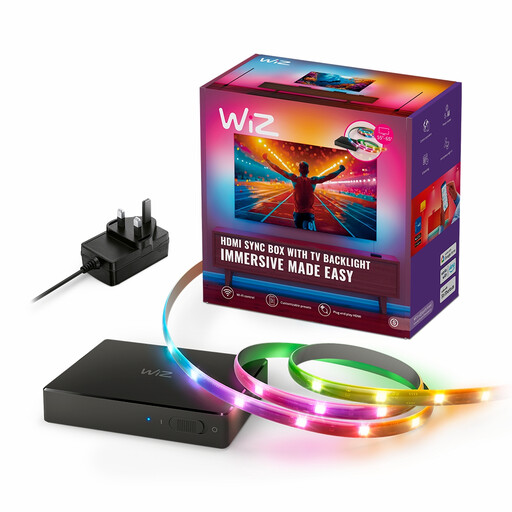
Why It Stands Out: This kit is a dedicated ambient lighting kit designed specifically to elevate your home cinema. Unlike camera-based systems that can have lag, the included Sync Box connects directly to your HDMI sources. It reads the video signal to perfectly match the on-screen colours, supporting high-quality formats like 4K at 60 Hz, HDR10+ and Dolby Vision.
Pros:
Who is it for?: This is an excellent choice for home theatre enthusiasts who want a seamless and high-performance lighting system that syncs directly with their movies and shows on 55" to 65" televisions.
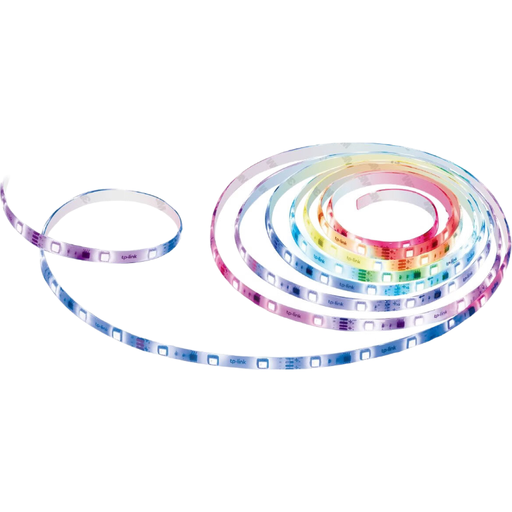
Why It Stands Out: The Tapo L920-5 offers impressive customisation without complexity. Its RGBIC technology allows you to control 50 separate colour zones along its 5-metre length. A key benefit is that it connects directly to your home's Wi-Fi network, meaning no additional hub or bridge is required, making it incredibly easy to set up.
Pros:
Who is it for?: Ideal for users who want highly customisable room lighting for bedrooms, living rooms or gaming setups and prefer a straightforward, hub-free installation process.
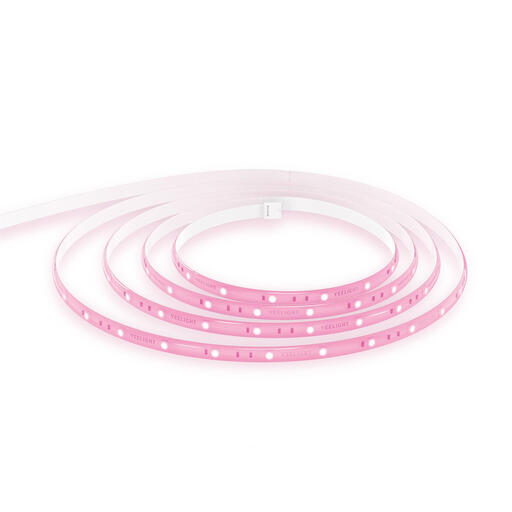
Why It Stands Out: The Yeelight 1S is a champion of flexibility, both in length and smart home integration. It can be extended up to 10 metres (32.8 ft), making it perfect for large-scale projects. More importantly, it boasts one of the widest compatibility ranges on the market, working with Amazon Alexa, Google Home, Samsung SmartThings and Apple HomeKit.
Pros:
Who is it for?: A great fit for tech-savvy individuals, especially those within the Apple ecosystem, who need a long, versatile light strip for ambitious projects like ceiling coving, outlining furniture or creating an extensive gaming battle station.
While these recommendations cover a range of popular uses, your perfect lighting solution might require a different length, feature set or price point. If you haven't found exactly what you're looking for, we invite you to explore our full collection of smart LED strip products to find the ideal match for your home.
1. Can you cut a smart LED light strip? Yes, most smart LED strips are designed to be cut to size. They have designated cut marks, usually indicated by a small scissor icon, along the strip. It is important to only cut at these points to avoid damaging the circuitry. Always consult the manufacturer's instructions before trimming.
2. Do smart LED lights use a lot of electricity? Generally, no. LED technology is highly energy-efficient compared to traditional incandescent or halogen bulbs. A smart LED light strip consumes very little power, especially when dimmed or displaying static colours. While usage varies by brightness and length, their impact on your electricity bill is typically minimal.
3. Do I need a smart hub for all LED light strips? Not anymore. While some systems do require a central hub or bridge to connect to your network, many modern strips now come with built-in Wi-Fi or Bluetooth. This allows them to connect directly to your router and smart home apps, simplifying the setup process. Always check the product specifications to see if a hub is required.