
24/7 Customer Support

Free returns

Same-day & Next-day Delivery

Quality Guaranteed
Download the APP
Categories
Choosing the right smart light bulb can feel like navigating a maze of technical terms: lumens, hubs, protocols and ecosystems. You want the convenience of voice control, the ambience of a colour-changing light bulb and the efficiency of modern LEDs, but without the headache of a complicated setup.
This guide is designed to cut through the jargon. As a Joybuy Product Recommendation Officer, my role is to provide clear, practical advice to help you select the ideal smart lighting for your home. We will explore the key features to consider and highlight a few standout options that cater to different needs and preferences.
Before you add anything to your basket, a little planning goes a long way. Focusing on these three areas will ensure you find a bulb that fits your home and lifestyle perfectly.
How your bulb connects to your network is the most important decision.
It is crucial to get the technical basics right. Most lamps and ceiling fixtures in the UK use a standard E27 smart bulb screw fitting, but always check your existing fixtures first.
Brightness is measured in lumens, not watts. A higher lumen count means a brighter light. For reference, an old 60W incandescent bulb is roughly equivalent to 800 lumens. A dimmable led bulb offers the flexibility to adjust the brightness from a soft glow to full illumination, all from your app or through voice commands.
Your smart bulb is only as good as the app that controls it. Consider how you want to interact with your lights. Do you want a simple app, or are you planning to integrate with a wider smart home system? Most major brands offer compatibility with popular voice assistants, turning your device into a voice control light bulb you can operate with Amazon Alexa, Google Assistant or Siri.
Based on features, ease of use and user feedback, here are our recommendations for 2026.
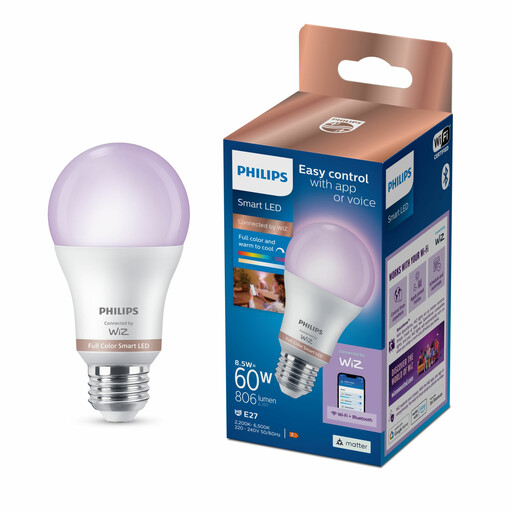
Why It Stands Out: This bulb is a fantastic all-rounder that makes smart lighting accessible to everyone. It operates on the WiZ platform, connecting directly to your Wi-Fi without needing a hub. With millions of colours and a range of white light temperatures, it offers immense versatility for setting any mood.
Pros:
Who is it for? This is the perfect choice for anyone starting their smart lighting journey. If you want a single colour changing light bulb or want to equip a few rooms without committing to a hub-based system, this bulb provides powerful features with minimal fuss.
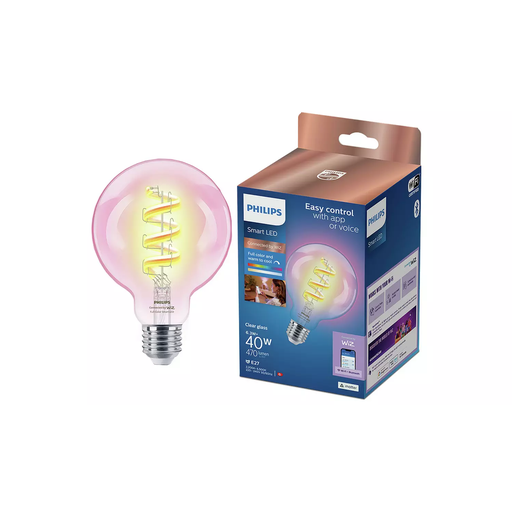
Why It Stands Out: This bulb proves that smart technology does not have to look futuristic. It combines the vintage aesthetic of a filament bulb with the full functionality of a modern smart light. The exposed filament design makes it a decorative piece, ideal for open fixtures where the bulb itself is part of the decor.
Pros:
Who is it for? This bulb is for the design-conscious user. If you have pendant lights, exposed-bulb lamps or any fixture where the bulb is visible, this model provides smart control without compromising on style.
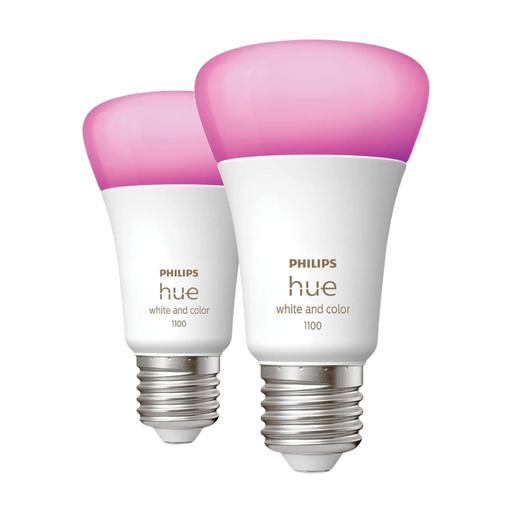
Why It Stands Out: The Philips Hue bulb is a cornerstone of the premium smart home world. This twin pack offers exceptional brightness at 1100 lumens and dual connectivity. You can start with simple Bluetooth control and later connect to a Hue Bridge to unlock the system's full potential, including syncing lights with music, games and films.
Pros:
Who is it for? This pack is ideal for those serious about building a comprehensive smart home. It suits both beginners who want a high-quality starting point and existing Philips Hue users looking to expand their system with brighter, more capable bulbs.
While these three bulbs represent excellent choices for different needs, the world of smart lighting is vast. If you are looking for a different fitting, style or feature set, you can find a solution tailored to your space.
Explore our full range of coloured light bulb options to find the perfect match for your home.
1. Do smart light bulbs use a lot of electricity? No, quite the opposite. Smart bulbs are almost exclusively LED-based, which makes them far more energy-efficient than traditional incandescent or halogen bulbs. Their standby power consumption is minimal, and the ability to schedule and automate them can lead to further energy savings by ensuring lights are only on when needed.
2. Can I use a smart bulb with a physical dimmer switch? It is strongly advised not to. A dimmable led bulb of the smart variety contains its own dimming electronics, which are controlled via the app or voice commands. Using an external, wall-mounted dimmer switch can interfere with the bulb's circuitry, leading to flickering, buzzing or permanent damage. Always use the smart controls to adjust brightness.
3. What is the difference between a Philips Hue bulb and a Philips WiZ bulb? Although both are made by the same parent company, Signify, they are designed for different systems. Philips WiZ bulbs (like the first two recommendations) are wifi light bulb models that connect directly to your router, offering a simple, hub-free experience. A Philips Hue bulb typically uses the Zigbee protocol and connects via a Hue Bridge. This creates a more powerful and reliable dedicated network, unlocking advanced features and a wider ecosystem of compatible products.