Stepping into the world of smart lighting can feel a little overwhelming. With terms like hubs, fittings and different connectivity options, it's easy to get lost. The goal is simple: to find a smart light bulb that makes your life easier, adds a bit of colour to your space and works without any fuss.
This guide is designed to cut through the clutter. We'll walk you through the key things to consider before you buy, from checking your light fittings to understanding the difference between Wi-Fi and Bluetooth control. Then, we'll share some of our top recommendations to help you find the right fit for your home, whether you're a student in a rented flat or a homeowner looking to build a fully automated setup.
Your Smart Lighting Buying Guide
Before you add anything to your basket, a few key considerations will ensure you get a bulb that works straight out of the box.
1. Check Your Fittings: B22 vs. E27
In the UK, most homes use one of two main types of light bulb fittings. Getting this right is the most important first step.
- B22 (Bayonet Cap): This is the classic British "push and twist" fitting with two small pins on the side of the base. If you're looking for a b22 smart bulb, this is the type you need.
- E27 (Edison Screw): This is a screw-in fitting, common across Europe and in many modern UK light fixtures and lamps. An e27 smart bulb has a threaded metal base.
The easiest way to check is to look at an existing bulb from the light fixture you plan to upgrade.
2. Choose Your Connection: Wi-Fi, Bluetooth or Hub?
How your bulb connects to your phone or smart speaker determines its features and ease of use.
- Wi-Fi Light Bulb: This type connects directly to your home's Wi-Fi router. The setup is usually straightforward through an app, and it's a great smart bulb no hub option. This is ideal if you're starting with one or two bulbs in a single room.
- Bluetooth Light Bulb: This is the simplest way to get started. The bulb connects directly to your smartphone via Bluetooth. The main limitation is range; you typically need to be in the same room to control the light. It's perfect for a desk lamp or a bedroom.
- Hub-Based Systems (e.g., Philips Hue Bridge): A hub is a small device that plugs into your router and acts as a dedicated brain for your entire lighting system. It uses a low-power signal (like Zigbee) that doesn't interfere with your Wi-Fi. This allows you to connect dozens of bulbs, control them from anywhere in the world and set up complex automations. This is the path for those serious about building a complete smart home.
3. Voice Assistant Compatibility
Most smart bulbs available today are designed to work with popular voice assistants. If you already own an Amazon Echo or Google Nest device, look for an Alexa compatible light bulb or one that "Works with Google Assistant" for hands-free control. This allows you to turn lights on, change colours and dim them with a simple voice command.
Our Top Product Recommendations
Here are a few standout options that cater to different needs, fittings and setups.
Philips Smart Light Bulb LED Globe Frosted Screw E27
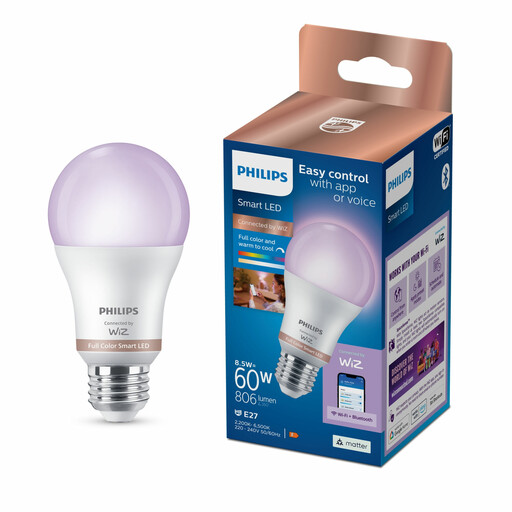
- Why It Stands Out: This bulb offers the full smart lighting experience with no extra hardware required. As a wifi light bulb, it connects directly to your network, allowing you to control it from anywhere via the WiZ app. It's a fantastic entry point into smart colour changing light bulb technology.
- Pros:
- No hub needed; connects directly to Wi-Fi.
- Offers millions of colours and a full spectrum of white light (warm to cool).
- Allows for scheduling and automation through the companion app.
- E27 screw fitting for compatibility with many modern lamps and fixtures.
- Who is it for?: Anyone with E27 fittings who wants to try a single colour changing light bulb or equip a room with smart lighting without committing to a hub-based system.
Philips Hue White & Colour Ambiance Smart Bulb Twin Pack LED B22 with Bluetooth
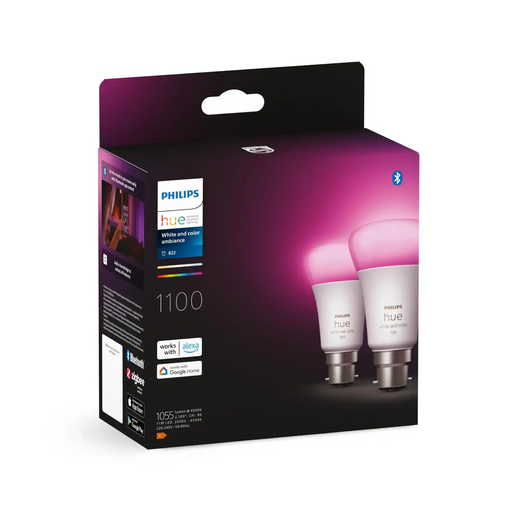
- Why It Stands Out: The Philips Hue range is known for its quality and extensive ecosystem, and this twin pack offers the ultimate flexibility. You can start immediately using Bluetooth light bulb control in a single room. Later, if you decide to expand, you can add a Hue Bridge to unlock whole-home control and advanced features.
- Pros:
- Dual connectivity: Use with Bluetooth out of the box or add a Hue Bridge later.
- Bright 1100 lumen output is great for lighting up larger spaces.
- B22 bayonet fitting is common in many UK homes.
- Fully compatible with Alexa, Google Assistant and Apple HomeKit (via Hue Bridge).
- Who is it for?: Those who want to start with a simple setup but keep the option open to build a powerful whole-home smart lighting system in the future.
Philips Smart Light Bulb LED Globe Frosted Bayonet B22 (2-Pack)

- Why It Stands Out: This twin pack provides a practical and cost-effective way to upgrade a room with bayonet fittings. Like its E27 counterpart, it operates on Wi-Fi, so there's no need for a hub. You get two full-colour bulbs that can be controlled independently or grouped together.
- Pros:
- Direct Wi-Fi connection for a simple hub-free setup.
- B22 bayonet fitting for traditional UK light fixtures.
- Twin pack offers good value for outfitting a room.
- Full colour and white spectrum control via the WiZ app.
- Who is it for?: Users with B22 fittings who want a straightforward and effective smart lighting solution for a bedroom, living room or office.
Looking for More Options?
These recommendations cover some of the most common needs, but the world of smart lighting is vast. If you're looking for different shapes, brightness levels or specialised outdoor lighting, there are plenty of other choices available.
Explore our full range of colourful lighting options to find the perfect match for your home.
Frequently Asked Questions
Do smart light bulbs use a lot of electricity?
No, quite the opposite. The vast majority of smart bulbs use LED technology, which is significantly more energy-efficient than old incandescent or halogen bulbs. A typical smart bulb uses less than 10 watts of power at full brightness. Plus, features like scheduling and remote control help ensure lights are only on when needed, potentially saving you money on your energy bills.
Can I use a smart light bulb in a normal lamp?
Yes, you can. As long as the bulb's fitting (B22 or E27) matches your lamp or light fixture, it will work just like a normal bulb. All the "smart" technology is built into the bulb itself, so you don't need any special wiring or fixtures. Just screw it in, switch it on and follow the app instructions to set it up.
Do I need a hub for a smart light bulb?
Not always. Many modern bulbs are a smart bulb no hub design, connecting directly to your home Wi-Fi or via Bluetooth to your phone. These are perfect for getting started. A hub, such as the Philips Hue Bridge, becomes beneficial when you want to build a larger system with 10+ bulbs, as it creates a more reliable dedicated network for your lights and unlocks advanced features like out-of-home control and syncing with entertainment.


