
24/7 Customer Support

Free returns

Same-day & Next-day Delivery

Quality Guaranteed

Unlock Your Welcome Offers: FREE Delivery | Up to 80% OFF | Free 30-day JoyPlus trial
Download the APP
Navigating the world of smart lighting can feel like walking through a maze of technical jargon and flashy marketing. You are promised a home that glows with perfect ambiance at the tap of a button, but the reality can often be a tangle of incompatible apps, dim colours and wasted money. As a Joybuy Product Recommendation Officer, my role is to help you sidestep these issues and find lighting that genuinely enhances your home.
Before you add anything to your basket, let's illuminate the three most common pitfalls that UK shoppers encounter and how to avoid them.
app controlled lights can slow down your internet. Furthermore, some budget options suffer from laggy responses or lose connection frequently, making that "smart" feature feel rather frustrating.led strip lights and bulbs fail to deliver. They produce pale, inaccurate shades of blue or green and lack the brightness (measured in lumens) to be anything more than a faint accent. This is especially disappointing when you're trying to create vibrant gaming lights or rich ambient mood lighting.smart light bulb, get it home, and discover it won’t work with your existing Alexa or Google Assistant setup. Or worse, the companion app is poorly designed, rarely updated and difficult to use. Being locked into a single, clunky system is a common frustration that limits the potential of your smart home.To ensure your new lighting is a long-term asset rather than a short-term gadget, focus on these key technical points.
Understanding how your lights connect is crucial.
Don't be swayed by colour count alone.
tv backlights, lower lumens are acceptable.The IP (Ingress Protection) rating is a non-negotiable check for lights used in kitchens, bathrooms or covered outdoor areas. It consists of two numbers: the first for dust protection and the second for water protection. For example, a smart ceiling light with an IP54 rating is protected against dust ingress and splashes of water from any direction, making it suitable for a steamy bathroom or above a kitchen sink where you might have under cabinet lighting.
Instead of a generic list, we've matched specific products to different user needs, ensuring you find a solution that fits your lifestyle.
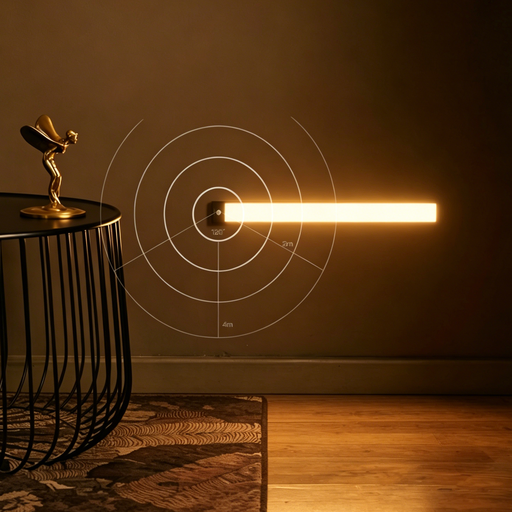
Why This Fits Their Persona: You need a simple, effective solution for dark spaces like wardrobes, hallways or kitchen counters. This light is wireless, rechargeable and installs in seconds with a magnetic strip, offering instant functionality without any complex setup.
It sidesteps the ecosystem trap entirely. As a dedicated motion sensor light, it doesn't need an app or hub, providing reliable, hands-free illumination exactly where you need it.
Its key advantage is its simplicity and portability. The magnetic mount allows for easy removal for recharging via USB and its warm light is gentle on the eyes during late-night trips to the kitchen.
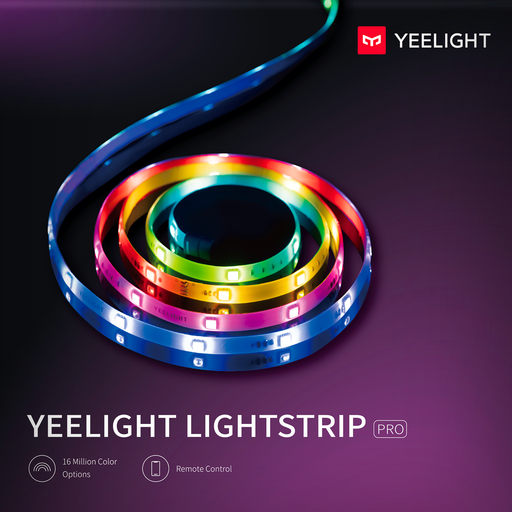
Why This Fits Their Persona: For those building a dedicated gaming setup or home cinema, this lightstrip offers advanced features. It is designed to sync with games and music, creating a truly immersive experience that standard colour changing lights cannot match.
It directly counters the "washed-out colour" trap. With RGBIC technology, it can display multiple colours on a single strip simultaneously, producing fluid, vibrant lighting effects rather than a single, flat colour.
The main advantage is its software integration. It works with popular gaming platforms (like Razer Chroma) and has a well-supported app for deep customisation, ensuring it won't become an obsolete, unsupported gadget.

Why This Fits Their Persona: If you're upgrading a room and want a sleek, integrated primary light source, this is an excellent fit. Its ultra-slim profile blends into modern ceilings and it provides both functional main lighting and an RGB backlight for ambiance.
This light is built for purpose. Its IP54 waterproof and dustproof rating means it's specifically designed for use in kitchens and bathrooms, avoiding the common mistake of installing an unsuitable fixture in a damp environment.
It combines two functions in one: a powerful main light and a separate RGB backlight for ambient mood lighting. It connects via Wi-Fi without a hub and works with Alexa and Google Assistant, offering a streamlined, high-performance solution.
We have compiled a complete, real-time list of products that fully satisfy these strict selection criteria and UK safety regulations.
A common concern is whether smart features increase your energy bill. The opposite is usually true. Smart lights use LED technology, which is significantly more energy-efficient than traditional incandescent or halogen bulbs. Furthermore, features like scheduling, dimming and motion sensors mean the lights are only on when needed, which can lead to further savings on your electricity costs.
Not necessarily. Many smart light bulbs and strips connect directly to your home's Wi-Fi network and are controlled via a smartphone app. These are great for getting started. However, if you plan to install many smart lights throughout your home, a system that uses a hub (like Zigbee or Matter) is often more reliable and won't slow down your internet for other activities like streaming or gaming.
For plug-in products like led strip lights or standalone lamps, installation is a simple DIY task. However, for hardwired fixtures like a smart ceiling light, UK electrical safety regulations apply. Unless you are a qualified electrician, it is always recommended to hire a professional to ensure the installation is safe and compliant.