
24/7 Customer Support

Free returns

Same-day & Next-day Delivery

Quality Guaranteed

Unlock Your Welcome Offers: FREE Delivery | Up to 80% OFF | Free 30-day JoyPlus trial
Download the APP
Stepping into the world of smart lighting can feel like a significant upgrade for your home. The ability to change the mood of a room with a voice command, set lights to wake you up gently, or ensure your home looks occupied while you are away offers a new level of convenience and atmosphere. However, with so many options available—from individual smart bulbs to complex systems—it can be difficult to know where to begin.
This guide is designed to cut through the technical jargon and marketing clutter. We will walk you through the key considerations for choosing the right setup for your needs, whether you are a tech-savvy homeowner, a student in a rented flat, or a gamer looking to create a more immersive experience. We will explore different types of smart lights and offer some practical recommendations to help you make an informed decision.
Before you start adding items to your basket, it is helpful to understand a few core concepts. Getting these right will ensure your new lighting works seamlessly within your home.
One of the first decisions you will face is whether to opt for a system that requires a central hub or one that connects directly to your home network.
Smart lighting is not just about standard bulbs. Consider what you want to achieve in your space.
If you already use a smart speaker, ensure your chosen lights are compatible. Most major brands work with the popular platforms, but it is always worth checking for "Works with Alexa" or "Hey Google" compatibility. This allows for hands-free control, making it easy to turn lights on or off, dim them, or change colours with simple voice commands. Many systems also integrate with Apple HomeKit.
Here are a few recommendations that cater to different needs and spaces, from simple bulb replacements to dynamic accent lighting.
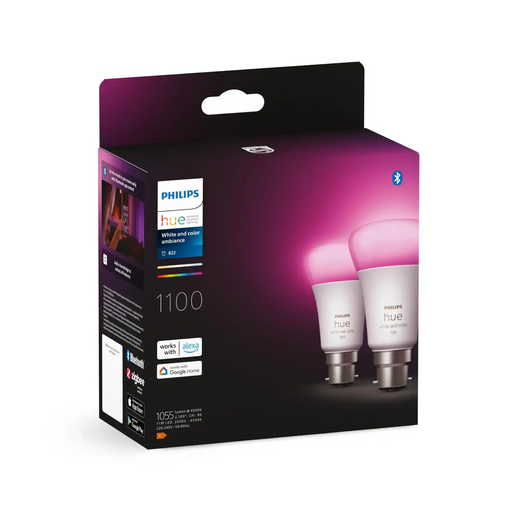
Why It Stands Out: These bulbs offer the best of both worlds. You can start immediately using Bluetooth for simple, single-room control directly from your phone. When you are ready to expand, adding a Hue Bridge unlocks the full potential of the system for whole-home automation and control from anywhere.
Pros:
Who is it for? This pack is ideal for anyone new to smart lighting. It is perfect for renters or students who want to start in one room, as well as for homeowners who plan to build a comprehensive smart home system over time.
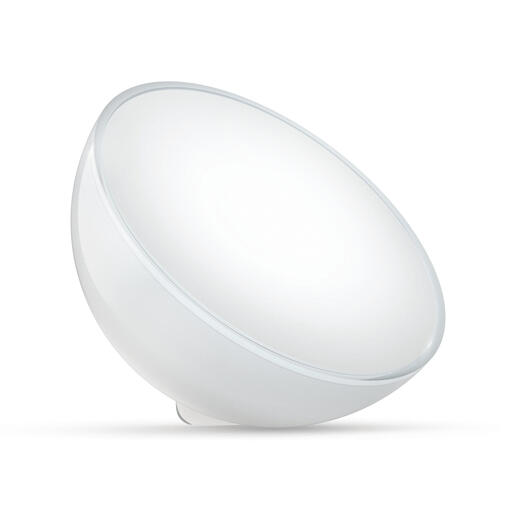
Why It Stands Out: The Hue Go is a truly portable smart light. With a built-in rechargeable battery, you are not tied to a power socket. You can carry it from the living room to the bedroom or use it as a centrepiece for a dinner party, all while enjoying the full range of Hue colours and effects.
Pros:
Who is it for? This is for those who value flexibility. It is an excellent choice for creating accent lighting, for renters who cannot install permanent fixtures, or for anyone wanting to add a dynamic and colourful light source to different areas of their home on demand.
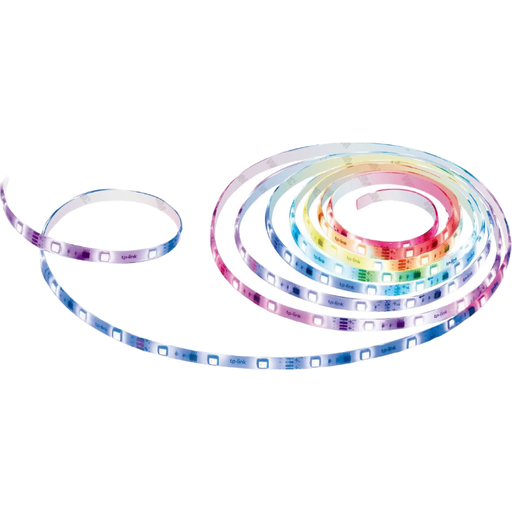
Why It Stands Out: This LED light strip connects directly to your Wi-Fi without needing a hub. Its standout feature is the ability to control 50 separate colour zones along the strip, allowing you to display multiple colours at once for stunning gradients and animated effects.
Pros:
Who is it for? This is a fantastic option for gamers, home cinema fans, or anyone wanting to create dramatic ambient lighting. It is perfect for backlighting a TV or monitor, running under a desk, or highlighting architectural details in a room.
While these recommendations cover some of the most popular uses for smart lighting, every home is different. If you are looking for different styles, fittings, or outdoor solutions, you can find a wider selection to suit your specific project.
Explore our full collection of Smarthome lighting to find the perfect match for your space.
No, quite the opposite. The vast majority of smart bulbs and strips use LED technology, which is significantly more energy-efficient than traditional incandescent or halogen bulbs. While they consume a very small amount of power in standby mode to stay connected to your network, this is typically less than 0.5 watts and has a negligible impact on your electricity bill.
Generally, yes, as long as you choose a bulb with the correct base. In the UK, the most common fittings are the B22 bayonet cap and the E27 screw cap. It is also wise to check the physical dimensions of the bulb to ensure it will fit inside your lamp's shade or housing, as some smart bulbs can be slightly larger than their non-smart counterparts.
Not necessarily. Many systems, like the Philips Hue bulbs recommended above, can be controlled directly from your smartphone using Bluetooth. This is perfect for single-room setups. However, for whole-home control, remote access when you are away and more complex automation, a Wi-Fi connection is required, either for the bulbs themselves (Wi-Fi light bulbs) or for the hub that controls them.