
24/7 Customer Support

Free returns

Same-day & Next-day Delivery

Quality Guaranteed

Unlock Your Welcome Offers: FREE Delivery | Up to 80% OFF | Free 30-day JoyPlus trial
Download the APP
Transforming the feel of a room can be as simple as changing the light. With smart lighting, you can shift from a focused, bright workspace to a warm, relaxing glow with just a tap on your phone or a simple voice command. However, the sheer variety of options—from individual smart light bulbs to complex RGB LED strip systems—can be overwhelming.
As the Joybuy Product Recommendation Officer, my role is to help you navigate these choices. This guide offers practical advice to help you find the right app controlled lights for your home, whether you're creating the ultimate gaming setup, an immersive home cinema or simply want to perfect your daily mood lighting.
Before you add anything to your basket, consider these key factors. A little planning ensures you get a system that works for you and your space.
How your lights connect to your network is a crucial first step.
Different lighting products serve different purposes.
Based on features, versatility and user applications, here are some standout options available right now.
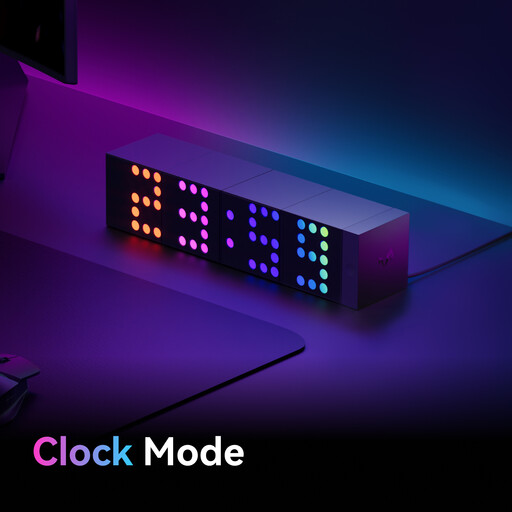
Why It Stands Out: The Yeelight Cube system moves beyond simple illumination into the realm of interactive art. These modular blocks can be arranged in any configuration you can imagine, making them a centrepiece for a gaming desk or a living room wall. Each cube features customisable colour zones, allowing for incredibly detailed and fluid lighting effects that can sync with music and games for a truly dynamic experience.
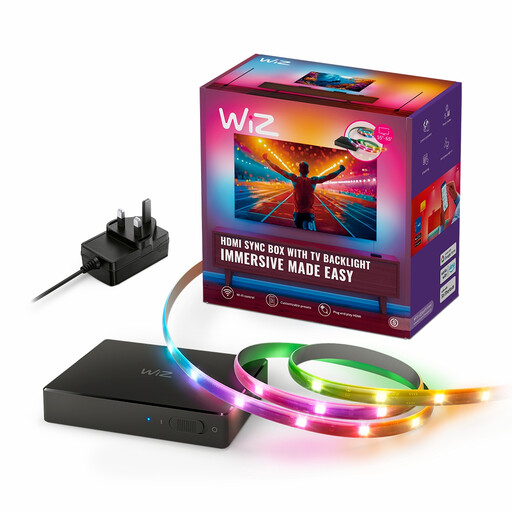
Why It Stands Out: This kit is specifically designed to create immersive TV backlights. Unlike camera-based systems that can have a slight delay, the included Sync Box analyses the signal directly from your HDMI source (like a Sky box, PlayStation or Apple TV). This ensures perfect, real-time synchronisation between the colours on your screen and the light cast on the wall behind it. It supports high-quality video standards, including 4K at 60Hz, HDR10+ and Dolby Vision.
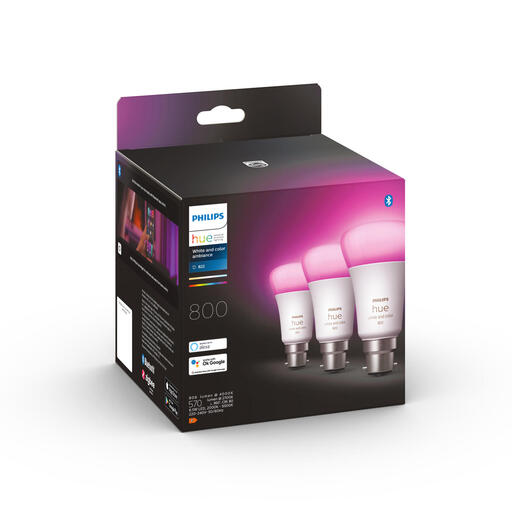
Why It Stands Out: The Philips Hue system is a benchmark for smart lighting, known for its reliability and extensive features. This triple pack of B22 bulbs—the standard bayonet cap fitting in many UK homes—is a versatile starting point. You can begin with a simple, room-based Bluetooth setup and later expand to a whole-home system by adding a Hue Bridge. With 16 million colours and a wide range of white light, these bulbs can do everything from providing bright task lighting to creating the perfect ambient lighting for a party.
These recommendations cover some of the most popular uses for smart lighting, but the possibilities are nearly endless. If you're looking for different bulb fittings, alternative strip lengths or other creative lighting systems, there are many more solutions to discover.
For a wider selection, explore our full range of Illuminated packages.
Q: Do smart light bulbs use a lot of electricity? A: No, quite the opposite. Smart bulbs use LED technology, which is significantly more energy-efficient than traditional incandescent or halogen bulbs. A smart bulb uses a very small amount of power in standby mode to stay connected to your network, but this is typically less than 0.5W, making its overall energy consumption very low.
Q: Can I use smart lighting with my existing light switches? A: Yes, but with a small catch. A smart bulb needs constant power to receive commands from your app or voice assistant. If you turn it off at the wall switch, it loses power and behaves like a normal bulb until the switch is turned back on. For the best experience, it is recommended to leave the physical switch on and control the lights using your smart device.
Q: Do I need a special hub for all smart lighting? A: Not anymore. Many modern smart lights, including options from Yeelight and WiZ, connect directly to your home's Wi-Fi network. Others, like Philips Hue, offer a choice: you can start with a hub-free Bluetooth setup for a single room or use a hub (Bridge) to unlock whole-home control, automations and enhanced performance for a larger number of lights.