
24/7 Customer Support

Free returns

Same-day & Next-day Delivery

Quality Guaranteed

Unlock Your Welcome Offers: FREE Delivery | Up to 80% OFF | Free 30-day JoyPlus trial
Download the APP
Bringing greenery into our homes is a joy, but keeping it alive can be a challenge, especially with a busy schedule. The market is now filled with the promise of a simple solution: the smart plant pot. These gadgets claim to take the guesswork out of watering and care. Yet, many end up being little more than expensive novelties that fail to deliver.
As the Joybuy Product Recommendation Officer, my role is to help you see past the marketing and focus on what truly matters. Before you invest in an AI planter, it's crucial to understand the common pitfalls that can lead to disappointment and a wilting plant.
The 3 Traps to Avoid When Buying a Smart Plant Pot:
To ensure your investment helps your plants thrive, focus on these key technical aspects. This is where you can separate a genuinely helpful device from a short-lived gadget.
A reliable smart flower pot should move beyond a simple moisture meter. Look for models equipped with a multi-sensor system. Key sensors to check for include:
A device that integrates these data points offers a far more accurate picture of your plant's environment, forming the basis of true intelligent plant care.
Consider how the device is powered. Is it tethered to the wall with a cable, or does it use a rechargeable battery? If it's battery-powered, what is the realistic duration between charges? A pot that needs daily charging is more hassle than a traditional one. Look for a substantial battery capacity (e.g., 2000mAh) and clear information on usage or standby time. Furthermore, check for safety and quality marks like CE Certification, which indicates compliance with EU/UK health, safety and environmental protection standards.
Finally, remember it is still a home for a living thing. The design must be practical.
We've analysed the market based on the criteria above. Instead of a simple list, we've matched our recommendations to different types of users, helping you find the right fit for your lifestyle.
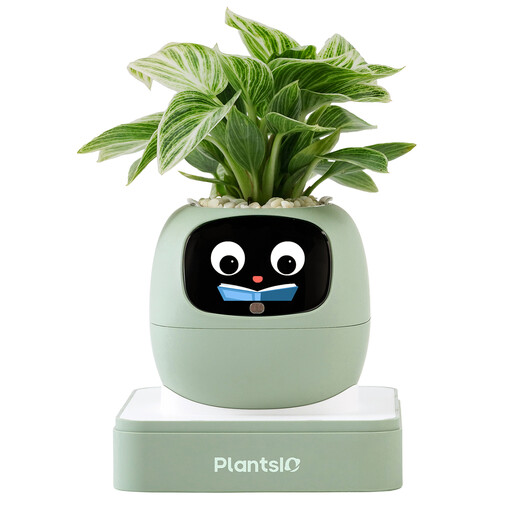
Why This Fits Their Persona: This is more than a planter; it's an interactive companion. It's perfect for someone who loves gadgets and wants a fun, engaging way to connect with their home environment. Its character-like design makes it an excellent and memorable unique tech gift.
It avoids the "gimmick" trap by linking its 80+ facial expressions directly to data from its humidity, light and water level sensors, providing genuinely useful and intuitive feedback.
The anthropomorphic interaction turns plant care from a chore into a delightful experience. It is CE and RoHS certified, ensuring it meets UK safety and environmental standards.
Why This Fits Their Persona: This is the ideal plant pot for busy people or those new to plant care. It provides unmissable visual cues—like a sad face when thirsty—that remove the mental load of remembering a watering schedule. It effectively acts as a friendly, low-maintenance plant sitter.
It avoids the "dumb" self-watering trap by using its sensors to prompt for action only when needed, preventing the constant dampness that leads to root rot in simpler reservoir-based pots.
The combination of a 2000mAh battery and multiple high-precision sensors ensures reliable, long-term monitoring without constant intervention or charging.

Why This Fits Their Persona: For some, the plastic look of a tech gadget clashes with their decor. This planter prioritises material and form, offering a timeless, handcrafted piece that enhances a room's aesthetic. It's for the person who enjoys the mindful ritual of manual plant care.
It completely sidesteps the risks of electronic failure or sensor inaccuracy by focusing on one thing: being a high-quality, well-designed home for a plant. There are no electronics to fail.
Crafted from 100% stoneware, it provides a durable, premium feel with an organic, textured charm that cannot be replicated in plastic. Its geometric drum shape is modern and versatile.
We have compiled a complete, real-time list of products that fully satisfy these strict selection criteria and UK safety regulations.
They can be a worthwhile investment for specific users. If you are a busy professional, a student living in a small flat or someone who struggles to keep plants alive, the automated reminders and data-driven care from a device like an AI planter can make all the difference. However, if you enjoy the hands-on process of gardening or prioritise a specific aesthetic, a high-quality traditional planter may be a more satisfying choice.
No, and this is a critical point. Most smart pots are designed for small-to-medium common houseplants, herbs or succulents. Always check the internal pot dimensions before purchasing. The Ivy pot, for instance, has a soil section of approximately 5.5cm x 5.5cm, making it ideal for starter plants or small species. It is not suitable for plants that require a large root system.
The lifespan depends on the build quality of both the pot and its electronic components. The physical pot should last for many years, but the electronics have a finite life. Look for products with CE certification, as this suggests a higher standard of manufacturing. The battery is also a key factor; a model with a high-capacity, rechargeable battery will typically offer better long-term value than one with non-replaceable batteries. Expect the electronic functions to last for 3-5 years, similar to other small home electronics.