
24/7 Customer Support

Free returns

Same-day & Next-day Delivery

Quality Guaranteed

Unlock Your Welcome Offers: FREE Delivery | Up to 80% OFF | Free 30-day JoyPlus trial
Download the APP
Smart scales can make weight management, meal planning and household measurements more convenient—but only when the product matches the way you intend to use it. A nutritional food scale is not a substitute for a digital bathroom scale, while a body composition scale may provide more information than you actually need.
Before buying, look beyond app compatibility and glossy product images. The practical differences are usually found in capacity, measurement increments, power source, platform materials and how the data is collected.
Bluetooth weighing scales may connect to several apps, but this does not automatically make them suitable for your routine. Check whether the scale works with the specific platform you already use, such as Apple Health, Google Fit, Samsung Health or MyFitnessPal. Also consider whether you need automatic food logging, multiple user profiles or simply a clear weight reading.
A calorie tracking scale can be helpful for portion control, but nutritional values depend on the food database and the accuracy of the item selected in the app. Treat app-generated nutrition information as a tracking aid rather than a precise dietary assessment.
A scale showing measurements in 1g increments may be useful for baking, coffee and portion control. However, its maximum load may be unsuitable for larger bowls or batch cooking. Conversely, a body scale with a high weight capacity is designed for a different purpose and will not provide the fine measurements needed for ingredients.
Check both the maximum capacity and the measurement increment before purchasing.
Digital bathroom scales generally need a flat, hard floor. Carpets, uneven tiles and damp surfaces can affect readings and create a slipping risk. Body composition scales using BIA also require bare, dry feet and stillness during the reading.
Kitchen scales face different issues. Food residue, liquid spills and difficult-to-clean surfaces can shorten their practical lifespan. Stainless steel or removable dishwasher-safe components can make everyday cleaning easier.
For smart kitchen scales, a capacity of up to 5kg and 1g increments covers many household uses, including baking, portioning and meal preparation. A 1kg bowl may be enough for individual portions, but a larger 3kg capacity gives more flexibility when weighing ingredients in a container.
For smart body scales, check the maximum supported weight and whether readings are shown in kilograms, pounds or both. A 180kg capacity may suit a wider range of households, but the scale must still be placed correctly and used according to its instructions.
Bluetooth connectivity is convenient, but it can add setup steps. Confirm that the app is available for your phone’s operating system and check whether Bluetooth must remain enabled during weighing. Families may also want unlimited user profiles or automatic user recognition.
For kitchen scales with app support, look for functions such as saved recipes, custom foods, nutrient breakdowns and integration with existing food diaries. If you prefer fewer running costs and less setup, a non-connected scale may be more suitable.
Stainless steel platforms are easy to wipe, while tempered glass is commonly used on bathroom scales and some kitchen models. Glass should be handled carefully and kept away from impact or excessive moisture.
Power sources vary. Battery-powered scales need replacement batteries, whereas rechargeable models require USB-C charging. Battery-free kitchen scales use kinetic energy, avoiding disposable batteries but requiring the user to wind or turn the mechanism before use.
When buying in the UK, check the product instructions, supplied accessories, warranty terms and relevant conformity markings. Do not use a household scale for medical or commercial purposes unless the product is specifically designed and approved for that use.
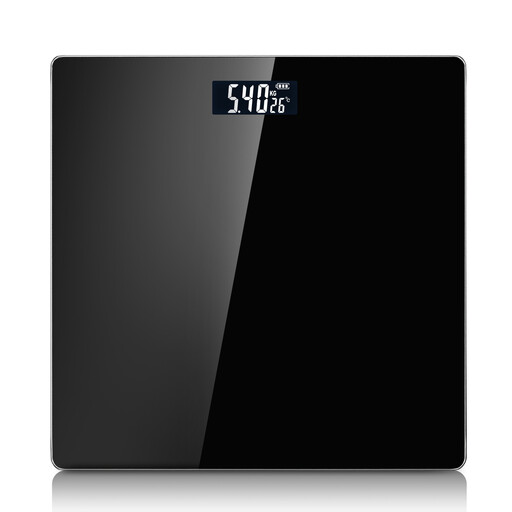
Why This Fits Their Persona: A straightforward choice for UK households wanting a digital bathroom scale without app setup or body composition features.
It does not promise unnecessary app metrics. Place it on a hard, flat surface and use the clear kg or lb display for consistent readings.
180kg capacity, 0.05kg increments, tempered glass platform and LCD display. Requires two AAA batteries, which are not included.

Why This Fits Their Persona: Suitable for cooks, fitness users and families who want food weighing combined with app-based nutrient logging.
Its specification lists both the 5kg capacity and 1g increment, while the stainless steel surface is designed for simple wipe-clean maintenance.
Bluetooth connection, backlit LCD, tare function, multiple units and support for RENPHO Health, MyFitnessPal, Apple Health and Google Fit.
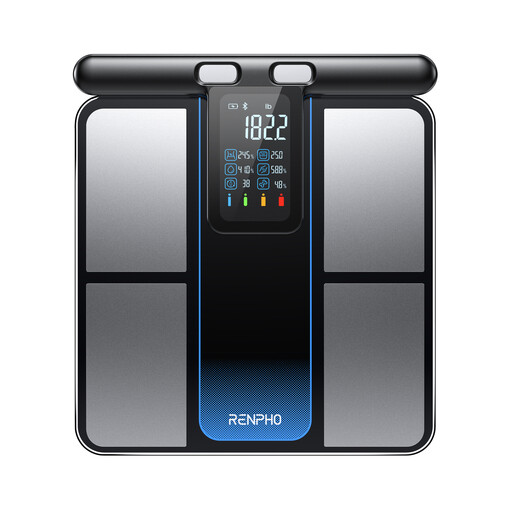
Why This Fits Their Persona: Designed for users who want weight and body composition trends recorded through a connected app.
It separates ordinary weight readings from BIA-based estimates. Use consistent conditions and avoid treating body composition figures as medical measurements.
Supports up to 180kg, Bluetooth app synchronisation, multiple profiles and upper-body analysis using eight electrodes.
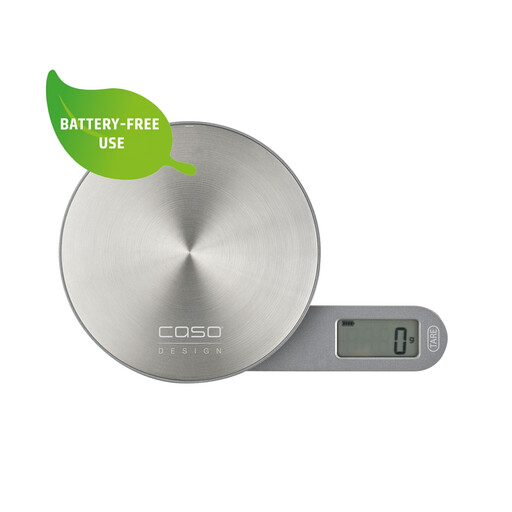
Why This Fits Their Persona: A practical option for cooks who want precision food scales without disposable batteries or app accounts.
The battery-free design avoids replacement battery costs. Remember that the swivel arm needs winding, providing up to three minutes of operation per wind.
5kg capacity, 1g increments, tare function, stainless steel surface, LCD display and magnetic base for storage.
We have compiled a complete, real-time list of products that fully satisfy these strict selection criteria and UK safety regulations.
They can be worthwhile if connected records help you maintain a regular routine. Choose smart body scales when you want app-based weight or body composition trends, and smart kitchen scales when portion and nutrient tracking are central to your goals. If you only need occasional measurements, a basic digital scale may involve less setup.
There is no universal replacement timetable. Check the platform for cracks, inspect the battery compartment and monitor inconsistent readings. Recalibrate or reposition the scale after moving it, and replace it if the display, sensors or platform are damaged. Follow the manufacturer’s warranty and care instructions.