
24/7 Customer Support

Free returns

Same-day & Next-day Delivery

Quality Guaranteed

Unlock Your Welcome Offers: FREE Delivery | Up to 80% OFF | Free 30-day JoyPlus trial
Download the APP
Smart scales can make everyday weighing more convenient, but the term covers several very different products. A Bluetooth kitchen scale may help log ingredients, while a digital bathroom scale may simply display body weight. Body composition scales add app-based metrics, but their readings require more careful interpretation.
For UK households, the right choice depends on what you actually want to measure, how often you will use the device and whether its capacity, connectivity and placement suit your home. Before buying, watch for these common pitfalls.
A display showing 0.05kg or 1g precision does not mean every reading will be equally consistent in every situation. Bathroom scales can be affected by carpet, uneven flooring, damp feet and changes in position. Kitchen scales may give unstable readings if placed near a vibrating appliance or overloaded with a large bowl.
Look for clear information about capacity, minimum weighing range, graduation and recommended surface rather than relying on phrases such as “high precision” alone.
Some body fat scales list 13, 25 or more measurements, including BMI, muscle mass, body water and biological age. These figures are generally generated through bioelectrical impedance analysis (BIA) and can vary with hydration, skin contact, time of day and foot placement. They should not be treated as medical assessments.
If your main goal is weekly weight tracking, a straightforward digital bathroom scale may be more practical than paying for app features. If you want nutritional food scales, check whether the app supports the foods, recipes and tracking platforms you already use.
Battery-powered models may need AAA batteries, while rechargeable scales need occasional USB charging. Some app-connected scales also require a compatible phone and permission for Bluetooth or health-data synchronisation.
Tempered glass surfaces are easy to wipe, but they must be kept dry and protected from strong impacts. A scale that looks attractive in a product photo may be inconvenient if it cannot be stored safely or is difficult to read in your bathroom lighting.
For baking, portion control and dietary tracking, 1g increments are useful for measuring flour, spices and smaller ingredients. A kitchen model with a 5kg capacity is suitable for many recipes, while a 10kg model provides more flexibility for large bowls and batch cooking.
For body weight, check the maximum load and graduation. A scale rated to 180kg may suit a wider range of household users than a compact model with a lower limit. Always use digital bathroom scales on a hard, level floor such as tile or wood. Carpets can interfere with the sensors.
Bluetooth scales can transfer readings to a companion app, but features differ considerably. Check whether the app records only weight or also supports calorie, protein and carbohydrate logging. For dietary tracking, integration with platforms such as Apple Health, Google Fit or MyFitnessPal may reduce duplicate data entry.
Also consider whether the scale supports multiple users. This is useful for families, but profile recognition may require each person to set up an account or pair a phone.
Tempered glass is common on bathroom and body composition scales because it provides a smooth, wipe-clean surface. Stainless steel is also practical for kitchen weighing scales, particularly when measuring ingredients regularly.
Prioritise a readable LCD or LED display, stable feet and clear instructions. Do not use glass scales with wet feet, on damp floors or if the platform is cracked. People with pacemakers or other implanted electronic devices should follow the product safety guidance and avoid BIA functions where instructed. Pregnant users should also check the manual and use weight-only measurement if advised.
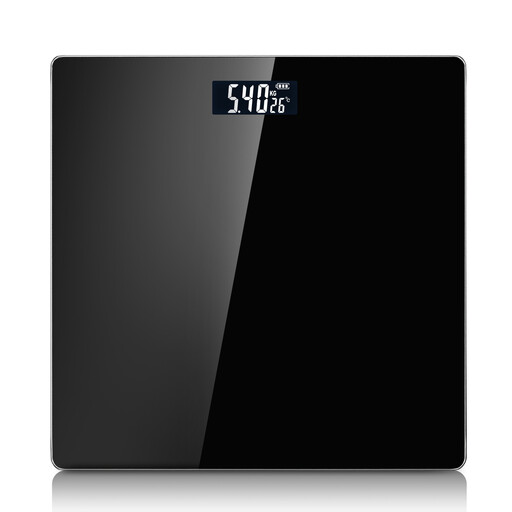
Why This Fits Their Persona: A simple option for shoppers who want daily weight readings without app pairing or body composition features.
Its stated 180kg capacity and 0.05kg graduation are clearly specified, while the basic LCD display avoids paying for unused app functions. Two AAA batteries are required and not included.
Compact 26 × 26cm format, KG/LB switching and a 4mm tempered glass platform.

Why This Fits Their Persona: Suits home cooks, bakers and fitness-focused households that want ingredient weighing combined with nutrition logging.
The listing states the supported app, units and 5kg capacity, so buyers can check suitability before purchase instead of assuming every food scale offers the same database.
1g increments, stainless steel surface, backlit LCD and compatibility with RENPHO Health, Apple Health, Google Fit and MyFitnessPal.

Why This Fits Their Persona: Designed for batch cooking, large bowls and users who want Bluetooth-supported portion and dietary tracking in the kitchen.
Its 10kg maximum capacity and 3g minimum weighing specification are stated separately, helping buyers distinguish load capacity from small-quantity performance.
1g graduation, Bluetooth connectivity, multiple units including ml and lb:oz, plus a wipe-clean 3mm tempered glass surface.
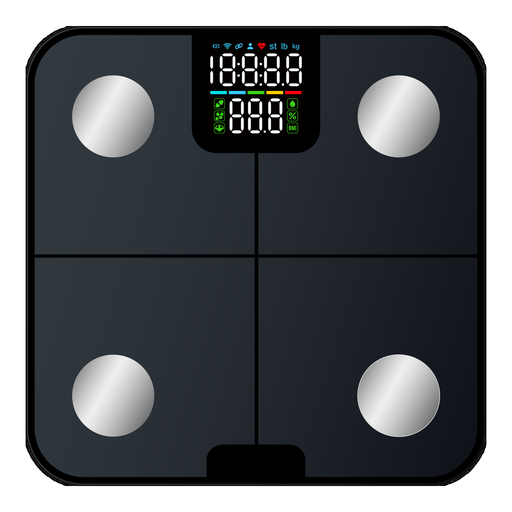
Why This Fits Their Persona: Appropriate for users interested in trend tracking across multiple body metrics through a Bluetooth Low Energy app connection.
The product information lists the 180kg capacity, Bluetooth 5.4 connection and usage restrictions for BIA measurements. Metrics should be viewed as household tracking data, not medical conclusions.
Lists 25 body metrics, supports kg, lb and st, and uses a 61 × 58mm hidden LED colour display.
We have compiled a complete, real-time list of products that fully satisfy these strict selection criteria and UK safety regulations.
They can be useful if app synchronisation, dietary logging or long-term trend charts fit your routine. If you only need occasional weight measurements, a non-connected digital bathroom scale may offer a simpler setup and lower purchase cost.
No. BIA-derived body composition figures can change according to hydration, contact and measurement conditions. Treat them as reference data for observing trends, not as a diagnosis or substitute for medical advice. Follow the product’s restrictions if you have an implanted electronic device or are pregnant.
Most models use AAA batteries, although some kitchen scales have rechargeable or battery-free designs. Running cost depends on usage, battery type and automatic switch-off behaviour. Check whether batteries are included, as several models specify that they are not.