If you want to hear films through the speaker, start with your TV setup: Amazon documents Echo Studio for specified Fire TV home-cinema configurations, while Apple supports HomePod mini with Apple TV 4K under its stated conditions. If you mainly stream soundtrack albums, one compact speaker takes less room; choose a compatible pair only if you have space for two speakers and want left-right separation.
Who this choice matters to
Listeners who want sound from their TV
If you want to hear the film itself rather than play a soundtrack album from your phone, check the exact TV, streaming device and speaker combination. Amazon and Apple describe different, device-specific routes for television audio.
Soundtrack streamers with limited space
If albums and playlists are your priority, a compact speaker may fit more easily on existing furniture. Sonos and Apple document streaming and same-model pairing options that let you assess whether to start with one speaker or plan for two.
Households weighing voice control and privacy
Choose an assistant ecosystem you are comfortable using, then review its microphone controls, app permissions and data settings. The Information Commissioner's Office also advises checking how long the maker says it will provide security updates.
What to check before buying
Decide whether the sound needs to come from your television or from streamed soundtrack albums. That choice determines which connections matter before you weigh placement, stereo pairing and voice controls.
Echo Studio with Fire TV
Consider it when: You want film audio and Alexa control through a Fire TV configuration supported by Amazon.
The trade-off: Home-cinema support depends on the particular Fire TV device, Echo generation and, for some other TV sources, HDMI-ARC arrangement.
HomePod mini with Apple TV 4K
Consider it when: You use Apple TV 4K and want a compact speaker that also fits an AirPlay and Siri setup.
The trade-off: Apple says HomePod mini does not support Dolby Atmos 5.1 or 7.1 surround sound; routing other television audio requires the specified Apple TV 4K and HDMI ARC/eARC setup.
A speaker for streamed albums
Consider it when: You mainly play film scores from a streaming service or phone rather than needing sound from the TV.
The trade-off: Do not assume a streaming connection also provides a supported TV-audio route. Sonos Era 100, for example, needs a separate Sonos adapter for line-in.
| Concern |
What to check |
Who this matters to |
| Television audio |
Check the exact TV, streamer and speaker models, including any HDMI ARC/eARC requirements. |
If I want to hear films, not just stream their albums, I need a documented path from my TV to the speaker. Around 33% of consumers put TV-audio compatibility first. |
| Compact placement |
Measure the intended surface and check that the speaker and its power lead can be placed safely. |
With little furniture space, I want the speaker to fit without taking over the TV area. Compact placement is the primary need for around 27% of consumers. |
| Stereo separation |
Confirm same-model pairing support and whether two speakers can be positioned in the room. |
If left-right separation matters more to me than keeping the setup to one unit, I need space and power for a pair. Around 27% of consumers prioritise stereo separation. |
| Assistant and privacy |
Review microphone controls, app permissions and the maker's stated security-update support. |
Before adding a voice assistant to my living room, I want to understand its controls and data settings. Privacy and ecosystem fit come first for around 13% of consumers. |
Mistakes to avoid
-
Assuming any streaming speaker can replace TV speakers
Wi-Fi or Bluetooth playback does not by itself establish a route for television sound. Amazon and Apple tie their documented TV-audio options to particular device combinations.
Note your exact TV, streamer and speaker models, then check the supported combination before ordering.
Depending on the setup you already own, a compatible streaming device or TV connection may also be needed.
-
Expecting left-right stereo from one speaker
A stereo pair uses two compatible speakers. Apple documents HomePod mini pairing, while Google says its supported speaker pairs must use identical models in the same room.
Check pairing support and choose a pair only if you can give both speakers suitable positions.
A pair also needs a second placement position and power socket.
-
Reading a Dolby Atmos label as a promise for every setup
Apple states that HomePod mini does not support Dolby Atmos 5.1 or 7.1 surround sound, and Amazon's home-cinema configurations have device-specific conditions.
Check format support across the source, streaming device, TV connection and exact speaker generation.
-
Leaving privacy choices until after setup
A connected voice assistant brings account, microphone and app-permission decisions into the living room. The Information Commissioner's Office advises checking data practices and security-update support.
Review permissions and microphone controls during setup, and disable access you do not need.
Relevant brands to consider
Amazon Echo
An Alexa-based route for households considering Echo Studio with Fire TV.
- Amazon lists Echo Studio in specified Alexa Home Cinema configurations.
- The supported Fire TV devices, Echo generations and HDMI-ARC conditions vary by configuration; check the complete setup.
Apple HomePod
A compact Siri and AirPlay route for households using Apple TV 4K.
- Apple documents AirPlay 2 and same-model stereo pairing for HomePod mini, as well as home-cinema audio with Apple TV 4K.
- Apple says HomePod mini does not support Dolby Atmos 5.1 or 7.1 surround sound. Other television audio through ARC/eARC has further TV and Apple TV prerequisites.
Sonos
A speaker-system option for households mainly streaming soundtrack albums.
- Sonos documents Wi-Fi, Bluetooth and AirPlay 2 listening for Era 100.
- Era 100 line-in requires a separate Sonos adapter; do not assume the speaker alone provides a TV-audio connection.
Google Home and Nest
A Google ecosystem option for households planning a compatible speaker pair.
- Google documents stereo pairing for supported identical models in the same room and describes a Google Home Speaker (2026) pair for Google TV Streamer audio.
- Check the exact model and its availability before choosing this route. Google's pairing guidance calls for suitable positions around 1.2–2.4 metres apart.
TV-centred soundbar options on Joybuy
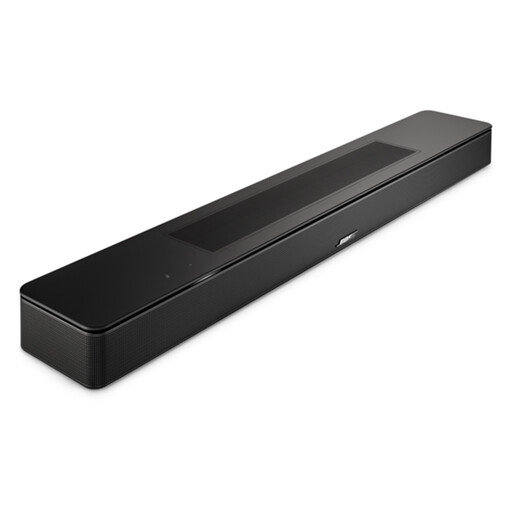
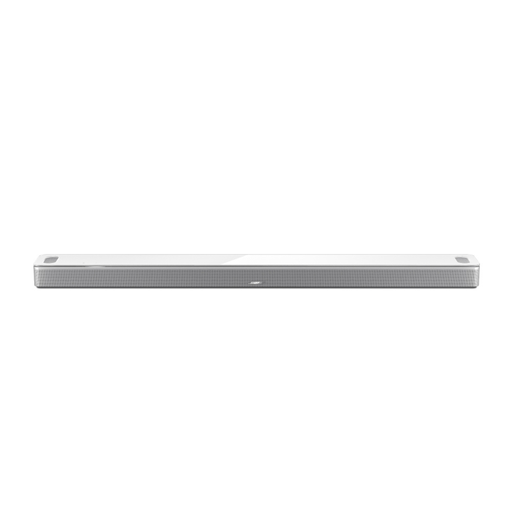
These Bose soundbars are TV-centred alternatives for listeners who want film audio from their television. They are not the compact standalone smart-speaker or same-model pairing routes discussed above; check your TV connection and available furniture space before choosing either one.
 No image available
Bose Smart Compact Sound Bar
Consider this soundbar if you want a TV-centred alternative for film audio rather than a standalone speaker for streamed albums.
Measure your TV furniture and confirm that its connection options work with your television before ordering.
View on Joybuy
 No image available
Bose Smart Ultra Soundbar Arctic White
Consider this TV-centred soundbar if you have room for a wider unit and want film audio from your television.
Allow for its stated 104.5 cm width, and confirm that its connection options work with your TV before ordering.
View on Joybuy
Common questions
Will any smart speaker play sound from my television?
No: TV-audio support depends on the devices in your setup. Apple documents HomePod mini with Apple TV 4K, while Amazon documents Alexa Home Cinema for specified Fire TV and Echo combinations; check model generations and any HDMI ARC/eARC requirements before buying.
Is one speaker enough for a small living room?
One speaker is a simpler fit when space and sockets are limited, particularly if you mainly stream soundtrack albums. For left-right separation, check that the exact model supports pairing and that you can position two matching speakers; Google advises placing supported pairs around 1.2–2.4 metres apart on stable, level surfaces.
What privacy and setup checks matter for a living-room smart speaker?
Place the speaker securely, route its power lead safely and review app permissions and microphone controls during setup. The Information Commissioner's Office advises checking the maker's stated security-update support for connected products.
Must a speaker have UKCA marking in Great Britain?
Not necessarily: GOV.UK says Great Britain continues to recognise CE marking alongside or in place of UKCA marking where the applicable product requirements are met. Neither mark alone establishes that a particular listing is compliant; check the product documentation and supplied power equipment. Northern Ireland has different arrangements.


