Households keeping an existing TV
If the screen still works well for shared viewing but its apps do not meet the household’s needs, assess a streaming player. Check for an available HDMI input and support for each essential app.


If the existing TV’s picture and HDMI connection still suit the room, consider a streaming player before replacing the screen. Choose a new TV when the display itself needs changing, and consider a soundbar separately if shared listening is the problem. Check the exact device’s support for your household’s apps before buying.
If the screen still works well for shared viewing but its apps do not meet the household’s needs, assess a streaming player. Check for an available HDMI input and support for each essential app.
If the display itself no longer suits the room, assess replacement TVs for screen fit and connections as well as the exact model’s broadcaster-app support.
If streaming already works but the household wants to address shared-room listening, consider audio equipment separately. Check the TV’s audio output against the soundbar’s input before choosing one.
Decide whether the screen needs replacing, then check app access and connections. Treat sound as a separate decision once the viewing setup works.
| Concern | What to check | Who this matters to |
|---|---|---|
| Essential apps | Check each required service’s current support for the exact TV or player model and software version. ITV and Channel 4 describe device-specific conditions. | If the screen still suits us, I would rather address missing broadcaster apps than replace the TV. Around 31% of consumers put app access first. |
| Keeping the screen | Assess the display’s fit for shared seating and whether it has an available HDMI input before choosing between a player and a new TV. | When the picture or screen size is the problem, adding a player would leave my main concern unresolved. For around 31% of consumers, replacing the display comes first. |
| Connections | Check the TV’s available HDMI ports and the player’s connection requirements; for a soundbar, identify any ARC or eARC-labelled port. | I want the devices we keep to connect without an avoidable change to the setup. Connection simplicity is the primary concern for around 23% of consumers. |
| Shared-room audio | Decide whether the TV’s sound meets the household’s listening needs, then confirm compatible TV outputs and soundbar inputs if adding one. | Our apps and picture are workable, but listening together is what I want to improve. Around 15% of consumers prioritise the audio decision. |
ITV lists device-specific conditions for ITVX, while Channel 4 identifies older devices that no longer support its app. A smart-TV label alone cannot settle access for a particular model.
List the services your household uses and check each provider’s current supported-device information before ordering.
A separate streaming player may provide another app platform through HDMI when the existing display still suits the room. It will not fix a screen that is itself unsuitable.
Check the current TV’s picture, room fit and available HDMI input before deciding which part of the setup to change.
The HDMI Licensing Administrator describes ARC and eARC as audio-return capabilities; their presence on one device does not establish compatibility across the TV and soundbar.
Check the labelled TV port and the soundbar’s supported input in both products’ documentation before choosing a connection.
TV Licensing states that a UK TV Licence covers live TV across channels and streaming services, as well as BBC iPlayer. Changing the viewing device does not remove the relevant requirement.
Check the household’s TV Licence position before watching live TV or BBC iPlayer on the new setup.
A separate streaming-player platform to assess when keeping a TV with a suitable HDMI input.
A separate streaming platform for households considering Google TV Streamer with an existing display.
A streaming-player route for households considering Apple TV hardware and its app platform.
A streaming-player platform for households keeping a suitable TV and checking UK catch-up apps.
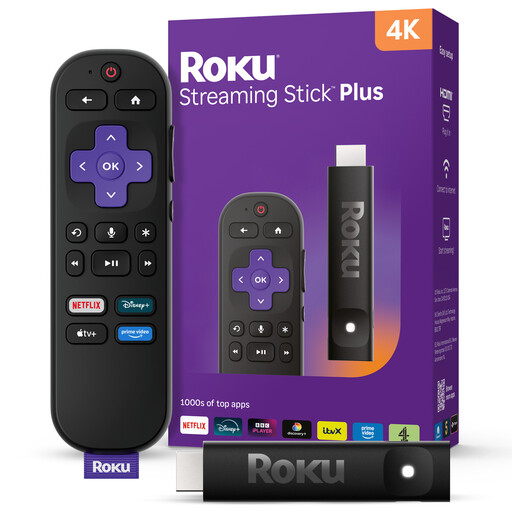
These Roku streaming sticks are options to assess if you want to keep a suitable TV and use a separate streaming platform. Check the TV connection and current support for your essential apps before choosing either model.
 No image available
Consider this separate streaming player if the household wants to retain its current screen. Check that the TV has an available suitable HDMI input and that this exact model supports the apps you need.
 No image available
Consider this streaming-stick route if the existing display still suits shared viewing. Confirm its connection requirements against the TV’s available ports and check current support for each essential app.
Yes, if the screen still suits you and it has a suitable available HDMI input, a separate streaming player is an option. Check the player’s current support for each required app and its connection requirements before buying.
No, a soundbar is not needed to access streaming services. Consider one if the household wants to address its listening experience, and confirm a compatible connection between the exact TV and soundbar first.
Check the labelled HDMI port on the TV and the supported input on the soundbar. The HDMI Licensing Administrator describes ARC as a way to return TV audio through HDMI and eARC as supporting additional higher-bitrate audio capabilities; confirm the intended connection in both products’ documentation.
Do not assume app support will remain unchanged. ITV specifies device conditions for ITVX, and Channel 4 identifies older devices that no longer support its app, so check current support and available software updates when planning the setup.
No, the device change itself does not determine the requirement. For UK viewing, TV Licensing states that a TV Licence covers live TV across channels and streaming services, as well as BBC iPlayer; check the household’s position before using those services.