
24/7 Customer Support

Free returns

Same-day & Next-day Delivery

Quality Guaranteed

Unlock Your Welcome Offers: FREE Delivery | Up to 80% OFF | Free 30-day JoyPlus trial
Download the APP
A smart video doorbell can help you check visitors, monitor deliveries and speak to someone at the door while you are upstairs, at work or away from home. However, product listings often focus on headline features while leaving important limitations unclear.
Before buying a wireless video doorbell or doorbell camera, check how it handles storage, battery use, Wi-Fi coverage and outdoor exposure. These details usually have a greater effect on everyday convenience than a higher resolution number alone.
A 2K video doorbell may provide detailed images, but resolution does not tell you whether the camera can see parcels on the ground or visitors standing close to the door. A narrow horizontal view may miss the doorstep.
For delivery monitoring, look for a vertical or head-to-toe field of view, ideally around 4:3 or 9:16. A wide-angle lens can also reduce blind spots, although excessive distortion may affect facial detail at the edges.
A battery-powered doorbell camera avoids wiring, but it still needs charging. Battery life can reduce in cold weather, with frequent motion alerts or when live video is viewed regularly. Published battery estimates are usually based on specific usage conditions.
Solar assistance may reduce charging frequency, but it depends on mounting position and available daylight. A hardwired model can provide more consistent power, while a removable battery is useful for renters or homes without suitable doorbell wiring.
Some doorbell cameras require a cloud subscription for longer video history, advanced detection or downloadable recordings. Others support microSD storage or include a base station with a memory card.
A no monthly fee doorbell may still involve the cost of buying a card or base station. Check whether the advertised local storage is included, whether the memory card is supplied and which features remain available without a subscription.
For most UK front doors, 1080p is usable, while a 2K video doorbell can show more detail when viewing faces or parcels. The lens, lighting and compression also affect image quality.
For night-time monitoring, check whether the product uses infrared or colour night vision. A built-in spotlight can produce colour footage in darkness, but it may be more noticeable to visitors and can affect battery consumption.
A motion detection doorbell can notify you when movement occurs, but basic motion sensors may react to passing traffic, pets, trees or changing light. Human, vehicle, pet and package detection can make alerts more relevant.
Look for adjustable activity zones where possible. This allows you to focus notifications on your path or doorstep rather than a public pavement. Detection descriptions should be treated as product functions, not a guarantee that every event will be identified correctly.
A wireless video doorbell is convenient, but confirm that your home has a reliable 2.4GHz Wi-Fi signal at the entrance. Thick walls, metal doors and long distances from the router can cause delays or disconnections.
For outdoor use, check the IP rating. IP54 offers protection against dust and water splashes, while IP65 and IP66 provide a higher level of protection against water jets and weather exposure. No IP-rated device should be submerged.
Also check whether an indoor chime is included. A phone notification can be missed when the handset is muted, whereas a separate chime provides an audible alert inside the property.
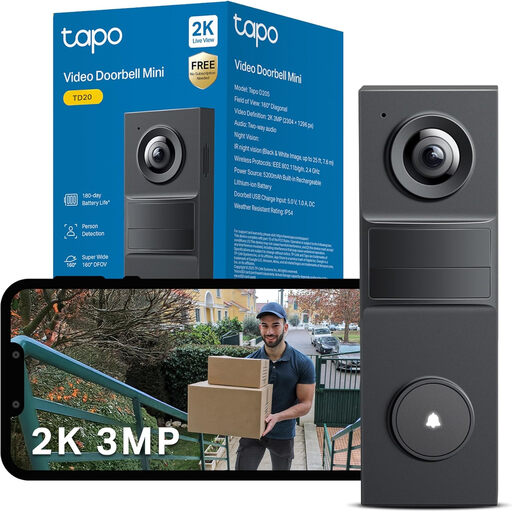
Why This Fits Their Persona: A practical choice for households wanting app alerts, two-way audio and local storage options without making advanced installation necessary.
It lists free AI detection, customisable activity zones and microSD support, so buyers can check storage and alert controls before relying on cloud features.
2K live view, 160° viewing angle, two-way audio, up to 180 days stated battery operation and support for a Tapo solar panel.
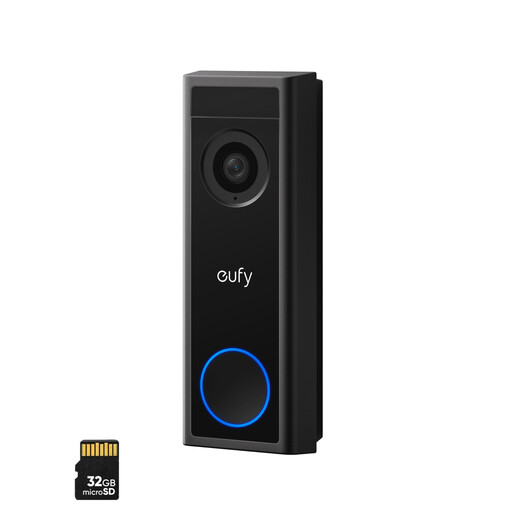
Why This Fits Their Persona: Suitable for homeowners who want the choice of battery installation or connection to existing doorbell wiring.
The dual-power design makes the installation choice clear. Hardwired use enables continuous recording functions, while the 6,500mAh battery supports a less permanent setup.
2K FHD video, 4:3 viewing, live video calls, human and motion detection, plus Alexa and Google Assistant compatibility.
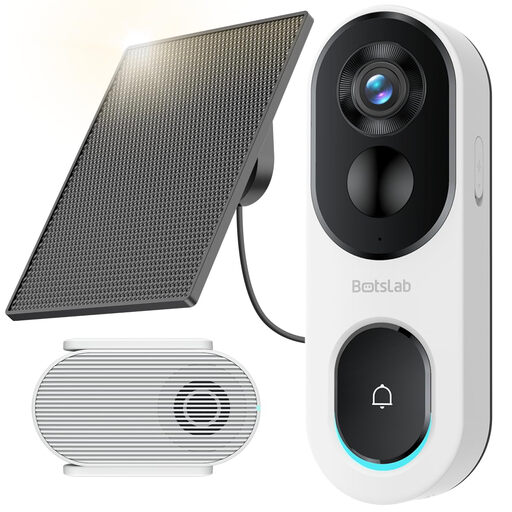
Why This Fits Their Persona: Designed for users monitoring frequent deliveries who want solar assistance, local storage and head-to-toe coverage.
The listing explains that a microSD card is required for local footage and that the solar panel should be positioned for useful exposure, rather than implying unlimited power in every location.
2K head-to-toe view, package and human detection, two-way audio, night vision and support for 32–256GB cards through its base station.
We have compiled a complete, real-time list of products that fully satisfy these strict selection criteria and UK safety regulations.
Most app-connected models need Wi-Fi to send live video and notifications to your phone. Many use 2.4GHz Wi-Fi because it generally travels further through walls than 5GHz. A doorbell with a separate indoor monitor, such as the Verbex NT601A, can receive calls without Wi-Fi, but it does not provide the same remote app access.
It depends on temperature, alert frequency, live viewing and recording settings. Product listings may state several months under particular conditions, but busy entrances can use more power. Choose a removable battery, dual-power model or solar-supported option if regular charging would be inconvenient.
Yes, some models support local microSD storage or an included base-station card. Confirm whether the card is supplied and which functions require cloud storage. Also consider recording retention, card capacity and whether footage can be accessed remotely through the app.
When installing any home security camera, position it towards your own entrance where possible, use privacy zones if available and check current UK privacy guidance when neighbouring property or public areas may be captured.