
24/7 Customer Support

Free returns

Same-day & Next-day Delivery

Quality Guaranteed

Unlock Your Welcome Offers: FREE Delivery | Up to 80% OFF | Free 30-day JoyPlus trial
Download the APP
Smart watches can manage notifications, track workouts, show directions and even handle calls from your wrist. However, product listings often make similar devices appear more capable than they are. A low purchase price may hide limited phone compatibility, short battery life or health features that are intended only for general wellness.
This guide explains what to check before buying smart watches, then matches several options to different lifestyles and budgets.
“Compatible with Android and iOS” does not always mean identical functionality. Some watches support notifications on both platforms but offer more complete features on one operating system. An Apple Watch, for example, requires an iPhone for setup and core features. Samsung Galaxy Watch models may work with iOS in limited ways, while Android users generally receive broader integration.
Before ordering, check:
A heart rate monitor watch, sleep monitor smartwatch or blood oxygen monitor watch can provide useful personal activity information. These readings may vary with movement, skin contact and how tightly the watch is worn. They are not a diagnosis or a substitute for professional medical advice.
Look for clearly stated functions such as heart rate monitoring, SpO2 tracking and sleep recording, but avoid buying based on dramatic health promises.
Ratings such as IP67 and IP68 describe protection against dust and water under specified test conditions. They do not automatically mean a watch is suitable for swimming, hot showers, salt water or high-pressure water.
For example, the realme Watch 5 and several Jugeman models list IP68 protection for everyday exposure to rain and sweat. Still, buyers should follow the manufacturer’s instructions and dry the watch after contact with water. A model with a stated 50 m water resistance rating, such as the Apple Watch Series 11, has different specifications, but it is still not intended for scuba diving or high-velocity water sports.
A Bluetooth calling smartwatch uses a built-in microphone and speaker to make or answer calls through a paired phone. This is convenient for quick conversations, but it is not the same as a cellular smartwatch with independent mobile connectivity.
If you want to leave your phone behind, look for GPS smartwatch functionality and, where required, LTE or eSIM support. Otherwise, Bluetooth calling is generally suitable for commuting, household tasks and short outdoor activities.
Some watches use your phone’s GPS, while others contain independent positioning hardware. Independent GPS is useful for runners, cyclists and walkers who want route recording without carrying a handset.
Check whether the product specifies GPS, multi-system GNSS or a linear route function. The realme Watch 5 lists 5-GNSS independent positioning, while the Jugeman V10 describes GPS route recording without a smartphone. GPS accuracy can still vary around tall buildings, under trees and in poor weather.
Battery figures are usually estimates based on a stated usage pattern. Frequent GPS use, Bluetooth calling, a bright always-on display and continuous sensors can reduce runtime.
For practical comparison, consider:
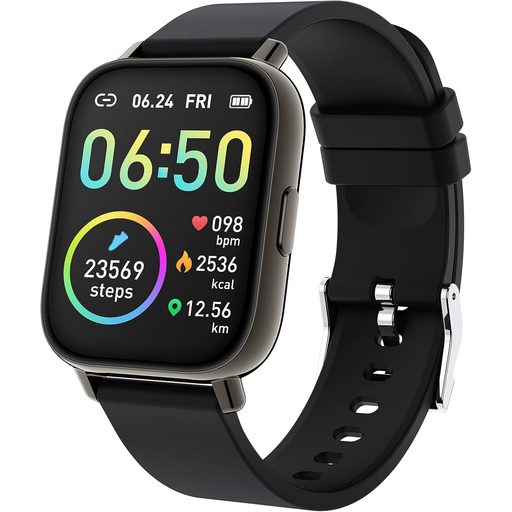
Why This Fits Their Persona: A straightforward fitness tracker watch for adults wanting step counting, notifications and everyday activity tools without moving straight to a premium ecosystem.
Its listing clearly identifies iOS and Android compatibility, IP68 protection and 24 sports modes, making the main functions easier to assess before purchase.
1.69-inch display, heart rate and sleep monitoring, call notifications and step, calorie and distance tracking.
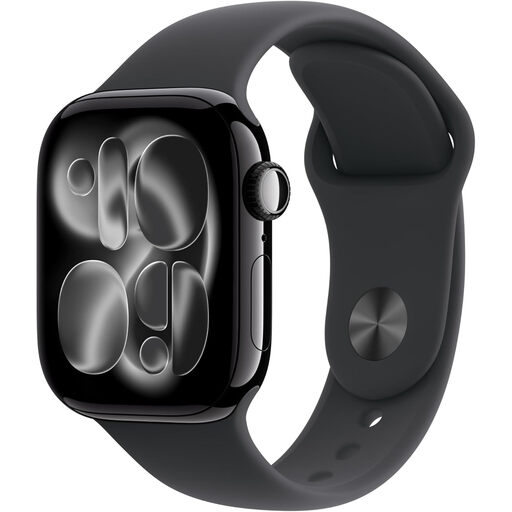
Why This Fits Their Persona: A suitable choice for iPhone users who want close integration with Apple apps, workout tracking and a refined everyday smartwatch design.
The compatibility requirement is explicit: an iPhone is needed for setup and features. Its stated 24-hour normal-use battery figure also sets a realistic charging expectation.
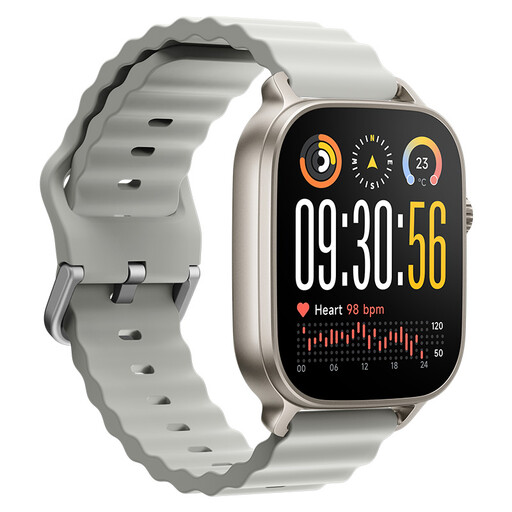
Why This Fits Their Persona: Runners, walkers and gym users may value independent positioning, a large display and a broad selection of sports modes.
The listing separates its independent 5-GNSS positioning, Bluetooth calling, IP68 rating and stated battery estimate rather than presenting them as one vague feature.
1.97-inch 600-nit AMOLED display, 108 sport modes, 460mAh battery and heart rate, SpO2 and sleep monitoring.
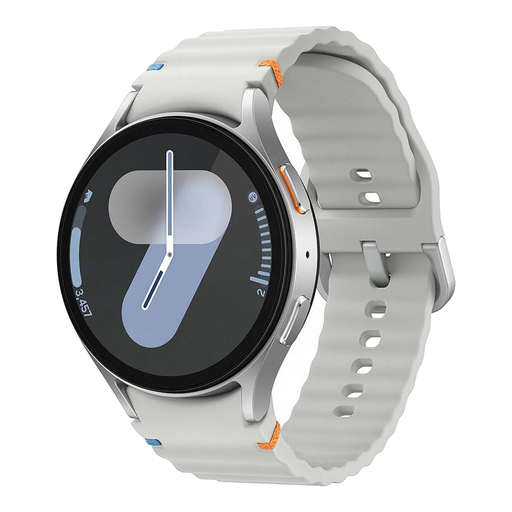
Why This Fits Their Persona: Android users wanting LTE connectivity, workout tracking and a fuller smartwatch platform may prefer this connected format.
The specification identifies 4G LTE, eSIM, Bluetooth and Wi-Fi separately, while also noting that iOS users may receive limited features.
4G connectivity, dual-function fitness and wellness sensors, 5ATM plus IP68 protection and up to 40 hours of typical battery use.
We have compiled a complete, real-time list of products that fully satisfy these strict selection criteria and UK safety regulations.
Some do, but feature support varies. Check the product listing and companion app before buying. Apple Watch models require an iPhone, while many fitness tracker watch models support both Android and iOS. Samsung Galaxy Watch compatibility with iPhone may be limited.
Battery life ranges from roughly a day to more than a week, depending on the model and settings. GPS, Bluetooth calling, LTE, continuous heart rate monitoring and bright displays use more power. Compare the stated typical-use figure rather than relying only on standby claims.
A Bluetooth calling smartwatch normally needs a paired phone nearby. A GPS smartwatch can record routes independently, but maps, calls and messages may still require a connection. LTE models with an activated eSIM offer more independent use, subject to network support and additional running costs.