
24/7 Customer Support

Free returns

Same-day & Next-day Delivery

Quality Guaranteed

Unlock Your Welcome Offers: FREE Delivery | Up to 80% OFF | Free 30-day JoyPlus trial
Download the APP
Smart body composition scales can do more than show your weight. Depending on the model, they may connect to an app, estimate body fat, record BMI, track muscle mass and help you follow longer-term trends. However, the feature list can make it difficult to separate useful functions from marketing noise.
For UK households, the right choice depends on how you plan to use the scale, where it will stand and how much data you actually want to track. A simple digital body scale may be sufficient for occasional weigh-ins, while fitness enthusiasts may prefer Bluetooth weighing scales with app history.
Most body fat scales use Bio-electrical Impedance Analysis (BIA). A small electrical signal passes through the body, and the device estimates metrics such as body fat, visceral fat and muscle mass.
These readings can vary with hydration, meals, exercise, skin temperature and foot position. Treat them as indicators for observing trends rather than medical results. For more consistent comparisons, weigh yourself at a similar time, on the same hard surface and under similar conditions.
App-connected scales can store readings and create charts, but Bluetooth is only valuable if you intend to open the app regularly. Check whether the scale works with your phone, whether the app supports your preferred fitness platform and whether each household member can have a separate profile.
Some smart bathroom scales offer extensive data but require bare, dry feet and a smartphone nearby for synchronisation. If you only need weight, a large LCD display and straightforward battery operation may matter more than multiple metrics.
A scale placed on carpet, an uneven floor or a damp bathroom surface may produce inconsistent readings and create a slipping risk. Tempered glass should also be checked for cracks before use and cleaned with a soft, damp cloth rather than abrasive products.
Always compare the stated capacity with the needs of everyone using it. A 180kg limit is suitable for many households, but it should not be exceeded.
Look beyond the number of advertised metrics. Consider whether the scale records weight, BMI, body fat percentage and muscle mass in a useful app and whether the display shows weight clearly without requiring a phone.
BIA body composition monitors are more useful when they help you identify a consistent direction over time. They should not replace professional advice or be used to diagnose a health condition.
Users with pacemakers or other implanted medical devices should avoid the BIA function unless their healthcare professional advises otherwise. Pregnancy guidance should also be checked in the product instructions; weight-only mode may be appropriate where specified.
For everyday use, check:
For fitness tracking scales, app compatibility can be more important than the number of metrics. Look for Bluetooth support, user profiles, historical graphs and integration with platforms you already use, such as Apple Health, Google Fit, Fitbit or Samsung Health.
Families should also check whether the app supports multiple users and whether the scale offers baby or pet weighing. These functions can be convenient, but adult supervision is still required when weighing children.
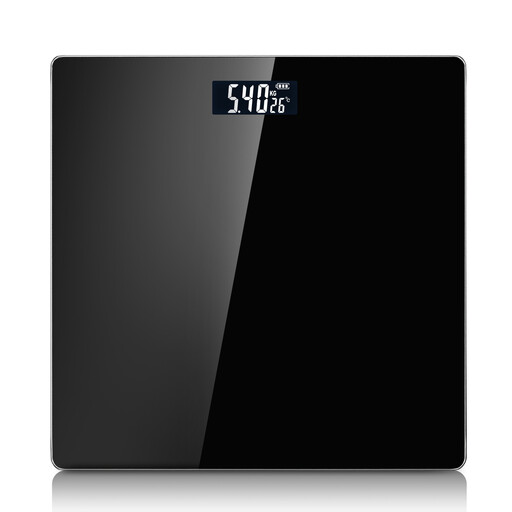
Why This Fits Their Persona: A straightforward choice for UK shoppers who want dependable weight readings without app accounts, Bluetooth setup or body composition estimates.
It does not present BIA estimates or complicated app features as necessary. Its 0.05kg precision and 180kg/400lb capacity are clearly stated.
Large LCD display, kg/lb readings and a 4mm tempered-glass platform. Two AAA batteries are required and are not included.
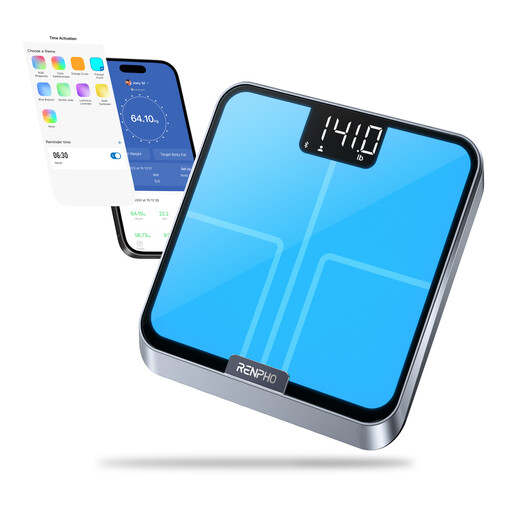
Why This Fits Their Persona: Suitable for users who want detailed progress records, reminder functions and a connected routine for a household.
The 13 listed metrics, Bluetooth pairing and app synchronisation are specified clearly, while the instructions explain weight-only use with shoes.
Tracks metrics including BMI, body fat and muscle mass; supports unlimited users, Baby Mode and selected fitness platforms.
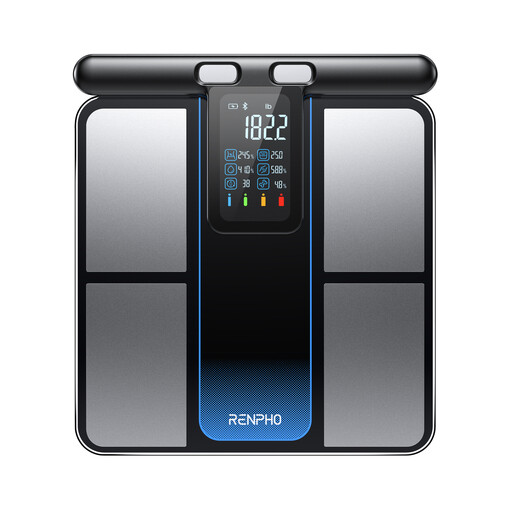
Why This Fits Their Persona: Designed for users who want broader body tracking and a platform that can accommodate different family members up to 180kg.
Its app and multi-user functions support ongoing records, rather than relying on a single isolated reading or vague feature promise.
Eight electrodes, a retractable handle, Bluetooth app connectivity and synchronisation with selected health platforms.

Why This Fits Their Persona: A practical companion for people who want to connect body-weight goals with portion control, recipe preparation and macro logging.
It is clearly a kitchen nutritional scale rather than a body scale, with separate 5kg capacity and food-measurement functions.
Measures in 1g increments, supports g, oz, lb, ml and cup units and records nutritional data through the RENPHO Health app.
We have compiled a complete, real-time list of products that fully satisfy these strict selection criteria and UK safety regulations.
They can provide repeatable weight readings when used correctly. BIA results are estimates affected by hydration and other conditions, so compare trends collected in a consistent routine rather than treating one reading as a definitive measurement.
Most use replaceable AAA batteries, so running costs are generally limited to occasional battery replacement. Bluetooth models may also require a compatible smartphone and app, so check whether the app is available for your device before buying.
Lifespan depends on construction, battery care, floor conditions and usage. Keep the scale dry, avoid dropping it, do not exceed its capacity and clean it with a soft cloth. A cracked tempered-glass surface should not be used.