
24/7 Customer Support

Free returns

Same-day & Next-day Delivery

Quality Guaranteed
Download the APP
Categories
That shaky, jarring video footage can undermine an otherwise perfect shot. Whether you're a vlogger capturing daily life, a traveller documenting your adventures or simply someone who wants to create better family videos, a wobbly camera can be frustrating. A smartphone gimbal, or phone stabiliser, is a tool designed to counteract this, using motors and sensors to keep your phone steady, even while you're on the move.
The market is filled with options, each with its own set of features and functions. This guide is designed to help you understand the key considerations and browse some of our top recommendations for 2026, allowing you to find a device that fits your creative needs and budget.
Before diving into specific models, it helps to understand what to look for. Here are a few practical points to consider during your search.
The core function of a gimbal is stabilisation, which is achieved across different axes of movement.
For many users, especially travellers and on-the-go creators, a foldable gimbal is a must-have. A compact design that fits easily into a bag or pocket makes you more likely to carry and use it. Also, look for models that come with integrated accessories. A built-in gimbal with tripod allows you to set up for static shots, time-lapses or hands-free vlogging. Similarly, a detachable gimbal with remote offers the flexibility to control your camera from a distance, perfect for group shots or solo filming.
Modern gimbals are more than just stabilisers. Many now include intelligent features that can elevate your content. An AI tracking gimbal uses facial or object recognition to automatically keep your subject in the frame, which is incredibly useful for solo creators presenting to the camera.
Before purchasing, always check the gimbal's specifications for phone compatibility. Ensure the clamp can accommodate your phone's size and weight, especially if you use a case or add-on lenses. This is a crucial step for anyone looking for a reliable gimbal for iPhone or a specific Android model.
Here are a few standout options that cater to different types of users, from aspiring creators to casual videographers.
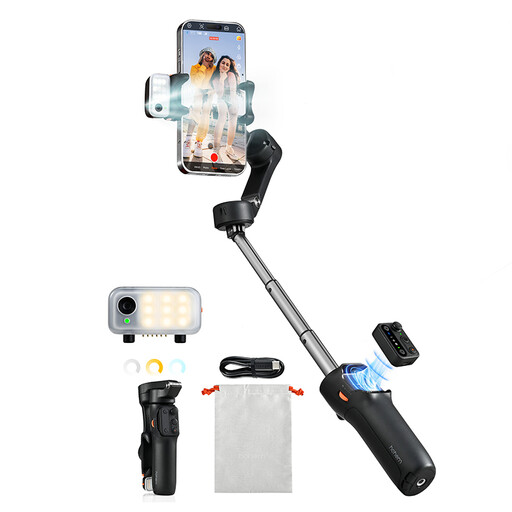
Why It Stands Out: This model packs a suite of advanced features into a single package. The standout is its magnetic AI tracker, which functions with gesture controls and doesn't require a Bluetooth connection or a specific app to work, offering a streamlined user experience.
Pros:
Who is it for? This is an excellent choice for the dedicated vlogging gimbal user or content creator who wants professional-level stabilisation and tracking features without the complexity of app-dependent hardware.
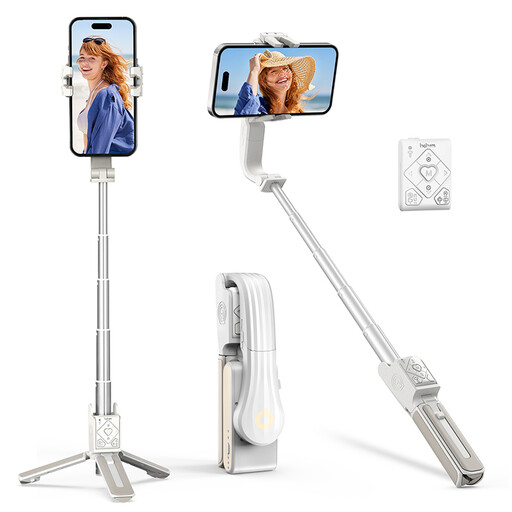
Why It Stands Out: This device prioritises versatility and extreme portability. It functions as a single-axis gimbal, selfie stick, tripod and 360° rotating mount, making it a multi-purpose tool for casual shooting. At just 195g, it's one of the lighter options available.
Pros:
Who is it for? This is geared towards travellers, families and social media users who want more than a basic selfie stick but don't need the full capabilities of a 3-axis gimbal. Its convenience is its main appeal.
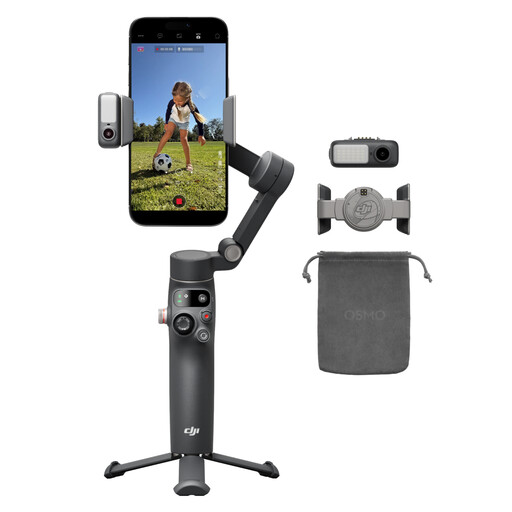
Why It Stands Out: This model offers a highly integrated and polished experience. According to the manufacturer, its native tracking works directly with your phone's camera and supports external microphones and lighting, creating a cohesive production setup.
Pros:
Who is it for? Serious content creators, live streamers and videographers who value a reliable, all-in-one ecosystem and are looking for a high-performance phone stabiliser for demanding projects.
If a motorised gimbal seems like more than you need, or if your primary requirement is a stable base for static shots like interviews, time-lapses or group photos, a different tool might be more suitable. For these situations, a sturdy and lightweight stand is often the most practical solution.
Explore our curated selection of portable tripod options to find the right support for your smartphone or camera.
It depends on your use case. For capturing smooth video while walking, running or moving the camera dynamically, a 3-axis gimbal is essential for professional-looking results. If you primarily need to keep the horizon level during simple pans or want a stabilised selfie stick, a more compact single-axis model may be sufficient.
Most modern gimbals are designed to be user-friendly. Setup typically involves mounting your phone, performing a quick balance (many models have guides for this) and connecting via Bluetooth. Features like magnetic clamps and direct phone connections are making the process faster than ever. While there is a small learning curve to master all the creative modes, basic stabilisation is usually straightforward straight out of the box.
This depends on the gimbal's payload capacity and the size of its clamp. Heavier, bulkier cases can sometimes exceed the motor's weight limit or prevent the phone from fitting securely in the clamp. It is always recommended to check the gimbal's specifications and measure your phone with its case on to ensure compatibility.