
24/7 Customer Support

Free returns

Same-day & Next-day Delivery

Quality Guaranteed

Unlock Your Welcome Offers: FREE Delivery | Up to 80% OFF | Free 30-day JoyPlus trial
Download the APP
We’ve all been there. You’ve captured what should have been a perfect moment—a walk along the Cornish coast, your child’s first steps or a dynamic clip for your latest TikTok—only to find the playback is a shaky, jarring mess. That frustration is precisely why the smartphone gimbal has become an essential tool for anyone serious about video.
This guide is designed to help you navigate the options. As the Joybuy Product Recommendation Officer, my role is to cut through the clutter and provide clear, practical advice. We will explore what makes a good phone stabiliser, look at a few standout models and help you find the right device to create the smooth, professional-looking footage you're aiming for.
Before you decide, it’s helpful to understand a few key features. Considering these points will ensure you select a mobile gimbal that fits your creative style and practical requirements.
The core function of a gimbal is to counteract unwanted movement. The main difference in the market comes down to the number of axes of stabilisation.
For travel vloggers, content creators on the move or families packing for a holiday, size and weight matter. A foldable gimbal is designed to collapse into a compact, pocket-friendly form. Pay attention to the device's weight and folded dimensions. A lighter, smaller gimbal is one you are more likely to carry and use, turning spontaneous moments into high-quality clips.
Modern gimbals are more than just stabilisers; they are often a complete vlogging kit for phone. Look for features that match your workflow:
Based on features, design and user-friendliness, here are a few models that cater to different needs and creators.
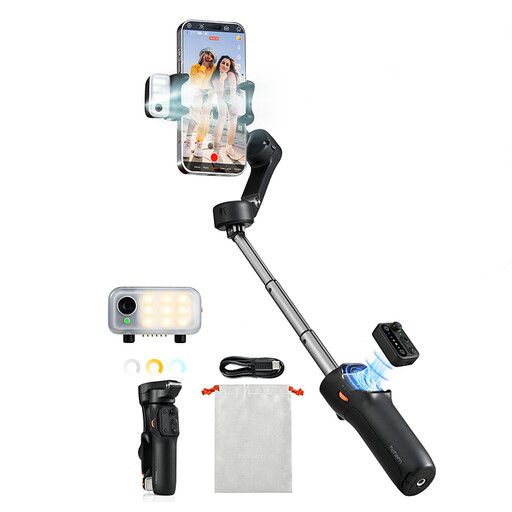
Why It Stands Out: This model is a comprehensive solution for serious mobile videographers. Its core strength is the iSteady 8.0 3-axis stabilisation system, which delivers exceptionally smooth footage even during dynamic movement. What sets it apart is the magnetic AI tracker, which includes a fill light and works independently of any app—you can control it with simple hand gestures. The all-in-one design incorporates an extension rod and a tripod, making it a truly versatile tool.
Pros:
Who is it for? This is an excellent choice for dedicated vloggers, travel content creators and anyone who demands the highest level of stabilisation for their smartphone videos.
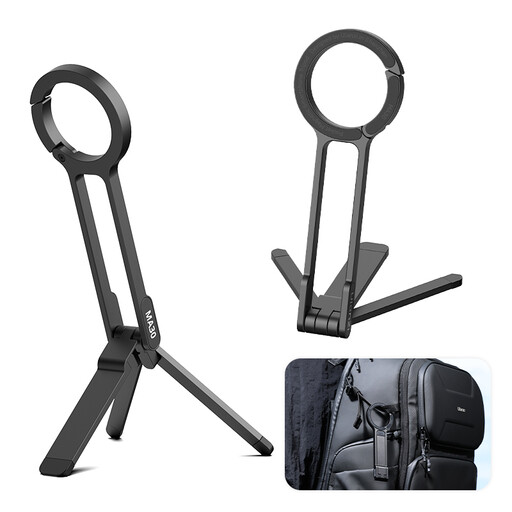
Why It Stands Out: The ULANZI MA30 takes a different approach, prioritising speed and portability over motorised stabilisation. It is not a gimbal, but a highly innovative magnetic tripod and selfie stick. Its Maglock system allows for instant mounting, and the clever carabiner design means you can clip it to a bag or belt loop. It’s a fantastic tool for static shots, video calls or as a stable handle for filming.
Pros:
Who is it for? The minimalist creator, traveller or anyone who needs a rock-solid phone tripod for static shots, time-lapses or stable video calls. It's for those who value portability above all else. Note the powerful magnets require care around sensitive electronics and medical devices.
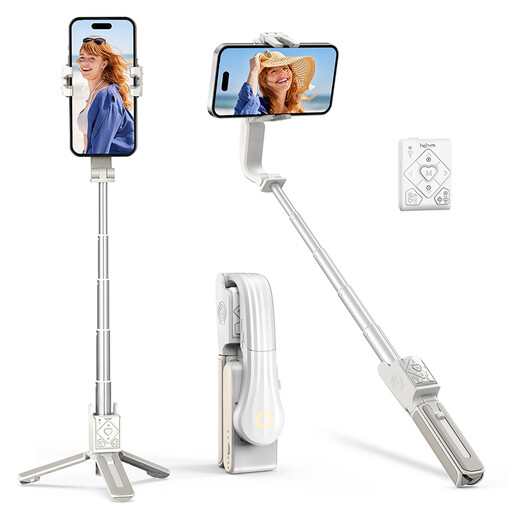
Why It Stands Out: This device is the perfect hybrid, blending the portability of a selfie stick with the stability of a gimbal. As a 4-in-1 selfie stick gimbal, it offers single-axis motorised stabilisation to eliminate shakes, a built-in tripod, a detachable remote and 360° rotation for live streaming. Weighing only 195g, it’s incredibly light and folds down to a pocket-friendly size.
Pros:
Who is it for? Social media users, families and casual vloggers who want to upgrade from a standard selfie stick. It provides a noticeable improvement in video smoothness without the size and complexity of a 3-axis gimbal.
If you're after something more straightforward or want to explore a wider range of options, our collection of portable selfie sticks and stabilisers offers something for every need. Browse our full selection to find your perfect match for capturing life's moments.
A 3-axis gimbal corrects movement on three axes (pan, tilt and roll), providing the smoothest possible footage, especially when you are moving. A 1-axis gimbal typically only stabilises the roll axis, which is great for reducing minor hand shakes and is often found in more compact, lightweight designs.
Most modern gimbals feature adjustable clamps designed to accommodate standard-sized smartphones, often with a slim case still attached. However, very thick, heavy or irregularly shaped cases (like those with wallets or large grips) can interfere with the gimbal's balance and motor function. It is always best to check the manufacturer's specifications for payload capacity and clamp dimensions.
They are different tools for different jobs. A selfie stick is designed to extend your reach for wider-angle photos and videos. A smartphone gimbal is designed to stabilise your phone to create smooth, shake-free video. A selfie stick gimbal combines both functions, offering extended reach with the added benefit of motorised stabilisation.