
24/7 Customer Support

Free returns

Same-day & Next-day Delivery

Quality Guaranteed

Unlock Your Welcome Offers: FREE Delivery | Up to 80% OFF | Free 30-day JoyPlus trial
Download the APP
Shaky, unprofessional-looking video can undermine even the most compelling content. Whether you're a vlogger capturing daily life, a TikToker creating the next viral trend or a traveller documenting your adventures, smooth footage is no longer a luxury—it's a necessity. A smartphone gimbal is a powerful tool designed to transform your phone into a professional-grade camera, but with so many options available, finding the right one can be a challenge.
This guide is designed to help you understand the key features to look for. We'll break down the technology and highlight some recommended models to help you capture cinematic-quality video with the device you already own.
Before diving into specific products, it's useful to understand what sets different models apart. Focusing on these three areas will help you make a more informed decision.
The core function of a gimbal is to counteract unwanted movement. The level of stabilisation is determined by the number of axes it controls.
For content creators on the move, convenience is key. Many modern gimbals now integrate multiple functions into a single device. Look for a foldable selfie stick tripod design that combines a gimbal, an extendable pole and a built-in tripod. This versatility allows you to switch seamlessly between handheld vlogging, high-angle shots and stable, hands-free recording without carrying extra gear. A compact, foldable design ensures it can fit easily into a pocket or small bag.
Beyond stabilisation, smart features can significantly enhance your creative workflow.
Based on features that matter to modern creators, here are a few options to consider.
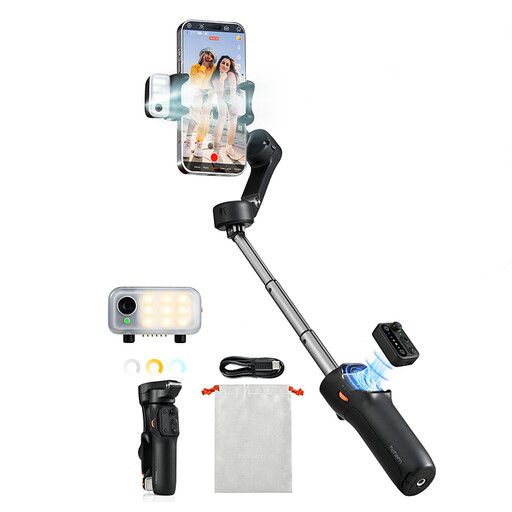
View Product Details on Joybuy.co.uk
Why It Stands Out: This model is a comprehensive solution for creators who need top-tier performance. It combines advanced 3-axis stabilisation with a suite of smart features, including a magnetic AI tracker that works without needing an app and a powerful, adjustable fill light.
Pros:
Who is it for? Serious vloggers, travel content creators and aspiring filmmakers who require professional-level stabilisation and the convenience of built-in AI tracking and lighting.
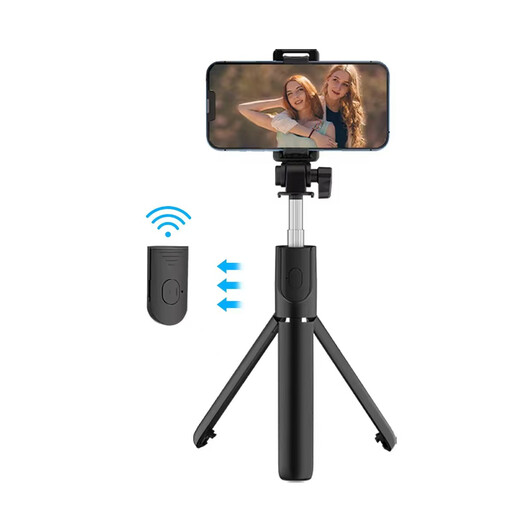
View Product Details on Joybuy.co.uk
Why It Stands Out: While not a motorised gimbal, the Verbex K50 focuses on a different kind of versatility: height. With an impressive maximum extension of 1.9 metres, it functions as a floor-standing tripod, perfect for live streaming or capturing wide group shots.
Pros:
Who is it for? Live streamers, tutorial creators and users who need a stable, tall and hands-free setup for static video or photography rather than motion stabilisation.
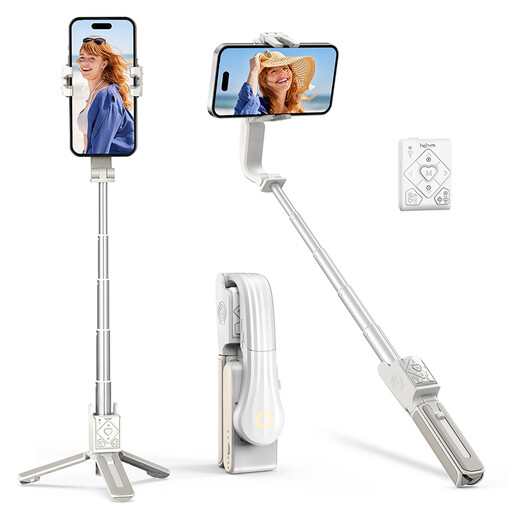
View Product Details on Joybuy.co.uk
Why It Stands Out: This device prioritises portability above all else. Weighing only 195g, it combines a single-axis gimbal, selfie stick and tripod into a pocket-sized package, making it an ideal companion for casual vlogging and travel.
Pros:
Who is it for? Travellers, casual vloggers and everyday users who want a significant upgrade from a standard selfie stick with basic stabilisation in the most portable form factor possible.
If these recommendations aren't quite what you're looking for, or if you'd like to explore a wider range of stabilising solutions, there are many other models available.
Discover more tools to elevate your content by exploring our full collection of Selfie Tripod Stand products.
1. Is a 3-axis gimbal necessary for a smartphone? It depends on your needs. For walking, gentle movements or reducing hand tremors, a single-axis gimbal provides a noticeable improvement. However, if you plan to film while running, cycling or capturing fast-paced action, a 3-axis gimbal stabiliser is essential for achieving smooth, professional-looking results by correcting pan, tilt and roll movements.
2. Can I use a smartphone gimbal with any iPhone or Android phone? Most modern gimbals are designed with wide compatibility in mind. They typically feature adjustable clamps that can accommodate a range of phone sizes and weights. However, it is always important to check the product's specifications for payload capacity and supported phone dimensions to ensure your specific gimbal for iPhone and Android is a good fit.
3. What is the difference between a gimbal and a stabilised selfie stick? A traditional selfie stick simply extends your reach. A stabilised selfie stick, or single-axis gimbal, adds a motor to correct for roll (side-to-side tilt), which smooths out minor shakes. A full gimbal, usually with 3 axes, uses multiple motors to actively counteract a wide range of movements, resulting in far superior stabilisation for dynamic video.