
24/7 Customer Support

Free returns

Same-day & Next-day Delivery

Quality Guaranteed

Unlock Your Welcome Offers: FREE Delivery | Up to 80% OFF | Free 30-day JoyPlus trial
Download the APP
Shaky, unprofessional-looking footage can undermine the quality of your content, whether you're a vlogger building a YouTube channel, a business owner creating social media clips or simply capturing family holidays. While modern smartphones have impressive built-in stabilisation, a dedicated smartphone gimbal stabiliser is the key to achieving truly smooth, cinematic motion.
Navigating the market can be confusing, with a wide array of features and technical specifications. This guide is designed to clarify the essential features to look for and present a selection of models that cater to different creative needs, helping you find the right tool to elevate your video production.
Before diving into specific products, understanding a few key features will help you make a more informed decision.
The core function of a gimbal is to counteract unwanted movement using motors.
For content creators on the move, a portable phone gimbal is essential. Look for models with a foldable design that can easily fit into a backpack or even a large pocket. Battery life is equally important. A device that lasts for at least 6-8 hours will see you through a typical day of shooting, while models with 10+ hours of runtime offer peace of mind for longer projects or travel.
Modern gimbals are more than just an anti-shake phone holder; they are intelligent creative tools. Features like AI tracking gimbal technology can automatically keep a subject in frame, which is invaluable for solo creators. Other useful functions include gesture controls for hands-free operation, one-touch cinematic effects like dolly zoom and integrated fill lights for shooting in low-light conditions.
Here are a few options we've selected that offer a compelling combination of features, performance and value for different types of users.
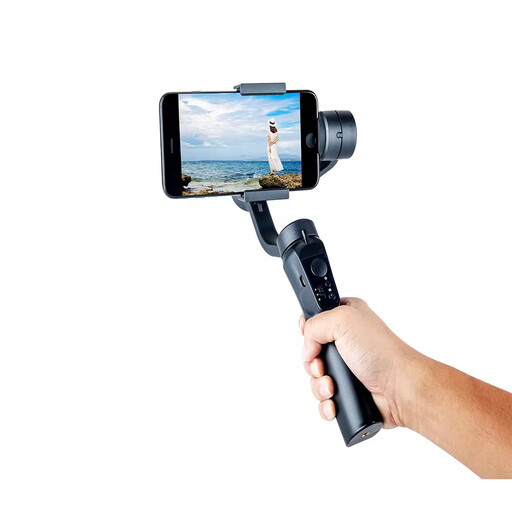
Why It Stands Out: The Verbex C16 focuses on portability and ease of use. Its 2-axis stabilisation system effectively smooths out common jitters from hand movements, while its foldable design and light weight (approx. 352g) make it an excellent travel companion. The integration of app-based features like face tracking and gesture control adds a layer of smart functionality that is useful for everyday content creation.
Pros:
Who is it for? This is a suitable choice for casual content creators, families and travellers who want a simple, portable solution to improve their video stability without the complexity of a professional-grade setup. It's a great entry-level vlogging stabiliser.
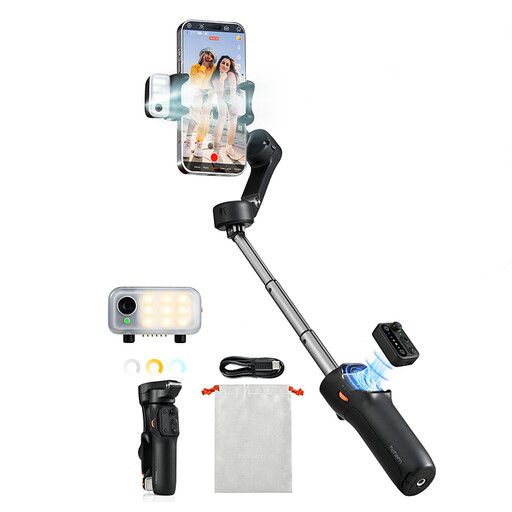
Why It Stands Out: This hohem model is a versatile tool packed with features for the aspiring creator. Its upgraded 3-axis stabilisation delivers exceptionally smooth footage, even during motion. A standout feature is the magnetic AI tracking module, which works independently of any app and includes a built-in, 3-colour fill light. The package is completed by a detachable remote, a built-in extension rod and an included tripod.
Pros:
Who is it for? This gimbal is aimed at serious vloggers and social media influencers who need a reliable, all-in-one solution. The combination of 3-axis stability, app-free AI tracking and a fill light makes it a powerful gimbal for iPhone and Android users creating content for platforms like TikTok and YouTube.
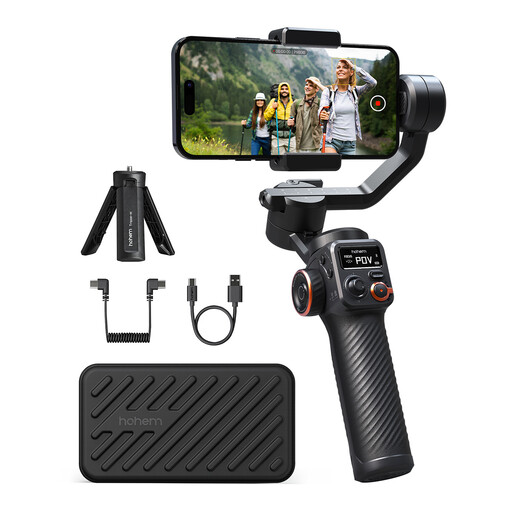
Why It Stands Out: Built for demanding users, this hohem model boasts a robust feature set centred around performance and control. Its iSteady 7.0 stabilisation and high payload capacity of 400g can handle larger smartphones, even with external lenses or microphones attached. The clear OLED display provides at-a-glance status updates on battery, mode and Bluetooth connection. With an exceptional 18-hour battery life and the ability to reverse-charge your phone, it’s built for marathon shooting sessions.
Pros:
Who is it for? This stabiliser is designed for pro-sumer content creators and mobile filmmakers who require maximum battery life, a higher payload capacity and direct control via an onboard display. It's an excellent tool for those undertaking long-form projects, interviews or complex shoots where reliability is paramount.
If these models don't quite match what you're looking for, or if you're interested in exploring a wider range of options from simple selfie sticks to other stabiliser models, you can browse our full collection.
Explore our complete range of camera stick and stabiliser accessories.
While a 2-axis gimbal reduces basic shake, a 3-axis gimbal is highly recommended for anyone serious about video quality. It stabilises movement on the pan (horizontal) axis, which is essential for eliminating the jarring motion produced when walking or moving the camera. This results in the fluid, floating-camera look associated with professional productions.
Most gimbals are designed to be a universal gimbal for iPhone and Android devices. However, compatibility is determined by the phone's weight and dimensions (specifically its width). Always check the gimbal's specifications for its supported payload (weight) and clamp width to ensure it will fit your specific smartphone, especially if you use a large device or a heavy case.
An AI tracking gimbal uses a camera sensor, often combined with a dedicated processor, to identify and lock onto a human subject. Once you select a target (often by drawing a box on the screen or using a gesture), the gimbal's motors will automatically move to keep that person in the frame as they move. This is incredibly useful for solo creators filming themselves, as it acts like a virtual camera operator. Some advanced models can perform this function without needing a specific app.