
24/7 Customer Support

Free returns

Same-day & Next-day Delivery

Quality Guaranteed
Download the APP
Categories
Shaky, jarring video can instantly make your content look amateurish, whether you're capturing a family holiday, vlogging your latest adventure or creating content for social media. While modern smartphones have impressive cameras, their built-in stabilisation can only do so much. This is where a dedicated smartphone gimbal comes in.
As a Joybuy Product Recommendation Officer, my role is to help you navigate the options. This guide cuts through the clutter to offer practical advice and highlight some excellent choices for achieving smooth, professional-looking footage. We will explore what to look for in a phone stabiliser and present a few recommendations to help you make an informed decision.
Before diving into specific products, it's useful to understand the key features that differentiate them. Considering these points will help you find a gimbal that suits your specific needs and budget.
The core function of a gimbal is to stabilise your phone. The number of axes it stabilises determines how smooth your final video will be.
Your gimbal is only useful if you have it with you when you need it. A foldable gimbal is much easier to pack in a bag or even a large pocket, making it a great companion for travel. Also, look for integrated features like a built-in gimbal with tripod. This allows you to set up static shots, time-lapses or film yourself without needing extra equipment. An extendable pole is another useful addition for capturing wider angles or group shots.
Modern gimbals are more than just stabilisers. Many come with intelligent features that can elevate your content creation. An AI tracking gimbal uses facial or object recognition to automatically keep your subject in the frame, which is incredibly useful for solo creators. Other features to look for include gesture controls for hands-free operation, companion apps with creative shooting modes and built-in fill lights for better low-light performance. Ensure the model you choose is compatible with your device, whether you need a gimbal for iPhone or a gimbal for Android.
Here are a few standout options that cater to different types of users, from serious content creators to casual holidaymakers.
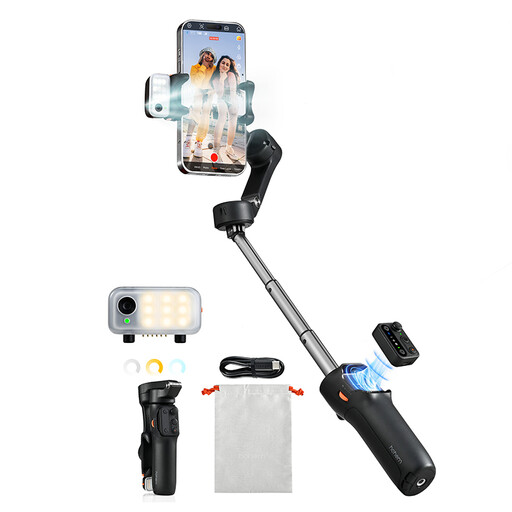
Why It Stands Out: This model from hohem packs advanced features into a user-friendly package. The standout is its magnetic AI tracking module, which works independently without needing a Bluetooth connection or a specific app. Combined with its robust 3-axis stabilisation, it offers a high degree of creative freedom.
Pros:
Who is it for? This is an excellent choice for aspiring vloggers and content creators who want advanced features like AI tracking and superior stabilisation without a complex setup.
Do not disassemble, puncture or expose the built-in battery to fire or extreme heat. Keep the gimbal, detachable remote, tripod and small accessories away from children under 3 years to prevent choking hazards. Do not point the fill light directly into eyes. Ensure the smartphone is securely locked before operation. For a full list of safety guidelines, please refer to the product page.
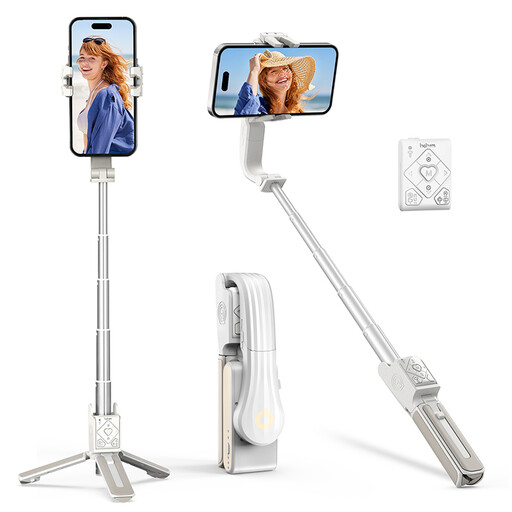
Why It Stands Out: This device prioritises portability and versatility. It cleverly combines a selfie stick, tripod and a single-axis portable video stabiliser into one ultra-light, pocket-sized unit. Its ability to rotate 360° makes it particularly useful for live streaming and dynamic social media content.
Pros:
Who is it for? Ideal for travellers, casual social media users and anyone looking for a multi-functional tool that is more capable than a standard selfie stick but less bulky than a full 3-axis gimbal.
Keep fingers and loose clothing away from motorised moving parts. When using as a tripod, ensure it is on a flat, stable surface. The detachable remote is a choking hazard and should be kept away from small children. Do not force the motor's rotation. This device is not waterproof. For a full list of safety guidelines, please refer to the product page.
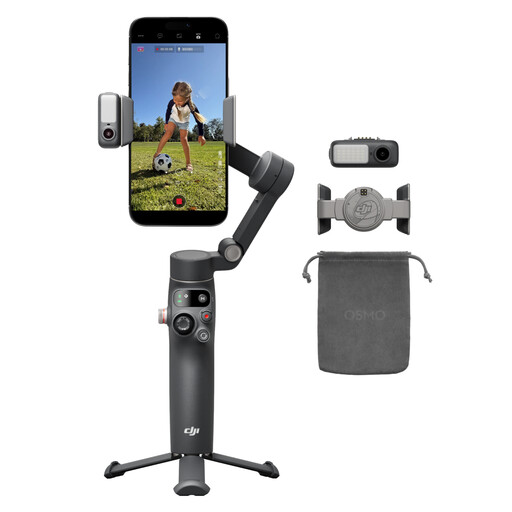
Why It Stands Out: DJI is a well-regarded name in stabilisation, and the Osmo Mobile 8 demonstrates why. It offers robust 3-axis gimbal stabilisation and integrates native tracking directly with your phone's camera, along with audio and lighting capabilities in one module. The seamless 360° pan and comfortable grip make it a powerful tool for demanding users.
Pros:
Who is it for? This gimbal is aimed at serious content creators, live streamers and vloggers who require a reliable, high-performance phone stabiliser for daily use and professional-looking results.
Before first use, fully charge the battery and update the firmware via the DJI app. Always keep the device within your visual line of sight during operation. Keep away from water unless specifically rated as waterproof. Regularly inspect for damage. Keep small parts away from children. For a full list of safety guidelines, please refer to the product page.
If a motorised gimbal feels like more than you need, but you still want to improve the stability of your shots, a high-quality tripod can be an excellent alternative. For static filming, interviews or time-lapses, a sturdy stand is essential.
Explore our curated selection of stands to find a solution that fits your phone and your creative style.
Discover our range of mobile tripod stands
1. Is a smartphone gimbal worth it? If you are serious about improving your video quality for vlogging, social media or even just capturing better family memories, a gimbal is absolutely worth it. It is the single most effective tool for eliminating shaky footage and achieving a cinematic, professional look.
2. Will a gimbal work with my iPhone or Android phone? Most modern gimbals are designed for wide compatibility. They use adjustable clamps to fit a variety of phone sizes and weights. Whether you need a gimbal for iPhone or a gimbal for Android, it is always best to check the product specifications for supported dimensions and payload capacity to ensure a perfect fit.
3. What is the difference between a gimbal and a selfie stick? A selfie stick is a simple mechanical pole that extends your reach. A smartphone gimbal, even a basic selfie stick gimbal model, contains motors and sensors. It actively works to counteract your hand's movements, keeping the phone level and stable to produce smooth video. A standard selfie stick offers no stabilisation.