
24/7 Customer Support

Free returns

Same-day & Next-day Delivery

Quality Guaranteed

Unlock Your Welcome Offers: FREE Delivery | Up to 80% OFF | Free 30-day JoyPlus trial
Download the APP
A smartwatch can simplify daily routines, track exercise and keep notifications visible without reaching for your phone. However, choosing between a smartwatch UK shoppers can use with Android or iPhone, a dedicated fitness tracker and a GPS smartwatch is not always straightforward.
Many listings focus on the number of sports modes or health features while leaving out practical details such as phone compatibility, charging requirements and the meaning of water-resistance ratings. Before buying, check these common pitfalls and match the watch to how you actually intend to use it.
Heart rate, blood oxygen, sleep and blood pressure functions can be useful for observing general trends. They should not be treated as medical diagnosis or a replacement for professional advice. Readings may vary according to strap fit, skin contact, movement and the activity being performed.
If you want a health monitoring smartwatch, check precisely what it records, how the information is displayed in the companion app and whether the feature is available with your phone. A long list of sensors does not automatically mean every function is equally useful to you.
Compatibility can differ significantly. Some watches support both operating systems but offer fewer functions when paired with an iPhone. Others require a particular app, account or operating system version.
An Apple Watch requires an iPhone for setup and core features. The Samsung Galaxy Watch7 supports Android and iOS with limited features on iPhone, while several affordable models, including the Fitbit Inspire 3 and OUKITEL V3, are designed for use with both platforms. Always check the phone requirements before ordering.
IP67 and IP68 ratings describe protection against dust and water under defined laboratory conditions, but they do not mean a watch is suitable for diving, high-pressure water or prolonged exposure to soaps and chemicals. A 5 ATM rating is commonly associated with swimming suitability, but the manufacturer’s usage instructions still matter.
For everyday rain, sweat and handwashing, an appropriate IP rating may be sufficient. If swimming is important, look for a stated swimming or 5 ATM specification rather than relying on the word “waterproof” in a product title.
A Bluetooth calling smartwatch needs a paired phone nearby for most calls. Check whether the watch has a built-in microphone and speaker, whether call notifications are supported and which apps can send alerts. A model with 4G LTE, such as the Samsung Galaxy Watch7 44mm, can provide greater independence when an eSIM is activated, although network compatibility and additional charges may apply.
A GPS smartwatch can either use your phone’s GPS or include independent positioning. Connected GPS is often adequate for walking and gym sessions when your phone is with you. Independent GPS is more suitable for runners, cyclists and hikers who want route information without carrying a handset.
The realme Watch 5 includes 5-GNSS independent GPS, while the Jugeman V10 is described as recording running routes without a smartphone. Confirm the supported positioning systems and whether route maps or only linear tracks are available.
Battery claims depend on settings, screen brightness, GPS, calls and notification frequency. A watch advertised for several days may need charging more often when used for long workouts or Bluetooth calls.
Also check the charging method. Magnetic charging can be convenient, but replacing a proprietary cable may be harder than replacing a standard USB cable. If overnight sleep tracking matters, prioritise a model with enough battery capacity for continuous wear or fast charging.
A larger AMOLED screen can improve readability outdoors, while a compact fitness tracker may be more comfortable during sleep. Compare case dimensions, strap availability and display type rather than selecting by appearance alone.
For example, the realme Watch 5 has a 1.97-inch 600-nit AMOLED display, while the Fitbit Inspire 3 uses a lightweight 40.7mm tracker with a greyscale OLED touchscreen. These designs suit different preferences and routines.
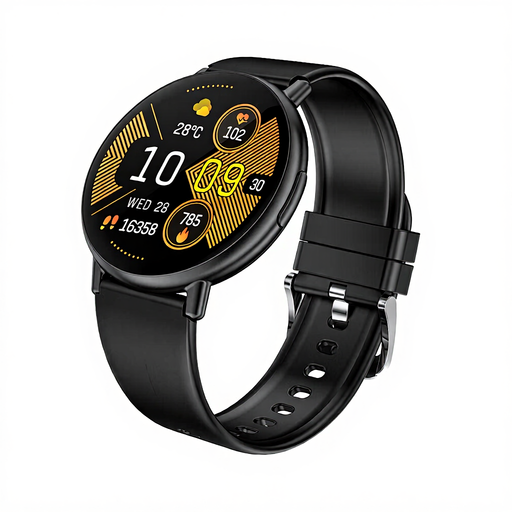
Why This Fits Their Persona: A practical entry point for UK shoppers wanting notifications, steps and heart-rate tracking in a traditional round design.
Its listing specifies iOS 8.4 and Android 4.4 or above, plus an IP67 rating rather than relying only on vague water-resistance wording.
1.39-inch 360x360 display; stated 4-6 days of normal use and magnetic charging.
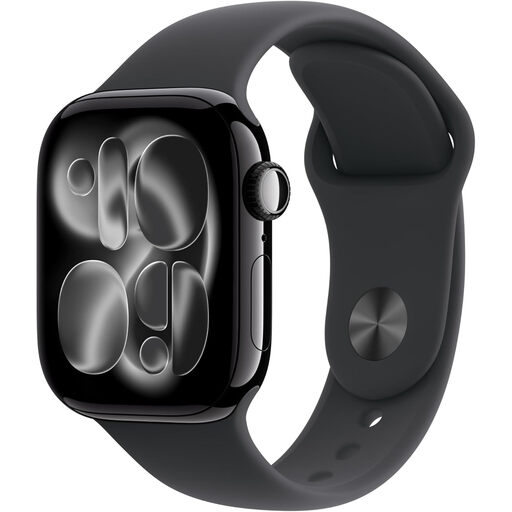
Why This Fits Their Persona: Suits iPhone users seeking integrated notifications, structured workout tools and a premium aluminium case.
The listing clearly states that an iPhone is required for setup, helping avoid an incompatible purchase.
GPS connectivity; 50m water resistance and IP6X dust resistance; fast charging support.
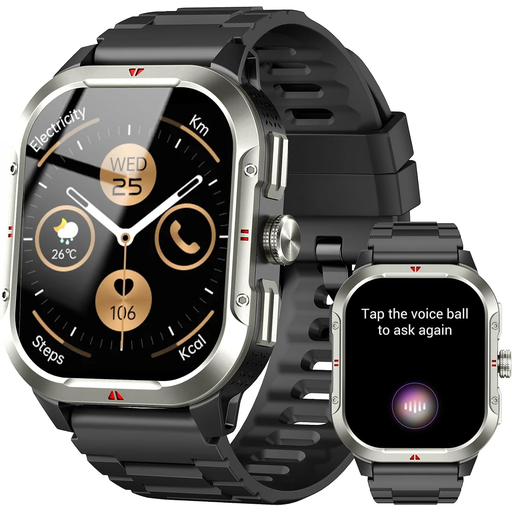
Why This Fits Their Persona: Designed for runners, hikers and active users who want independent route recording and numerous activity modes.
It specifies independent GPS and IP68 protection, allowing buyers to distinguish route tracking from phone-dependent GPS.
Over 110 sports modes; tracks heart rate, steps, calories, distance and workout duration.
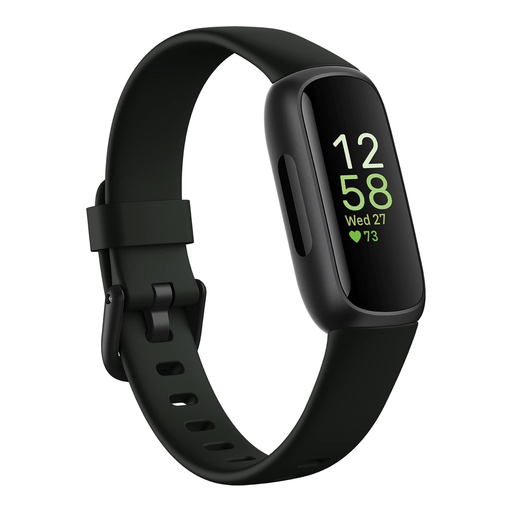
Why This Fits Their Persona: A slim option for people prioritising sleep, daily movement and low-maintenance wear over wrist-based calling.
The specification identifies Connected GPS, so users know that route tracking relies on a nearby smartphone.
Up to 10 days’ stated battery life; 5 ATM water resistance and 20+ exercise modes.
We have compiled a complete, real-time list of products that fully satisfy these strict selection criteria and UK safety regulations.
Most smartwatches require a companion app, Bluetooth pairing and permission to display notifications. Allow time to update the watch, create an account if required and configure which alerts are genuinely useful. Disabling constant notifications, reducing screen brightness and limiting always-on functions can reduce charging frequency.
A Bluetooth-only model generally avoids a separate mobile plan. LTE models may require an eSIM and compatible network subscription, so include these ongoing costs when comparing prices. Replacement straps and charging cables can also affect long-term ownership.
Some do, but features vary. Check the product specification and companion app requirements before purchase. Apple Watch models require an iPhone, while the Samsung Galaxy Watch7 supports iOS with limited features. Many Fitbit and entry-level models support both systems.
Battery life ranges from roughly a day on some feature-rich models to more than a week on selected fitness trackers. GPS, calls, bright displays and frequent health measurements can reduce the stated figure. Compare typical-use information rather than standby time alone.
Only if the specifications and usage instructions support it. IP67 or IP68 protection is intended for defined dust and water exposure, whereas 5 ATM ratings are more relevant to swimming. Avoid diving, high-velocity water and chemical exposure unless the manufacturer specifically permits them.