
24/7 Customer Support

Free returns

Same-day & Next-day Delivery

Quality Guaranteed

Unlock Your Welcome Offers: FREE Delivery | Up to 80% OFF | Free 30-day JoyPlus trial
Download the APP
Buying a smartwatch and fitness tracker can make daily movement, sleep and exercise data easier to understand. However, product pages often place impressive-sounding features ahead of the details that affect everyday use. A device may appear suitable for running, swimming or wellness tracking, yet prove inconvenient once it is on your wrist.
The main buying pitfalls for UK shoppers are:
For casual walks, gym sessions and everyday activity, an activity tracker with automatic exercise recognition may be sufficient. If you run or cycle outdoors without carrying a phone, look for a GPS smartwatch with built-in GPS.
Connected GPS can still be useful. For example, the Fitbit Inspire 3 uses your smartphone’s GPS to map routes and provide pace and distance information. This helps keep the tracker slimmer and lighter, but your phone must be close and connected.
Also check the number and type of exercise modes. A sports watch may list dozens of activities, but the important question is whether it includes the sessions you actually do, such as running, swimming, strength training, walking or yoga.
Battery life affects whether sleep tracking and all-day heart rate monitoring become part of your routine. A device offering up to 10 days, such as the Fitbit Inspire 3, may require fewer charging interruptions than a larger health and fitness smartwatch offering around six days.
Comfort is equally important. Check the tracker’s weight, strap sizes and case dimensions. Slim designs are generally easier to wear in bed, while a larger colour display may be more convenient for reading notifications and checking workout figures.
A screen that is easy to read in typical indoor and outdoor conditions is more practical than a specification based only on resolution. Consider whether you prefer a discreet greyscale display or a larger AMOLED touchscreen.
For swimming, a 5 ATM water-resistant fitness tracker is designed for water exposure equivalent to a stated pressure rating, but it is not intended for every aquatic situation. Follow the manufacturer’s instructions, avoid hot water and rinse the device after pool or saltwater use where advised.
Heart rate monitoring, sleep tracking, stress tracking and other wellness functions provide information for general fitness purposes. They should not be treated as a diagnosis or replacement for advice from a qualified healthcare professional. Be especially cautious with products that advertise blood pressure, glucose or similar measurements without clearly explaining their limitations.
Compatibility also matters. Confirm the required iOS or Android version, Bluetooth connection and app requirements before ordering. Notification features may differ between operating systems.
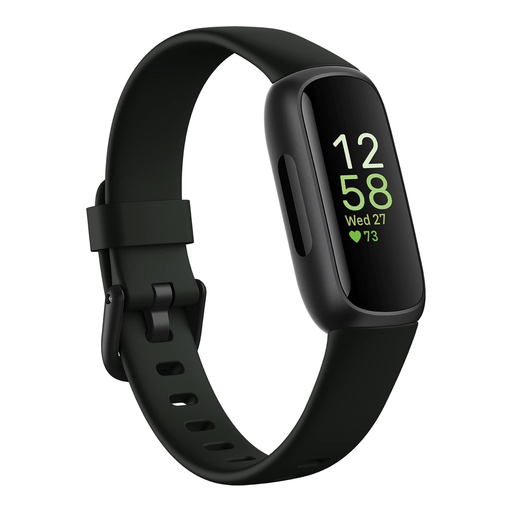
Why This Fits Their Persona: Its slim 13.8g tracker is suited to beginners who want steps, sleep and heart-rate information without the size of a traditional smartwatch.
The specifications clearly identify connected GPS rather than built-in GPS, while the battery is listed as up to 10 days and water resistance as 5 ATM.
24/7 heart-rate tracking, automatic sleep tracking, 20+ exercise modes and smartphone notifications.
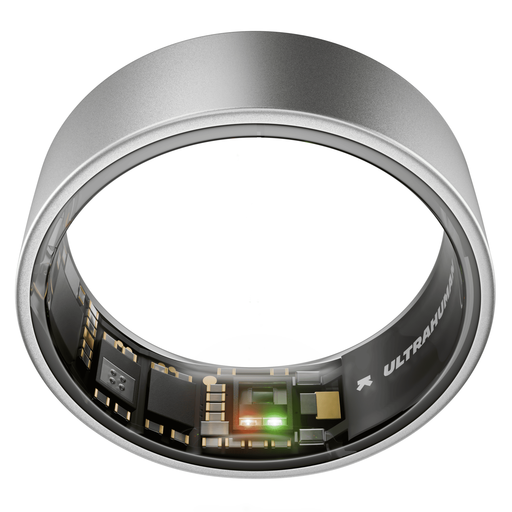
Why This Fits Their Persona: This titanium smart ring suits users who prefer discreet, screen-free wellness tracking for sleep, movement, recovery and stress trends.
Sizing is not based on standard ring measurements, so the supplied sizing guidance should be followed before purchase.
Tracks sleep stages, steps, workouts, heart rate, HRV and skin temperature in a titanium design.
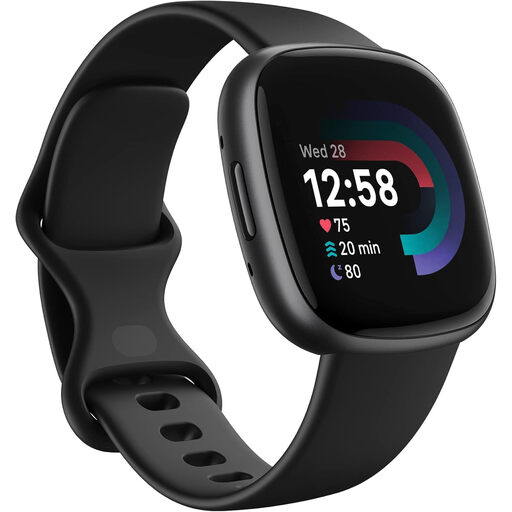
Why This Fits Their Persona: Runners, cyclists and swimmers can use its built-in GPS, exercise modes and swimproof design for varied training.
The product specification states built-in GPS rather than relying on a phone, and lists up to six days of battery life.
Over 40 exercise modes, 28.38mm AMOLED touchscreen, NFC and Bluetooth 5 connectivity.
We have compiled a complete, real-time list of products that fully satisfy these strict selection criteria and UK safety regulations.
A simple fitness tracker can be a practical starting point if your priorities are steps, sleep, heart rate and occasional exercise. Choose a smartwatch with built-in GPS, a larger display and more exercise modes if you plan to train outdoors without your phone.
The right battery life depends on your routine. Around six days may suit users who are happy to charge weekly, while a device rated for up to 10 days can be more convenient for continuous sleep and activity tracking. GPS use, screen settings and notifications can reduce the stated figure.
Check the exact water-resistance rating and manufacturer instructions. Devices listed as swimproof or rated up to 50 metres may be suitable for pool swimming, but water resistance does not necessarily cover hot tubs, saunas, diving or high-pressure water. Ensure the tracker, charging contacts and strap are clean and dry before charging.