
24/7 Customer Support

Free returns

Same-day & Next-day Delivery

Quality Guaranteed

Unlock Your Welcome Offers: FREE Delivery | Up to 80% OFF | Free 30-day JoyPlus trial
Download the APP
Navigating the UK market for a new smartwatch can feel overwhelming. With endless models promising to track your every move and streamline your life, it's easy to fall for marketing hype and end up with a device that disappoints. As a Joybuy Product Recommendation Officer, my role is to help you see past the clutter and focus on what truly matters.
Before you spend your hard-earned money, let's look at three common pitfalls that catch out many UK buyers and how you can sidestep them to find a watch that genuinely fits your lifestyle.
One of the most frequent points of confusion is water resistance. Many listings use the term "waterproof", but this can be misleading. A watch's ability to handle water is defined by specific ratings, and getting this wrong can lead to an expensive paperweight.
The Trap: Buying an IP-rated watch and assuming it's a waterproof smartwatch suitable for your weekly swim, only for it to fail after a few lengths.
A primary reason for buying a smartwatch is health tracking. However, not all sensors are created equal. Many budget models use basic sensors that can provide inconsistent readings for heart rate, sleep and blood oxygen (SpO?).
Relying on a heart rate monitor watch that gives erratic data during a workout defeats the purpose of tracking your fitness. Inaccurate sleep analysis can also lead you to make lifestyle changes based on flawed information. While no consumer smartwatch is a medical device, a good one should provide consistent and believable trends over time.
The Trap: Paying for advanced health monitoring features that are too unreliable to be useful, turning your device into little more than a digital clock.
A bright, always-on display, continuous GPS tracking and Bluetooth calling are fantastic features. The catch? They consume a significant amount of power. Many brands advertise a long battery life of "up to 30 days", but this figure is often based on a standby or minimal-use mode.
Once you enable the features you actually bought the watch for, you might find yourself needing to charge it every single night. This can be a major inconvenience, especially if you want to use it for sleep tracking.
The Trap: Choosing a watch for its impressive feature list without checking the "typical usage" battery life, leading to daily charging frustration.
To make an informed choice, focus on the specifications that directly impact your daily experience. Here are the core parameters to check.
First and foremost, ensure the watch works with your phone. Most watches are designed as either an Android smartwatch or a smartwatch for iPhone, though many support both. Beyond basic pairing, consider the level of connectivity you need. A simple fitness tracker watch might only sync data, whereas a more advanced model will offer on-wrist notifications, music controls and even smartwatch with Bluetooth calling, which lets you take calls without reaching for your phone. For ultimate convenience, some models include NFC for contactless payments.
If you're an active person, a sports smartwatch is a must. Look for one with multiple sports modes tailored to your activities, whether that's running, cycling or swimming. For outdoor enthusiasts, a smartwatch with GPS built-in is non-negotiable. This allows the watch to accurately track your route, distance and pace without needing to carry your phone. Cheaper models may use "Connected GPS," which relies on your phone's GPS signal and is less convenient.
You'll be looking at your watch screen multiple times a day, so its quality matters. AMOLED displays offer vibrant colours and deep blacks, making them easy to read, while a high brightness level is essential for outdoor visibility. For durability, consider the case material (aluminium alloy is both light and strong) and the water resistance rating (5 ATM is the standard for swimming).
Instead of a generic list, we've matched a few standout models to the people they're built for.
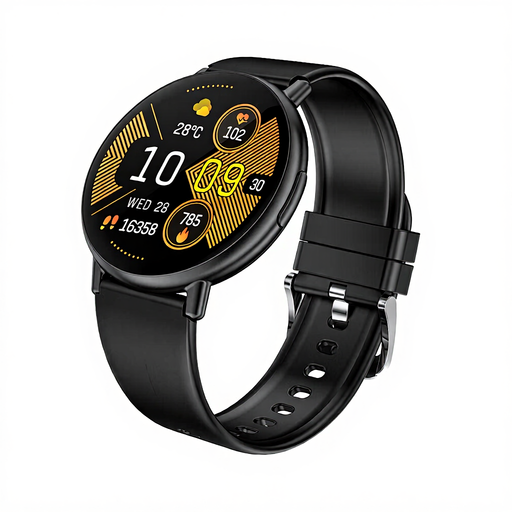
Why This Fits Their Persona: This is an excellent entry point for anyone wanting to try a smartwatch without a large investment. It covers the essentials like notifications, heart rate tracking and step counting in a classic, round design that suits both men's smartwatch and women's smartwatch styles.
It clearly states its IP67 rating, managing expectations about water exposure. The battery life is given as a realistic 4-6 days of normal use, avoiding the "30-day standby" trap.
A sharp 360x360 HD display, which is uncommon at this price point, and a very long standby time of 25-30 days make it a reliable and affordable smartwatch.
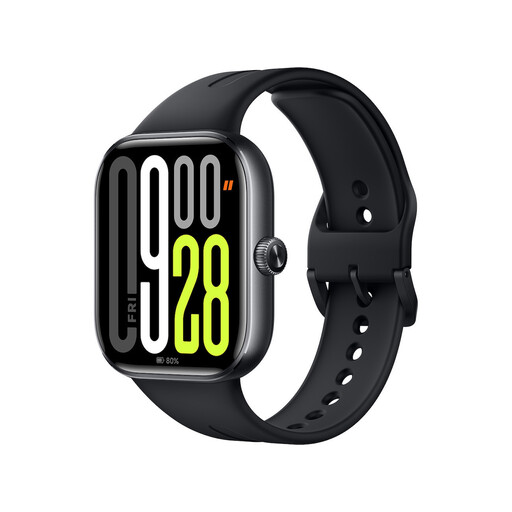
Why This Fits Their Persona: For the runner, cyclist or swimmer who needs accurate data without being tethered to a phone. It's packed with features specifically for tracking athletic performance and recovery.
It sidesteps the "waterproof" myth with a clear 5 ATM rating, making it suitable for swimming. It also tackles the battery pitfall head-on, offering up to 24 days of standard use.
Built-in multi-system GNSS (including GPS) provides precise location tracking. The huge 2.07-inch OLED display and 150+ sports modes offer a comprehensive fitness experience.
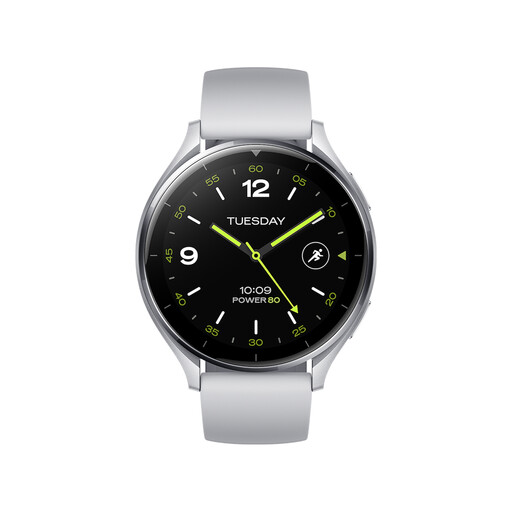
Why This Fits Their Persona: This user wants seamless integration with their digital life. Powered by Google's Wear OS, it offers access to a vast ecosystem of apps, Google Assistant and the convenience of NFC for contactless payments on the go.
By using a mature operating system like Wear OS, it avoids the pitfall of unreliable software and poor app support common in watches with proprietary firmware. Its advanced sensors provide more consistent health data.
The main advantage is the Google Wear OS platform, bringing Google Maps, Wallet (NFC) and Assistant to your wrist. It also features a beautiful 1.43" AMOLED display.
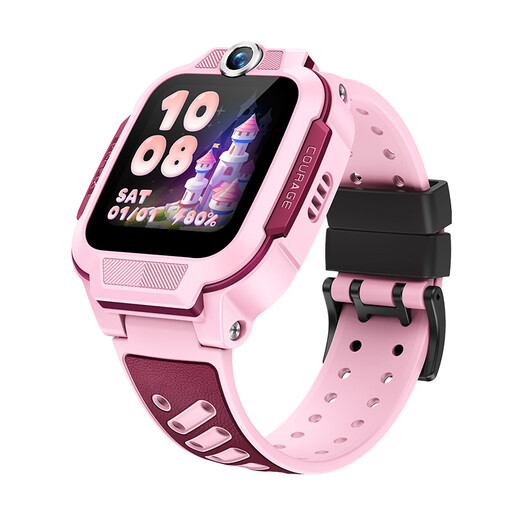
Why This Fits Their Persona: This is not just a watch; it's a communication and safety device for children. It gives parents peace of mind with reliable location tracking and allows kids to make clear calls to pre-approved contacts.
It avoids the "inaccurate tracking" pitfall by using a Triple-GNSS system (GPS+GLONASS+QZSS) for precise positioning. As a purpose-built kids smartwatch, it focuses on safety features over superfluous adult ones.
Its key strengths are the accurate satellite positioning and crystal-clear VoLTE calls thanks to its 4G connectivity, providing a reliable link between parent and child.
We have compiled a complete, real-time list of products that fully satisfy these strict selection criteria and UK safety regulations.
This depends entirely on your usage. A feature-rich smartwatch with an always-on display, frequent GPS use and notifications will typically last 1-3 days. A simpler fitness tracker or a watch used in a power-saving mode can last from 1 to 3 weeks. Always check the "typical usage" battery life, not just the "standby" time.
No, for most models you do not. A watch with Bluetooth calling connects to your nearby smartphone and uses its mobile connection to make and receive calls. You only need a separate SIM card for watches with standalone 4G/LTE functionality, which allows them to operate independently of a phone. This is more common in dedicated kids' smartwatches.
Yes, an affordable smartwatch can be excellent value if you manage your expectations. They are great for receiving notifications, basic step counting and getting a general idea of your heart rate and sleep patterns. The main compromises are often in sensor accuracy, software polish and build materials. Focus on models with clear specifications and positive user feedback on app stability.