
24/7 Customer Support

Free returns

Same-day & Next-day Delivery

Quality Guaranteed

Unlock Your Welcome Offers: FREE Delivery | Up to 80% OFF | Free 30-day JoyPlus trial
Download the APP
Choosing between smartwatches can be difficult when product listings use broad terms such as “health monitoring”, “long battery life” and “waterproof”. The practical difference often comes down to compatibility, sensor limitations and how the watch connects to your phone.
For UK shoppers, the right choice depends on whether you need a fitness smartwatch for running, a smartwatch with GPS for routes, a smartwatch with Bluetooth calling for everyday convenience, or a kids smartwatch with GPS for family communication. Before selecting a model, avoid these common buying traps.
A smartwatch with a heart rate monitor can show useful wellness trends, including heart rate, sleep duration or blood oxygen readings. However, these readings are not a medical diagnosis. Blood pressure, ECG and SpO₂ functions should be treated as general wellness tools unless a qualified healthcare professional advises otherwise.
Sensor results can also vary according to fit, movement, skin contact and the watch’s companion app. Look for clear descriptions of what is measured rather than assuming every “health monitoring smartwatch” offers the same level of information.
Terms such as IP67, IP68 and 50 m water resistance are not interchangeable. IP ratings describe protection against dust and water exposure under specified conditions. They do not automatically mean a device is suitable for high-pressure water, diving or prolonged swimming.
For example, an IP67 model may suit rain, sweat and splashes, while IP68-rated products are generally positioned for greater water exposure. Always check the manufacturer’s instructions before wearing a watch in a pool or shower.
A long battery life smartwatch may achieve its stated figure with limited notifications, reduced screen use and infrequent GPS activity. Bluetooth calling, bright displays, continuous sensors, GPS and mobile data can all increase charging frequency.
Compare the stated usage mode, standby time and charging method. A watch lasting four to six days in normal use may be more practical than one with a higher headline figure but demanding charging requirements.
A smartwatch for Android and iPhone may not provide identical features on both platforms. Check the minimum operating-system requirements, companion app, notification permissions and whether replying to messages or making calls works with your particular phone.
Apple Watch models require an iPhone for setup and core features. Samsung Galaxy Watch models can pair with Android devices, while iOS compatibility may be limited. More affordable Bluetooth models often support both Android and iOS, but app functions can differ.
A smartwatch with GPS can use one of two arrangements:
Check whether GPS is genuinely built into the watch. Some listings mention location features without making this distinction clear.
Screen size affects readability, comfort and battery use. A 1.83-inch or 1.97-inch display can make notifications and workout figures easier to view, while a compact round display may feel less obtrusive during sleep.
Also check case dimensions, strap size, display brightness and charging connector. Magnetic charging can be convenient, but replacement cables may not be universal. For overnight sleep tracking, consider whether the battery can last through the night and recharge quickly in the morning.
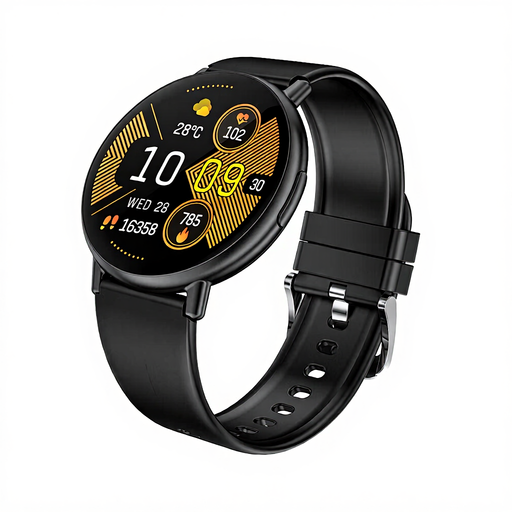
Why This Fits Their Persona: A straightforward choice for first-time buyers wanting steps, heart rate data and notifications without a large, feature-heavy setup.
Its stated four-to-six-day normal-use battery figure gives a clearer everyday reference than standby time alone. IP67 is presented for sweat, rain and splashes rather than unrestricted water use.
1.39-inch round colour touchscreen, HX3600 heart-rate sensor, magnetic charging and compatibility with iOS 8.4+ and Android 4.4+.
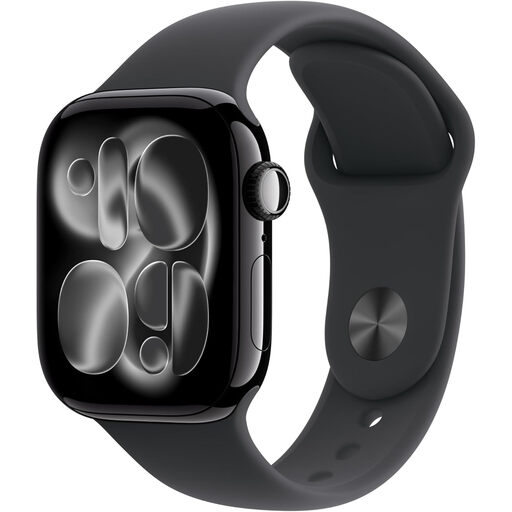
Why This Fits Their Persona: Suitable for iPhone owners who want integrated fitness, notifications, safety functions and access to Apple’s watchOS ecosystem.
The listing clearly states iPhone compatibility, up to 24 hours of normal-use battery life and 50 m water resistance, helping buyers assess ecosystem and charging requirements.
GPS connectivity, sleep features, workout metrics, fall and crash detection, fast charging and an IP6X dust-resistance rating.
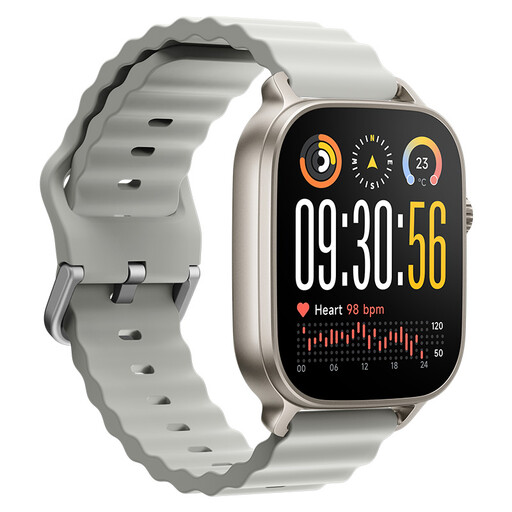
Why This Fits Their Persona: A practical match for users who want frequent workout tracking, independent positioning and fewer charging interruptions.
The description separates typical daily battery life from other usage conditions and specifies IP68 dust and water resistance rather than using only the word “waterproof”.
1.97-inch AMOLED display, 5-GNSS positioning, Bluetooth calling, 108 sport modes and a stated battery capacity of 460mAh.
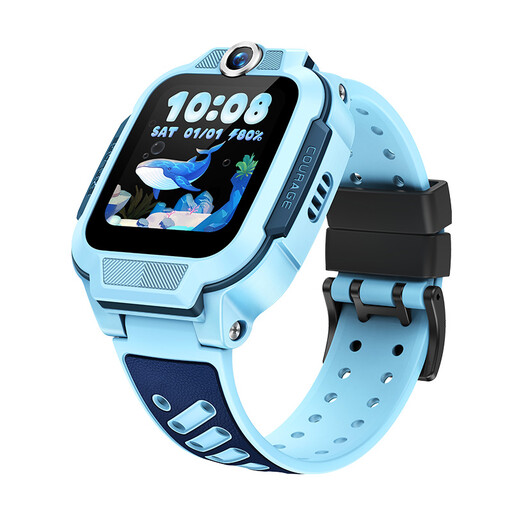
Why This Fits Their Persona: Designed around child-to-parent communication and location functions, with 4G connectivity for everyday outings and travel.
It specifies Triple-GNSS positioning, VoLTE calls and a 740mAh battery. Parents should still confirm network support, SIM or eSIM requirements and the companion app before purchase.
1.5-inch TFT display, 8GB storage, global 4G band support and GPS, GLONASS and QZSS positioning.
We have compiled a complete, real-time list of products that fully satisfy these strict selection criteria and UK safety regulations.
Before placing an order, confirm:
Some models are compatible with both, but functions can vary. Check the required operating-system version and companion app before buying. Apple Watch models require an iPhone for setup, while other products may offer broader Android and iOS support with fewer ecosystem-specific features.
Battery life ranges from around a day for some advanced GPS or cellular models to several days or longer for simpler Bluetooth watches. Actual results depend on screen brightness, calls, GPS, notifications and health sensors. Compare normal-use figures rather than standby claims alone.
GPS is useful for runners, cyclists, walkers and anyone who wants route information without carrying a phone. If you usually exercise near your phone, connected GPS may be sufficient and can provide a wider choice of affordable models.