
24/7 Customer Support

Free returns

Same-day & Next-day Delivery

Quality Guaranteed

Unlock Your Welcome Offers: FREE Delivery | Up to 80% OFF | Free 30-day JoyPlus trial
Download the APP
Ensuring your home is equipped with a reliable fire alarm is one of the most important steps you can take for the safety of your property and everyone in it. However, with options ranging from interconnected systems to smart alarms, choosing the right smoke detector can feel overwhelming. This guide is designed to help you understand the key features to look for and provide clear, practical recommendations for different types of homes across the United Kingdom.
As a Joybuy Product Recommendation Officer, my role is to help you navigate the market and find products that suit your specific needs, without the marketing jargon.
Before looking at specific models, it helps to understand a few key considerations. These factors will help you determine which type of fire alarm for home use is most suitable for your circumstances.
When selecting a smoke detector, safety and reliability are non-negotiable. Look for the EN 14604 certified mark. This is a European standard that specifies the requirements, test methods and performance criteria for smoke alarms. A device with this certification has been independently verified to meet stringent safety and operational standards, giving you confidence in its ability to perform when it matters most.
Modern smoke detectors offer various power solutions. While traditional models require yearly battery changes, many now come with a sealed 10 year battery smoke detector unit. This "fit and forget" approach provides a decade of continuous protection without the hassle of remembering to buy and replace batteries. A battery powered smoke alarm is also significantly easier to install than a hardwired unit, as it requires no professional electrical work.
Your property's size and your personal preferences will dictate the best connectivity option:
Based on common household needs in the UK, we have selected three distinct HEIMAN smoke detectors. Each one is EN 14604 certified and addresses a different requirement, from large-scale coverage to smart home integration.
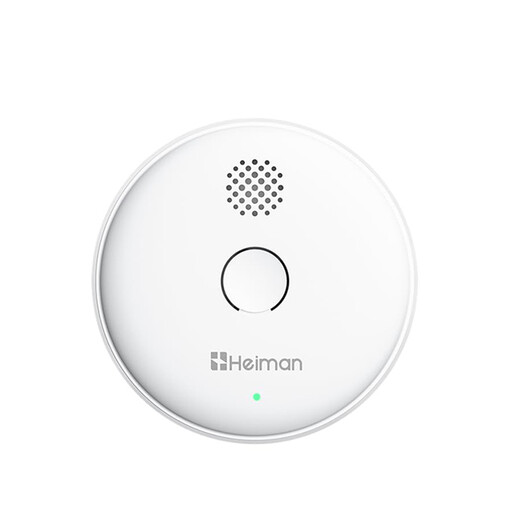
Why It Stands Out: The key feature of this model is its ability to create a synchronised safety network. If a fire starts in the basement, the alarm in the top-floor bedroom will sound at the same time, providing an early warning to everyone in the house.
Pros:
Who is it for? Homeowners with multi-storey or large, sprawling properties, as well as landlords responsible for ensuring comprehensive safety in houses of multiple occupation (HMOs).
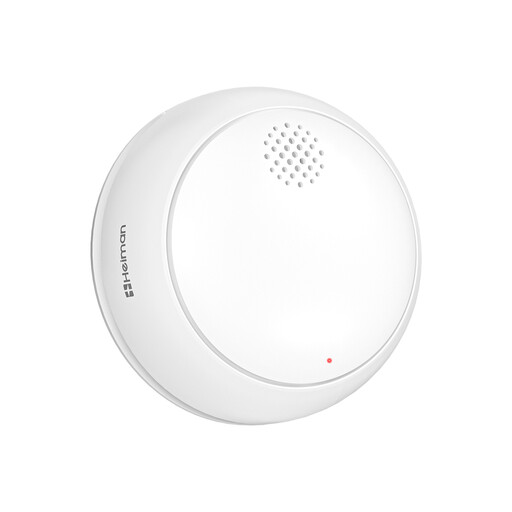
Why It Stands Out: This smart smoke alarm brings fire safety into the 21st century. By connecting to your home WiFi, it sends real-time alerts to your smartphone via an app, letting you know about a potential fire whether you are at work, on holiday, or just in the garden.
Pros:
Who is it for? Tech-savvy individuals, anyone with a smart home setup and people who own holiday homes or want to monitor their property remotely.
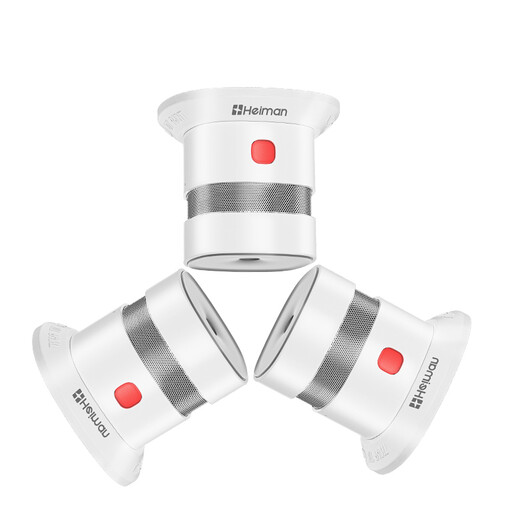
Why It Stands Out: This mini smoke detector proves that effective safety doesn't require a bulky device. Its small, unobtrusive design makes it easy to place without disrupting your decor, while its photoelectric smoke detector sensor is particularly effective at detecting the slow, smouldering fires that are common in household settings.
Pros:
Who is it for? Those living in flats, studios or dorm rooms. It is also an excellent choice for caravans, boats and anyone seeking a discreet yet powerful smoke detector.
If these specific models don't quite match what you're looking for, or if you'd like to compare them with other types of safety equipment, we have a wider selection available.
Explore our complete collection of fire alarms on Joybuy.
A photoelectric smoke detector uses a light beam to detect smoke. When smoke particles enter the chamber, they scatter the light, triggering the alarm. This type is generally more responsive to slow, smouldering fires. Ionization alarms use a small amount of radioactive material to create an electric current; smoke disrupts this current to trigger the alarm. They are typically more responsive to fast, flaming fires. For residential use, photoelectric sensors are often recommended as they are less likely to cause false alarms from cooking.
UK fire safety guidance recommends installing at least one smoke alarm on every level of your home. The ideal locations are on the ceiling in the centre of a room and in hallways and landings that are near sleeping areas. Avoid placing them in kitchens or bathrooms, as steam and cooking fumes can cause frequent false alarms.
You should test your smoke alarm once a week by pressing the test button until the alarm sounds. Once a month, you can gently vacuum the exterior of the alarm to remove any dust that could interfere with the sensor. For alarms with a 10-year sealed battery, the entire unit should be replaced after a decade.