
24/7 Customer Support

Free returns

Same-day & Next-day Delivery

Quality Guaranteed

Unlock Your Welcome Offers: FREE Delivery | Up to 80% OFF | Free 30-day JoyPlus trial
Download the APP
A good pen can transform the simple act of writing. Whether you're taking notes in a fast-paced lecture, signing important documents or unwinding with a journal, the right instrument makes all the difference. Yet, the search for genuinely smooth writing pens is often frustrating. Many of us have a drawer full of disappointments: pens that skip, smudge or feel uncomfortable after just a few minutes.
As the Joybuy Product Recommendation Officer, my role is to help you navigate the market and avoid common purchasing mistakes. Before you spend another pound on a pen that doesn't deliver, let's look at the frequent pitfalls that catch out UK shoppers.
To find a pen that offers a consistently smooth and clean experience, it's crucial to look beyond the marketing slogans and understand a few core parameters.
The ink formula is the single most important factor for a smooth writing experience. There are three main types to consider:
The point of the pen dictates the precision and character of your writing.
A pen that writes smoothly is useless if it's uncomfortable to hold. True ergonomic pens are designed to reduce hand fatigue. Pay attention to:
Instead of a generic list, we've matched specific pens to the people who will get the most from them.
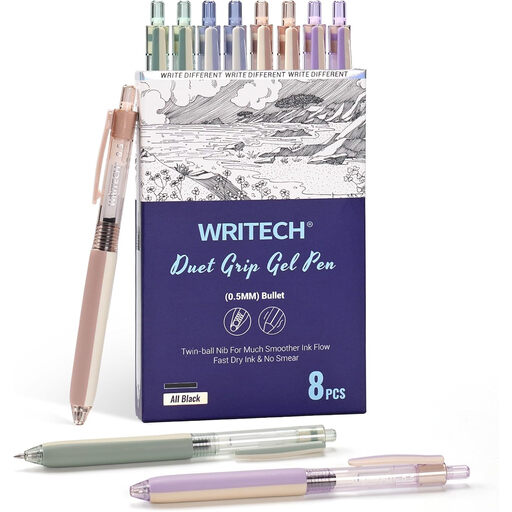
Why This Fits Their Persona: Students need a pen that keeps up with rapid note-taking and is reliable for revision. This pen's quick-dry ink is ideal for left-handers and prevents smearing when highlighting notes, while the 0.5mm fine point keeps writing neat and legible in crowded margins.
It directly counters the Quick-Dry Illusion. The specialised gel ink dries almost immediately on most paper types, keeping hands and pages clean even during fast writing.
The patented silent clicker mechanism is a significant benefit for quiet environments like libraries and lecture halls. The triangular barrel promotes a comfortable grip for long study sessions.
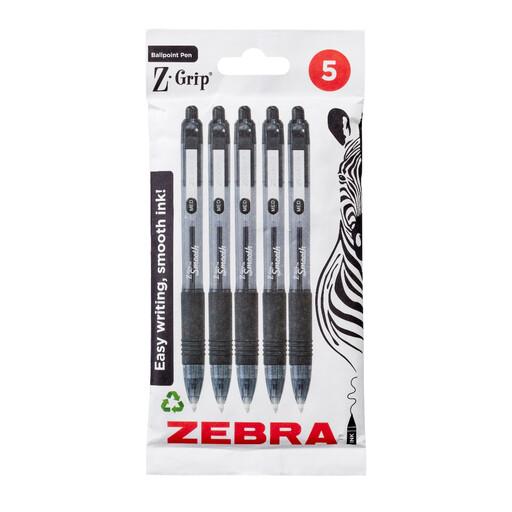
Why This Fits Their Persona: Professionals need a reliable workhorse pen that performs consistently on various paper qualities, from sticky notes to official letterhead. A retractable ballpoint is perfect for quick, one-handed use between tasks.
This pen avoids the Vague "Ergonomic" Claim. The Z-Grip line is well-known for its soft, rubberised grip that provides tangible comfort and reduces pressure during all-day use.
Its advanced low-viscosity ballpoint ink offers a much smoother glide than traditional ballpoints, but retains the reliability and resistance to bleeding that makes it suitable for any office task.
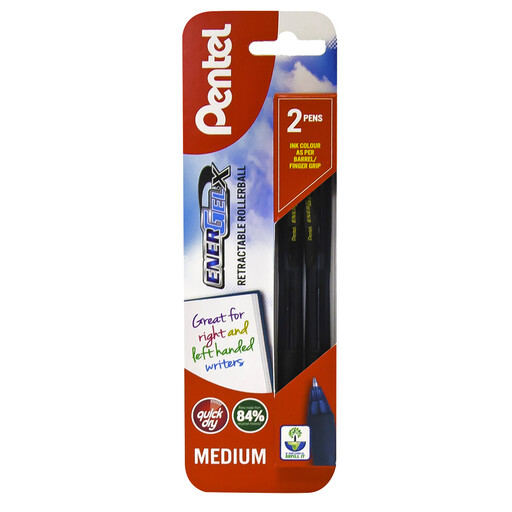
Why This Fits Their Persona: Journallers and planners need a pen that feels luxurious to write with but won't ruin their expensive notebooks. The EnerGel ink provides a vivid, smooth line that is a pleasure to use for daily entries, lists and creative spreads.
It solves the "Ultra-Smooth" Ink Trap. While the EnerGel ink is exceptionally smooth, its formulation is renowned for drying very quickly, which significantly reduces the risk of it bleeding or feathering on most journal paper.
The combination of a liquid and gel ink formula offers an outstandingly fluid writing experience that requires minimal pressure, reducing hand fatigue during long journaling sessions. The latex-free grip adds to the comfort.
We have compiled a complete, real-time list of products that fully satisfy these strict selection criteria and UK safety regulations.
The key difference is the ink. Ballpoint pens use a thick, oil-based ink that is very reliable and rarely bleeds. Gel pens use a water-based gel that produces a bolder, more vibrant line but can be prone to smudging if not a quick-dry formula. Rollerball pens use a thin, water-based liquid ink for the smoothest feel, but they are the most likely to bleed through thinner paper.
First, choose your pen carefully. A ballpoint or a high-quality, quick-drying gel pen is a safer choice than a rollerball for thin journal pages. Look for pens specifically marketed as no bleed journaling pens. Second, consider the paper. Journals with paper rated at 100 gsm (grams per square metre) or higher are more resistant to ink bleed-through.
Not necessarily. While premium pens often use high-quality materials and refined mechanisms, price is not the only indicator of performance. A mid-range pen with a well-formulated ink (like the ones recommended above) can often provide a smoother, more reliable writing experience than an expensive pen with an ink type that is poorly matched to your needs or paper. Focus on the ink type, tip size and grip comfort rather than the price tag alone.