Picnic planners comparing sugar labels
If you want a smoothie with lunch, the ‘of which sugars’ figure and the amount you intend to drink are more useful checks than a ‘no added sugar’ claim on its own.


For a picnic lunch, choose a smoothie by its serving size and nutrition label, not by a ‘no added sugar’ claim alone: that wording does not mean zero sugar. The NHS advises limiting fruit juice and smoothies together to 150ml a day and having them with a meal; also check whether the exact product needs to be kept cool outdoors.
If you want a smoothie with lunch, the ‘of which sugars’ figure and the amount you intend to drink are more useful checks than a ‘no added sugar’ claim on its own.
An individual pouch gives a defined portion. Check that pouch’s storage and drinking instructions rather than applying them to every chilled smoothie.
Smoothie recipes differ. Read the exact pack for ingredients, fibre, sugars and allergen statements before deciding whether it fits the lunch you are packing.
Start with the portion you will drink, then compare sugar labels and make a plan for carrying the product.
| Priority | What to check | Your needs |
|---|---|---|
| Sugars | Read ‘of which sugars’ and its per-100ml or per-serving basis. Check the ingredients alongside any ‘no added sugar’ wording. | I want to know how much sugar is in the drink, rather than assume ‘no added sugar’ means zero sugar. |
| Portion size | Check the bottle or pouch volume and measure what you will drink. The NHS advises no more than 150ml of fruit juice and smoothies combined per day, with a meal. | A single portion is easier for me to plan than an opened large bottle, particularly if I am also packing juice. |
| Picnic storage | Read the exact product’s refrigeration and out-of-fridge instructions. The Food Standards Agency says foods normally kept in the fridge also need to be kept cool at a picnic. | I need to know how to carry the smoothie and what to do with any remainder after opening. |
| Ingredients | Compare fibre using the same label basis and read the full ingredients and allergen statement. Added vitamins do not replace these checks. | If ingredients or allergens matter for this lunch, I need the information for the particular recipe I am buying. |
A smoothie can contain sugars from fruit even when no sugar has been added. The Naked Gold Machine listing, for example, states no added sugar but lists 9.7g sugars per 100ml.
Compare the ‘of which sugars’ figure on the exact pack and note whether it is given per 100ml or per serving.
The NHS advises limiting fruit juice and smoothies together to 150ml a day, with a meal. Tesco lists five 150ml servings in the 750ml Innocent Mangoes, Passion Fruits & Apples bottle.
Measure a portion before the picnic, or plan how to share the bottle and keep any remainder as its label directs.
The Food Standards Agency says food normally kept refrigerated needs to stay cool at a picnic. A storage allowance on one product does not apply to another.
Use a cool bag or cool box for products that require refrigeration, and follow any out-of-fridge period stated on the exact pack.
Sainsbury’s lists less than 0.1g fibre per 100ml for Naked Gold Machine, while Marks & Spencer lists 3.6g per 100g for Revitalise. Those figures use different weight and volume bases, so they are not a direct like-for-like comparison. Marks & Spencer also marks Revitalise unsuitable for people with coeliac disease or a wheat allergy.
Check the label’s measurement basis, ingredients and allergen statement for the bottle you intend to buy.
These examples show why the recipe and pack label matter more than the brand name alone.
The listed range includes a 750ml fruit smoothie and individually portioned children’s pouches.
Gold Machine is a 750ml fruit smoothie with a no-added-sugar claim.
Tropical Greens is a 750ml smoothie with a no-added-sugar claim.
Revitalise is a 350ml smoothie with nutrition stated by Marks & Spencer per 100g.
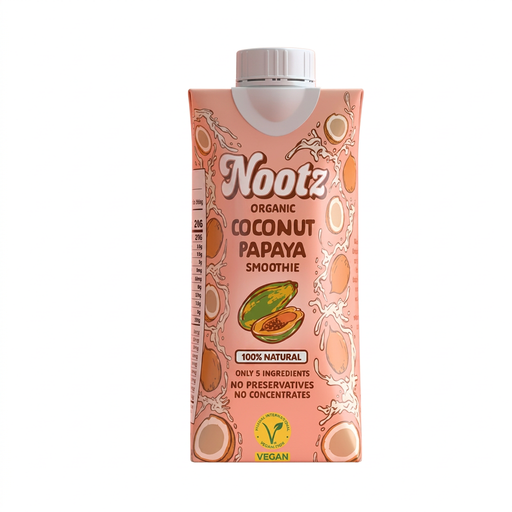
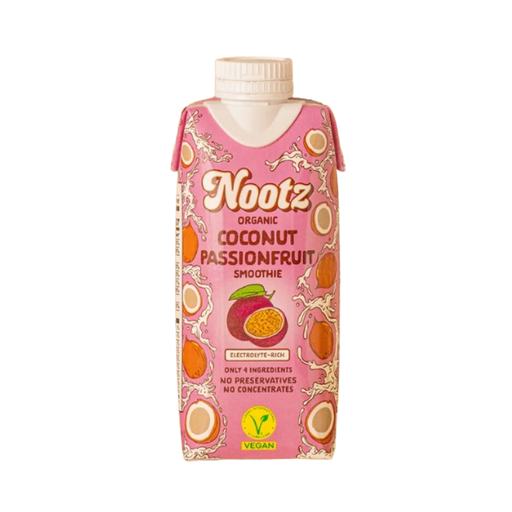
These Joybuy options are Nootz coconut milk smoothies in two bottle sizes. For a picnic lunch, compare the portion you intend to drink with the NHS’s 150ml daily guidance for fruit juice and smoothies combined.
 No image available
For a picnic lunch, the 180ml bottle needs portioning if you are following the NHS’s 150ml daily limit for fruit juice and smoothies combined. Check the current pack for its sugar and storage information.
 No image available
The 325ml bottle is larger than the NHS’s 150ml daily guidance for fruit juice and smoothies combined, so plan a measured portion with lunch if following that advice. Read the current pack for sugars, ingredients and storage directions.
No. Check the ‘of which sugars’ figure: Tesco’s listing for Innocent Mangoes, Passion Fruits & Apples says no sugar is added but describes naturally occurring sugars, while Sainsbury’s lists 9.7g sugars per 100ml for the no-added-sugar Naked Gold Machine.
The NHS advises limiting fruit juice and smoothies together to a maximum of 150ml a day and having them with a meal. If you take a larger bottle, measure a portion and plan how you will store the remainder.
If its label requires refrigeration, keep it cool at the picnic: the Food Standards Agency says foods normally kept in the fridge need to stay cool outdoors. Check product-specific exceptions separately; Sainsbury’s states that its Innocent Kids Apples & Blackcurrants pouch can stay out of the fridge for up to 12 hours.
Check the exact smoothie’s ingredients and allergen statement. Marks & Spencer marks its Revitalise Super Smoothie unsuitable for people with coeliac disease or a wheat allergy; do not assume another recipe has the same ingredients or warning.