People with demanding or closely spaced sessions
When quick recovery is needed, the British Dietetic Association advises starting carbohydrate refuelling as soon as possible after exercise. Check protein and fluid intake alongside any smoothie.


After hard or closely spaced exercise sessions, a fruit smoothie can contribute carbohydrate, but it should not be treated as a complete recovery drink by default: the British Dietetic Association advises prompt carbohydrate refuelling when quick recovery is needed, while protein and fluids also matter. If glass is essential, carry a homemade smoothie in a reusable glass bottle or confirm the material of a ready-to-drink pack before buying; the word “bottle” does not establish that it is glass.
When quick recovery is needed, the British Dietetic Association advises starting carbohydrate refuelling as soon as possible after exercise. Check protein and fluid intake alongside any smoothie.
A convenient fruit drink need not be treated as a specialised recovery product. If you want protein with your post-exercise snack, check the smoothie’s label and consider what else you are eating.
Check the material of a ready-to-drink pack rather than relying on its bottle shape. For a homemade drink, a reusable glass smoothie bottle offers a way to choose the container yourself.
Choose it when: You want a convenient carbohydrate-containing drink after a demanding session and can account for protein elsewhere in a meal or snack.
Trade-off: Protein and packaging material need checking on the exact product; a bottled smoothie is not necessarily glass-bottled.
Choose it when: A glass container is a firm preference and you want to decide what goes into the drink.
Trade-off: Preparation, cleaning, chilled storage and careful transport become part of the plan; glass does not determine the drink’s nutrition.
| Priority | What to check | Your needs |
|---|---|---|
| Carbohydrate | Read carbohydrate per 100ml and for the portion you intend to drink. Consider the smoothie alongside the rest of your post-exercise food. | After a hard session with another one soon, I want a practical way to start refuelling. The British Dietetic Association advises prompt carbohydrate-rich food and fluids when quick recovery is required. |
| Protein | Check protein on the exact label rather than relying on fruit, vitamins or the product name. Consider a separate protein-containing food where appropriate. | I do not want to assume that a standard fruit smoothie supplies the protein I want with a post-exercise snack. |
| Portion and sugars | Compare bottle volume with the stated serving size, and read sugars for the amount you plan to drink. NHS guidance limits fruit juice and smoothies to a combined 150ml a day because they contain free sugars. | A large bottle could contain several servings, so I want to know how much I am pouring rather than treating the whole pack as one portion. |
| Glass packaging | Look for an explicit pack-material statement or check the physical container. For a homemade smoothie, choose a reusable bottle with a compatible, secure lid. | Glass matters to my choice, so “bottled” alone is not enough to settle it. |
| Storage and fluids | Follow the product’s refrigeration and after-opening instructions. Plan fluid intake separately rather than assuming the smoothie covers it. | If I am carrying a smoothie after training, I need to know how to store it and what else I will drink. |
Tesco Groceries lists 0.53g protein per 100ml for Innocent Strawberries, Bananas & Apples and 0.2g per 100ml for Naked Blue Machine. Those standard fruit smoothies should not be assumed to provide the protein wanted with a recovery snack.
Check protein for the portion you intend to drink and, if needed, have a suitable protein-containing food alongside it.
A bottle description tells you the format, not the packaging material. That distinction matters if glass is a condition of your purchase.
Check for an explicit material statement or inspect the pack. Alternatively, prepare a smoothie to carry in your own reusable glass bottle.
Tesco Groceries describes its 750ml Innocent Strawberries, Bananas & Apples bottle as five 150ml servings. NHS guidance limits fruit juice and smoothies to a combined 150ml a day because of free sugars.
Read the serving information and sugars on the exact pack. If demanding training changes your fuelling needs, seek individual advice rather than taking bottle size as a serving recommendation.
Added vitamins do not tell you how much carbohydrate or protein a smoothie supplies for your intended portion, or account for your fluid intake.
Compare the nutrition label and serving size first, then consider the drink alongside the rest of your food and fluids.
These ranges offer points of comparison for smoothie formats and labels; a brand or retailer name does not establish the material of an individual pack.
Its fruit smoothie range includes Innocent Strawberries, Bananas & Apples 750ml.
Tesco Groceries lists Blue Machine alongside separately named Protein Machine smoothie variants.
Its smoothie category lists products from several brands, including Innocent and Naked.
Its chilled drinks range lists own-label smoothies, including Mango & Passionfruit Smoothie 750ml.
M&S describes ready-made fruit smoothies in 350ml and 750ml bottles, including blends made with yoghurt, dates and oats.
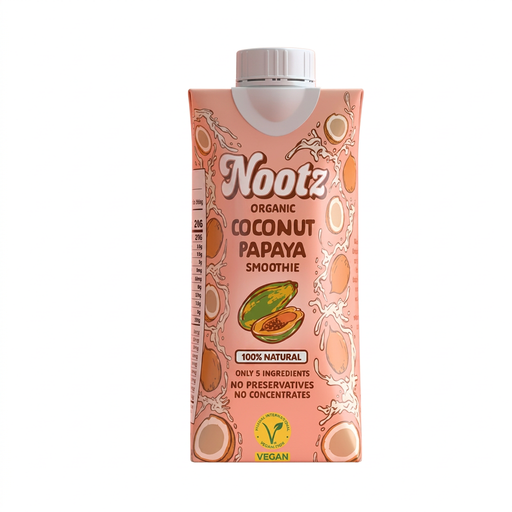
This ready-to-drink smoothie is an option to assess alongside a post-exercise snack. Check its pack material separately if glass is essential.
 No image available
For a ready-to-drink option after exercise, consider this 180ml smoothie alongside the rest of your snack and fluids. Do not rely on it alone for protein; check the pack’s nutrition information and pair it with a suitable protein-containing food if needed. Confirm the container material before buying if glass is essential.
Do not assume it is enough on its own. A fruit smoothie can contribute carbohydrate, but check protein and fluids as part of your wider post-exercise food and drink; Tesco Groceries lists just 0.53g and 0.2g protein per 100ml for its Innocent Strawberries, Bananas & Apples and Naked Blue Machine listings respectively.
Prompt carbohydrate refuelling matters particularly when quick recovery is needed before another demanding session. The British Dietetic Association advises starting carbohydrate-rich food and fluids as soon as possible in that situation; the same urgency should not be assumed for every routine workout.
The NHS advises limiting fruit juice and smoothies to a combined 150ml a day because they contain free sugars. Check the pack’s serving size rather than treating a larger bottle as one portion; seek individual advice if demanding training raises separate fuelling questions.
Yes. GlassBottles.co.uk lists empty bottles intended for smoothies. Choose a compatible, secure lid, transport the bottle carefully and keep a chilled smoothie refrigerated; choose the recipe and any accompanying food according to your carbohydrate, protein and fluid needs.