Households sharing chilled drinks
A larger bottle may suit several people if they can portion it out, keep it refrigerated as directed and finish it after opening within the time stated on the pack.


Choose a large smoothie bottle when the household can share it in measured portions and finish it within the pack’s opened-life instructions; ‘no added sugar’ does not mean sugar-free. If avoiding sugar in the drink is the priority, choose water or check a drink’s nutrition label for zero sugars instead. The NHS advises limiting fruit juice and smoothies together to no more than 150ml a day.
A larger bottle may suit several people if they can portion it out, keep it refrigerated as directed and finish it after opening within the time stated on the pack.
Individual packs make serving sizes easier to see. The NHS advises a combined limit of 150ml a day for children’s fruit juice and smoothies, taken with a meal, and identifies water and milk as children’s preferred drinks.
A ‘no added sugar’ claim is not the same as zero sugars. Reading the sugars figure per 100ml helps distinguish a smoothie from a drink chosen specifically for its sugar content.
Choose when: Several people want a smoothie and can divide a bottle into portions before its opened-life period ends.
Bear in mind: The British Nutrition Foundation counts sugars in smoothies as free sugars, including when no sugar has been added.
Choose when: Avoiding sugar in the drink matters more than buying a fruit smoothie; water needs no sugar-label comparison, while a flavoured drink does.
Bear in mind: A sugar-free flavoured drink is a different purchase from a smoothie made with fruit or vegetables.
| Priority | What to check | Your needs |
|---|---|---|
| Sugar label | Read sugars per 100ml on the exact pack. A ‘no added sugar’ claim does not establish zero sugars; the British Nutrition Foundation includes sugars in smoothies within free sugars. | If I’m looking for a drink with zero sugars, I need the nutrition label to say so rather than relying on a front-of-pack claim. |
| Portion size | The NHS advises no more than 150ml of fruit juice and smoothies combined per day. Tesco lists its 750ml innocent strawberry-banana smoothie as five 150ml servings. | When several people share a bottle, I want to pour separate portions rather than treat the bottle as one serving. |
| Pack and storage | Check the pack size, refrigeration instructions and time allowed after opening. Tesco’s listed innocent 750ml smoothie says to drink it within four days of opening. | Will we finish an opened bottle in time, or would individual packs be easier to use? |
| Ingredients and dietary fit | Check the ingredient list, allergen statement and any stated vegetable or fibre content on the exact recipe. M&S labels its oat-containing Defend smoothie as unsuitable for people with coeliac disease or a wheat allergy. | I may want a fruit-and-vegetable blend, but I also need to check whether its ingredients suit everyone who will drink it. |
Diabetes UK and the British Nutrition Foundation explain that sugars in smoothies count as free sugars. A no-added-sugar claim therefore does not answer whether the finished drink contains sugars.
Compare the sugars figure per 100ml. If zero sugars is the aim, check for that figure on an alternative drink or choose water.
A 750ml bottle can provide five 150ml servings, but it still needs to be stored and used according to its own label after opening.
Check the opened-life and refrigeration instructions before choosing between a shared bottle and individual packs.
Vegetable content does not make a smoothie sugar-free, and other ingredients can affect allergen suitability. Waitrose lists 9.6g sugars per 100ml for innocent Fruit + Veg; M&S labels its oat-containing Defend smoothie as unsuitable for people with coeliac disease or a wheat allergy.
Read the current nutrition panel, ingredients and allergen statement for the particular recipe you intend to buy.
Retailer listings include a 750ml smoothie, a fruit-and-vegetable blend and children’s 150ml multipacks.
Tesco’s grocery listing includes an own-label Strawberry Sensation Smoothie in a 750ml bottle.
M&S lists 750ml fruit smoothies and an oat-containing Defend smoothie.
Waitrose lists large smoothie bottles alongside children’s multipacks.
These are fruit-flavoured alternatives to smoothies, ranging from individual drinks to larger cartons. They are not interchangeable with fruit smoothies; if zero sugars is the deciding factor, check each drink’s nutrition label rather than its name alone.
 No image available
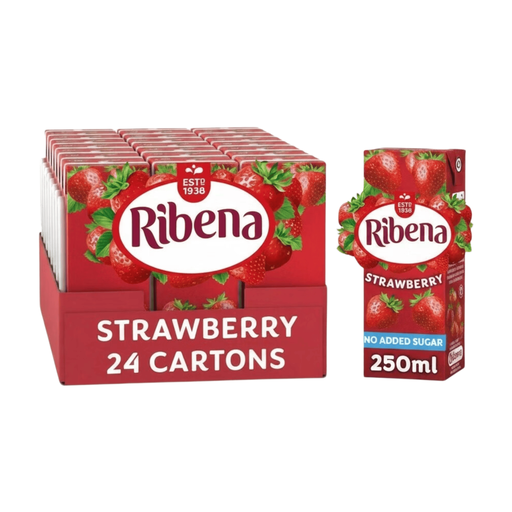
The 24 individual cartons provide a fruit-flavoured drink option for a household shop, rather than a smoothie. Each carton is 250ml; check the label’s phenylalanine warning if it is relevant to your household.
 No image available
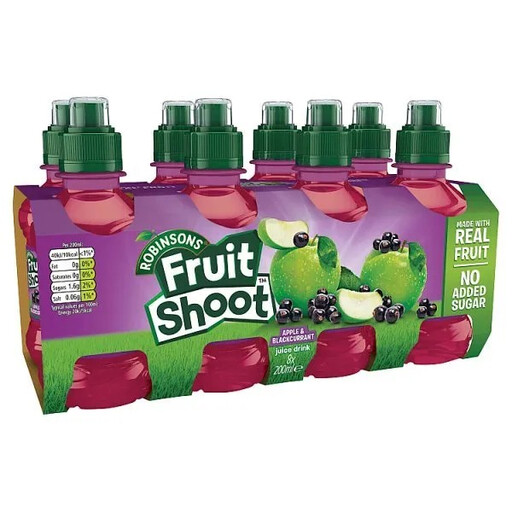
Eight individual 200ml bottles offer another fruit-flavoured drink format, not a smoothie. ‘No added sugar’ is not a zero-sugars claim; check the nutrition panel. The listing warns that the caps contain small parts and that the product is unsuitable for children under 36 months.
 No image available
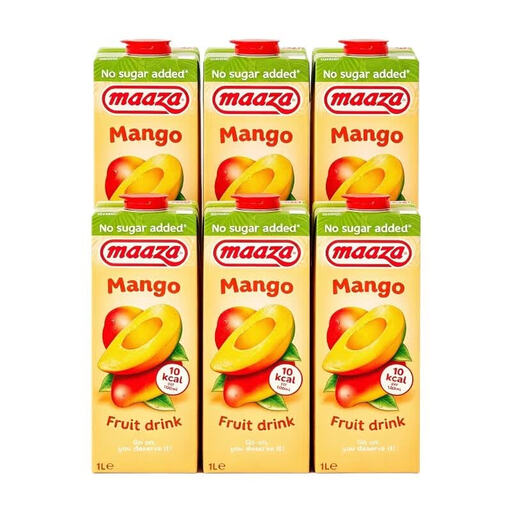
Six 1L cartons may suit a household planning to share a mango drink, rather than a smoothie. The no-added-sugar wording does not mean zero sugars; read the nutrition panel and check the pack’s instructions for use after opening.
 No image available
This single 500ml peach-flavoured soft drink is an alternative to a smoothie, not a family multipack. It contains sweeteners; check the nutrition panel if zero sugars is the reason for choosing it.
No. Diabetes UK and the British Nutrition Foundation explain that sugars in smoothies count as free sugars. Read the nutrition panel for the sugars figure per 100ml rather than treating a no-added-sugar claim as a zero-sugars claim.
The NHS advises limiting fruit juice and smoothies combined to no more than 150ml a day. Tesco describes its 750ml innocent strawberry-banana smoothie as five 150ml servings, so that bottle can be divided into five portions rather than treated as one serving.
The NHS identifies water and milk as children’s preferred drinks and advises limiting fruit juice and smoothies to a combined 150ml a day, with a meal. An individual smoothie pack makes a portion visible but does not change that guidance.
Follow the instructions on the bottle you buy. Tesco’s listed innocent 750ml smoothie and the M&S Defend 750ml smoothie each state that they should be consumed within four days of opening; check the exact pack for its refrigeration instructions too.
Do not assume so from the ingredients or the product category. M&S labels its oat-containing Defend smoothie as unsuitable for people with coeliac disease and for those with a wheat allergy; check the allergen statement on the exact product.