Who is choosing?

Parents choosing a fruit snack drink

A child-sized smoothie may be convenient during the holidays, but its portion and timing matter. The NHS advises no more than 150ml of fruit juice and smoothies combined each day for children and adults, served with meals.

Families comparing sugar labels

If lower labelled sugar matters more than a fruit-based smoothie, compare the nutrition panels and ingredients. A no-added-sugar juice drink can contain sweeteners and relatively little fruit juice.

Parents packing drinks for days out

Check the exact product’s storage directions, ingredients, allergens and child-use warnings before packing it. A portable pouch still needs to be suitable for the child and the time away from refrigeration.

What matters when choosing?

Fruit smoothie

Choose when: The snack is meant to be a fruit-based smoothie served with a meal.

Bear in mind: The NHS counts sugars in blended fruit as free sugars, even without added sugar, and advises a combined juice-and-smoothie limit of 150ml a day.

Lower-sugar juice drink

Choose when: Lower labelled sugar is the priority, rather than a drink made mainly from fruit.

Bear in mind: Sainsbury’s Orange Fruit Slurps contains 8% orange juice and sweeteners; it is a juice drink, not a smoothie.

Water between meals

Choose when: The child wants a drink between meals rather than a fruit-based snack.

The difference: Water does not provide the fruit flavour of a smoothie.

Priority What to check Your needs
Portion and timing Check the volume per serving and any other juice or smoothie that day. The NHS advises a combined maximum of 150ml daily, with these drinks kept to mealtimes. I want a fruit smoothie as part of a meal, not a drink to sip throughout the day.
Sugar and ingredients Read sugars per 100ml and per serving, then check fruit content and sweeteners. Tesco lists 10g sugars per 100ml for Innocent Mangoes, Passion Fruits & Apples smoothie; Sainsbury’s lists 0.7g per 100ml for its Orange Fruit Slurps juice drink. These are different types of drink. Lower labelled sugar matters more to me than smoothie texture, or I specifically want a fruit-based drink and will manage its portion.
Outing and handling Check refrigeration directions, time allowed out of the fridge, allergens and cap warnings on the current pack. Waitrose lists up to 12 hours out of the fridge for its Innocent Kids Apples & Blackcurrants pouches. For a day out, I need a format I can pack and serve according to its own instructions.

What is easy to overlook?

  • Reading “no added sugar” as “no free sugars”

    The NHS counts sugars in smoothies as free sugars because the fruit has been blended. A no-added-sugar claim does not tell you the sugars per serving.

    Check the nutrition panel and count the serving towards the NHS combined 150ml daily juice-and-smoothie guidance; serve it with a meal.

  • Treating a diet juice drink as a smoothie

    A juice drink can have lower labelled sugar while containing sweeteners and much less fruit. Sainsbury’s Orange Fruit Slurps, for example, contains 8% orange juice.

    Decide whether you want a fruit-based smoothie or lower labelled sugar, then compare the ingredients and nutrition information for that choice.

  • Free-pouring from a large bottle

    Tesco lists five 150ml servings in the 750ml Innocent Mangoes, Passion Fruits & Apples bottle. More than one serving exceeds the NHS combined daily juice-and-smoothie amount.

    Measure a 150ml serving and follow the bottle’s refrigeration instructions for what remains.

  • Overlooking the pack before an outing

    Ingredients and storage directions differ by product. Marks & Spencer states that its Brain Food Super Smoothie is not suitable for coeliacs or people with a wheat allergy.

    Check the current pack for allergens, storage directions and child-use warnings before serving or packing it.

Relevant brand and retailer examples

Innocent

Its range includes children’s fruit-smoothie pouches and larger bottles, which call for different approaches to portioning.

  • Waitrose lists Innocent Kids Apples & Blackcurrants in 150ml pouches.
  • Tesco lists five 150ml servings in the 750ml Mangoes, Passion Fruits & Apples bottle; its “never add sugar” statement does not mean the smoothie has no free sugars.

Sainsbury’s

Its Orange Fruit Slurps is an example of a no-added-sugar juice drink, rather than a fruit smoothie.

  • Sainsbury’s lists 0.7g sugars per 100ml and 1.8g per 250ml bottle for this drink.
  • The same listing gives 8% orange juice and names acesulfame K and sucralose as sweeteners.

Tesco

Tesco lists children’s smoothie multipacks as well as no-added-sugar juice drinks. The category name alone does not establish what is inside a particular drink.

  • Its listings include Innocent Kids smoothies in 4 × 150ml packs.
  • Check each product’s description and nutrition panel rather than assuming a drink in a reduced-sugar category is a smoothie.

M&S Food

Marks & Spencer lists a 350ml Brain Food Super Smoothie, a different format from a child-sized 150ml fruit drink.

  • Its product listing states 9.4g sugars per 100g.
  • Marks & Spencer states that this product is not suitable for coeliacs or people with a wheat allergy; check the pack before serving.

Joybuy product options

These options cover a lower-sugar orange juice drink and a fruit-based snack pouch. The pouch is measured by weight, so do not treat it as a 150ml smoothie serving.
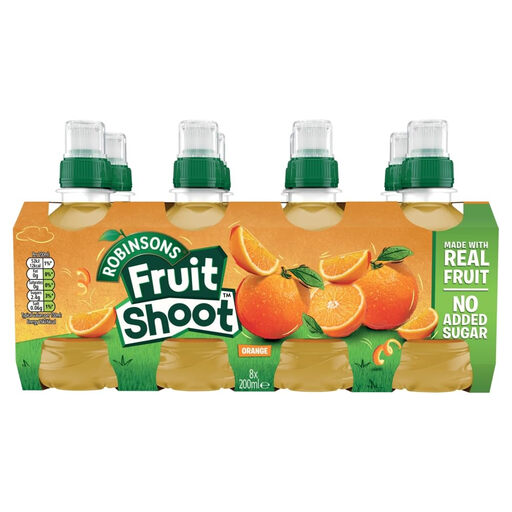
Fruitshoot Orange Low Sugar, eight 200ml bottles

Fruitshoot Orange Low Sugar, 8 × 200ml

Consider this orange juice drink when lower labelled sugar is the priority rather than a fruit smoothie. Check the current pack for sugars per bottle and sweeteners. Its cap carries a choking warning for children under 36 months.

Joybuy
Ella's Kitchen Smoothie Snack Yellow Fruit, five 90g pouches

Ella’s Kitchen Smoothie Snack Yellow Fruit, 6+ months, 5 × 90g

This fruit-based pouch is a snack format rather than a 150ml drink. Check the pack for sugars per pouch and serving guidance instead of equating its 90g weight with a drink volume. Its cap carries a choking warning for children under 36 months.

Joybuy

Frequently asked questions

Does “no added sugar” mean a smoothie has no free sugars?

No. The NHS counts sugars in smoothies as free sugars because the fruit has been blended. Check the sugars per serving even when the manufacturer says it has added no sugar.

How much smoothie should I serve with a holiday snack?

The NHS advises children and adults to have no more than 150ml of fruit juice and smoothies combined in a day, and to keep them to mealtimes. A 150ml pouch uses that full combined amount if no other juice or smoothie is served.

Is a no-added-sugar juice drink the same as a smoothie?

No. Ingredients vary: Sainsbury’s Orange Fruit Slurps is an orange juice drink containing 8% juice and the sweeteners acesulfame K and sucralose, rather than a crushed-fruit smoothie. Compare fruit content and sugars per serving when deciding between them.

What should I check before packing a smoothie for a day out?

Check the exact pack’s storage and after-opening directions, along with its ingredients, allergens and child-use warnings. Waitrose lists up to 12 hours out of the fridge for unopened Innocent Kids Apples & Blackcurrants pouches, but that instruction should not be applied to other products.