People planning snack portions
If you use a daily calorie target, compare the kcal for the entire bar or packet you intend to eat. A front-of-pack description cannot tell you whether that portion fits your plan.


Choose a snack bar by the calories in the amount you expect to eat, whether that is one bar or a whole two-bar packet; claims such as ‘protein’ or ‘wholegrain’ do not answer that question. For example, nākd. lists 138 kcal for a 35g Cocoa Delight bar, while Nature Valley lists 196 kcal for a two-bar Oats & Honey serving. Check sugars, saturated fat and allergens alongside the portion size, and consider the snack within your overall intake: NHS Better Health explains weight loss in terms of an overall calorie deficit, not a claim on one food.
If you use a daily calorie target, compare the kcal for the entire bar or packet you intend to eat. A front-of-pack description cannot tell you whether that portion fits your plan.
If a bar will replace a biscuit, chocolate or another snack, compare the portions you would actually choose. Check sugars and saturated fat as well as calories rather than assuming every bar has a similar nutrition profile.
Vegan or gluten-free wording may help narrow the options, but the exact ingredients and precautionary allergen statement still matter if you need to avoid particular foods.
Start with the portion you would eat, then use the rest of the label to decide whether the bar meets your other requirements.
| Priority | What to check | Your needs |
|---|---|---|
| Calories per portion | Find the kcal for one bar and for the full packet. Check the stated serving weight in grams against the amount you will eat. | I want to know what my planned snack adds to my daily intake, particularly if the wrapper holds two bars. |
| Full nutrition label | Read sugars and saturated fat alongside calories, using the same portion basis. Compare per 100g figures if the bars have different serving sizes. | A ‘natural’ or ‘no added sugar’ description will not settle the choice for me; I want to see the total sugars and calories. |
| Fibre or protein | If either matters to you, check its grams per bar alongside the bar’s kcal. Do not use a fibre, wholegrain or protein claim in place of the serving information. | I may prefer a bar with a particular ingredient or nutrient, provided the whole portion also fits the snack I have planned. |
| Dietary suitability | Check the current ingredients, declared allergens and ‘may contain’ statements on the exact variant. Read these alongside any vegan or gluten-free claim. | If I need to avoid nuts, soya, milk or gluten-containing ingredients, a broad dietary claim is not enough on its own. |
A small bar, a 50g flapjack and a packet containing two bars are different amounts of food. Nature Valley, for instance, lists 196 kcal for its 42g Oats & Honey serving of two bars, while TREK lists 227 kcal for one 50g Cocoa Oat flapjack.
Compare the kcal for the amount you intend to eat, then look at the serving weights before drawing conclusions from the totals.
‘No added sugar’, ‘wholegrain’ and ‘protein’ describe different product attributes; none states the calories in your portion. In its November 2025 review of 458 snack bars from 10 major UK retailers, Action on Salt & Sugar reported that 37% were high in sugars under front-of-pack thresholds. That figure describes the products reviewed, not shoppers’ preferences or every bar on sale.
Check the stated serving’s calories, total sugars and saturated fat before deciding whether a particular claim matters to your choice.
The nākd. Cocoa Delight ingredients include cashews, and Eat Natural lists peanuts, almonds and soya in its Dark Chocolate & Sea Salt bar. A claim about one dietary requirement does not answer every allergen question.
Read the ingredients and precautionary statements on the current pack of the exact flavour you intend to buy.
NHS Better Health explains that weight loss depends on an overall calorie deficit. A bar’s calorie figure describes that portion; it does not establish what your total intake will be.
Decide whether the bar replaces another snack or fits into the intake you have planned, rather than judging it in isolation.
Fruit-and-nut bars, including the 35g Cocoa Delight example described by nākd. as vegan, gluten free and dairy free.
Nut, fruit and cereal bars with variants that emphasise different ingredients and nutrients.
Oat bars, including Crunchy Oats & Honey in a two-bar serving.
Oat flapjacks, including the 50g Cocoa Oat bar for shoppers who specifically want to compare protein per portion.
Oat Boost flapjacks, which Graze describes as made with wholegrain oats.
A cereal brand associated with Alpen Light bars; check the specific product and pack when comparing a bar with current alternatives.
These options include smaller bars, an oat-bar variety pack and a protein bar. Use the size shown in each product name to identify the pack, then check the current nutrition and allergen label for the exact flavour before choosing a portion.
 No image available
Consider this Cherry Bakewell variant if you want an oat bar in a 4 x 30g pack. Check the current label for calories and sugars per bar, and for ingredients and allergens.
 No image available
This fruit-and-nut option comes in a 4 x 35g pack. Compare the Blueberry Muffin label’s calories and total sugars per bar with other flavours, and check its ingredients if you need to avoid nuts.
 No image available
If you are comparing smaller chocolate-flavoured snacks, this pack contains 6 x 21.5g bars. Check calories and sugars for one bar on the current pack rather than comparing its smaller portion directly with a larger flapjack.
 No image available
If protein content matters to your choice, compare the label for this 50g bar with its calories and saturated fat per bar. The Double Chocolate variant comes in a pack of 12; check the current allergen statement as well.
 No image available
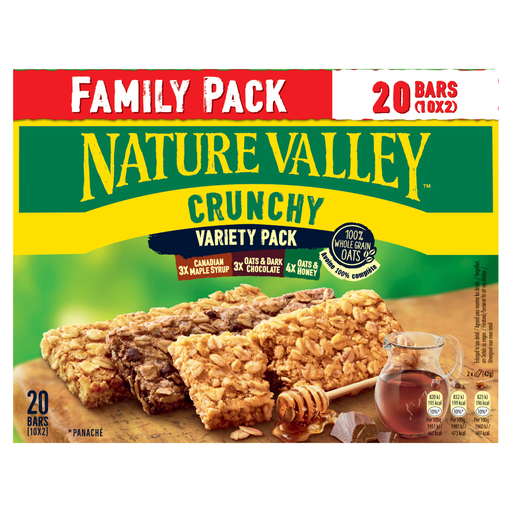
This variety pack may suit a preference for crunchy oat bars; it contains 10 x 42g packs. Check the serving instructions and nutrition label for each flavour so that your calorie comparison reflects the amount you will eat.
Compare the kcal for the whole amount you intend to eat. A wrapper may contain more than one bar, so check its serving size before looking at sugars, saturated fat, fibre, protein and salt. NHS Better Health notes that calories can be shown per 100g or per portion; use the figure that matches your portion.
No. nākd. lists 138 kcal and 15g sugars per 35g Cocoa Delight bar. Read the total sugars and calories on the nutrition panel rather than treating ‘no added sugar’ as a description of either figure.
No. TREK lists 9g protein and 227 kcal for its 50g Cocoa Oat flapjack. If you want to compare protein, consider its grams per bar alongside the calories in the entire portion.
Where present, they show whether fat, saturated fat, sugars and salt are high, medium or low, alongside energy information, as GOV.UK explains. Read them with the serving size and nutrition panel so that a difference in bar size does not distort your comparison.
Yes. Those claims do not rule out every other ingredient you might need to avoid: nākd. Cocoa Delight contains cashews, for example. Read the ingredients and precautionary allergen statement on the current pack of the exact bar.