Parents packing half-term snacks
A bar can be convenient to carry on a day out, but it need not be the default snack. NHS Healthier Families favours fruit and vegetables for children and advises aiming for no more than two packaged snacks a day.


If reduced fat is essential, look for a claim that applies to the whole bar on its current pack; a “Light” name or a fat-reduced ingredient is not enough. Compare fat, saturates, sugars and salt per 100g and per serving, and check the allergen statement before giving a bar to a child. For routine children’s snacks, NHS Healthier Families favours fruit and vegetables and advises aiming for no more than two packaged snacks a day.
A bar can be convenient to carry on a day out, but it need not be the default snack. NHS Healthier Families favours fruit and vegetables for children and advises aiming for no more than two packaged snacks a day.
Check whether the claim describes the finished bar. An ingredient such as fat-reduced cocoa does not establish that the whole snack bar is reduced fat.
Compare the full nutrition panel rather than fat alone, and read the current pack’s ingredients and precautionary allergen wording before sharing a bar with a child.
Start with the claim on the whole product, compare labels on the same basis, then consider the portion and the child who will eat it.
| Priority | What to check | Your needs |
|---|---|---|
| Reduced-fat claim | Look for wording about the finished bar, not just an ingredient. Compare total fat per 100g with similar bars; “reduced fat” and “low fat” are different descriptions. | I want a bar described as reduced fat, not one whose name or ingredient list merely suggests it. |
| Full nutrition label | Compare total fat, saturates, sugars and salt per 100g, then check the stated serving. Bar and serving sizes can differ. | A smaller portion should not make me overlook what is in an equal weight of another bar. |
| Snack routine | Consider when a packaged bar is useful and when fruit or vegetables are practical. NHS Healthier Families advises aiming for no more than two packaged snacks a day for children. | For an outing I may want something easy to carry; at home, I can choose a different snack. |
| Allergens | Read the exact pack’s ingredients and “may contain” statement each time. A recipe or precautionary warning can change. | If a child has an allergy, I need to check this particular bar rather than rely on a general dietary description. |
Nature Valley UK lists fat-reduced cocoa powder in its Crunchy Cocoa & Hazelnut bar, but the finished product declares 18.4g total fat per 100g. The ingredient description does not describe the bar’s overall fat content.
Check for a claim about the whole bar, then compare its total fat per 100g with similar products.
Serving figures do not provide a like-for-like comparison when bars or stated portions have different weights.
Compare fat, saturates, sugars and salt per 100g first. Then use the serving figures for the amount you plan to offer.
Reduced fat does not establish that a bar is lower in sugars. The NHS also notes that sugars from honey and syrups count as free sugars.
Read the sugars figure and ingredients alongside the fat figures, rather than choosing on one claim.
Nature Valley UK says its Crunchy Apple & Cinnamon bar may contain soya, wheat, peanuts and tree nuts. A separate description such as lactose free does not remove those warnings.
Check the current pack’s ingredient and precautionary allergen statements for the child who will eat it.
Nature Valley UK presents several bar lines, including Crunchy, Protein and Oaty & Crispy. The line name does not establish a reduced-fat claim for an individual bar.
Alpen Muesli’s product FAQ discusses former Alpen Light bars.
These options cover two cereal bars and a savoury thin for half-term snacking. Their names alone do not establish that any of them carries a reduced-fat claim; check the current pack if that claim matters to your choice.
 No image available
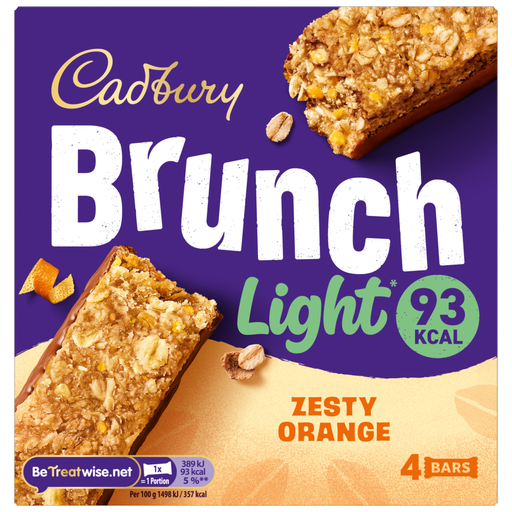
For a half-term cereal-bar snack, compare the current pack’s nutrition figures per 100g and per serving. “Light” in the name alone does not establish a reduced-fat claim.
 No image available
The 6 x 21.5g format gives a stated bar size for planning a snack. Check fat, saturates, sugars and salt on the current label before comparing it with another cereal bar.
 No image available
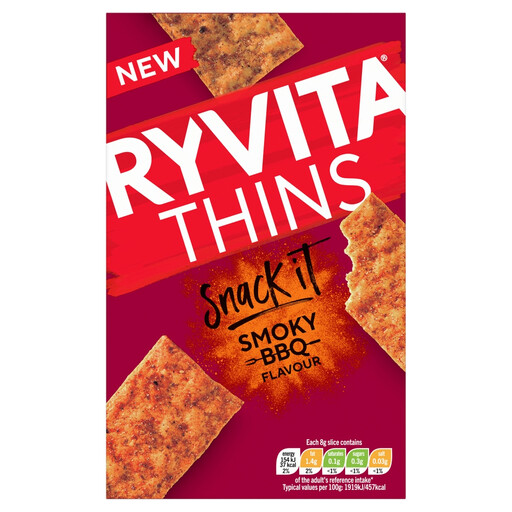
This is a savoury thin rather than a cereal bar, so choose it only if that snack format suits the occasion. The pack is 125g; check its stated serving and nutrition panel when deciding how much to offer.
No. It describes the cocoa ingredient, not necessarily the finished bar. Nature Valley UK lists fat-reduced cocoa powder in Crunchy Cocoa & Hazelnut, while its nutrition information gives 18.4g total fat per 100g for the bar. Check the claim and nutrition panel for the whole product.
Compare total fat, saturates, sugars and salt per 100g, then look at the figures for the portion you would serve. For context, the NHS guide describes solid foods with 3g fat or less per 100g as low in fat and those with more than 17.5g per 100g as high in fat. Neither threshold, by itself, verifies a reduced-fat claim.
No single fat claim settles that choice. NHS Healthier Families favours fruit and vegetables for children’s snacks and advises aiming for no more than two packaged snacks a day. If you choose a bar for convenience, check its full label and the portion being offered.
Yes. Nature Valley UK describes its Crunchy Apple & Cinnamon bar as lactose free but says it may contain soya, wheat, peanuts and tree nuts. Read the exact pack’s ingredient and precautionary allergen statements each time, as products can be reformulated.