Desk and commute snack planners
Separately wrapped bars can be easier to put in a bag or desk drawer. Check the weight and nutrition of one bar, not just the count on the outer pack.


For an afternoon snack to keep at a desk or carry in a bag, start with the number of separately wrapped bars and the size of each bar. Choose between fruit-and-nut, protein and oat-based options by checking the exact product’s ingredients and nutrition per bar as well as per 100g; a smaller portion or a protein claim does not settle the whole comparison.
The useful pack format depends on where you will keep the bars, what you want to compare on the label and whether ingredients restrict your choice.
Separately wrapped bars can be easier to put in a bag or desk drawer. Check the weight and nutrition of one bar, not just the count on the outer pack.
Look for a stated protein amount for the exact bar and serving size. For example, Nature Valley lists 10g for its Protein Peanut & Chocolate bar, while TREK lists 9g for its 50g Cocoa Oat flapjack; their other nutrition figures still need comparing.
Choose by the exact flavour’s ingredients and allergen statements rather than a brand-wide description. A gluten-free claim, for instance, does not rule out peanuts, soya or milk.
Confirm the pack format first, then compare like-for-like nutrition and the amount in the bar you would actually eat. Finish with the ingredients and allergen information for that flavour.
| Priority | What to check | Your needs |
|---|---|---|
| Pack format | Check the bar count, whether each bar is separately wrapped and the weight of one bar. | I want to take one portion to work or keep a few in a drawer without relying on the outer pack to define a serving. |
| Portion and comparison | Compare nutrition per 100g across different-sized bars, then check the figures per bar. According to NHS food-label guidance, a stated portion may differ from the amount you eat. | A compact 25g bar may suit my break, but I also want to see how its nutrition compares with a larger bar. |
| Protein and fibre | Read the amounts for the exact bar and serving size. Compare sugars, saturated fat and energy alongside them rather than relying on a front-of-pack claim. | If protein or fibre matters to my choice, I want to know what one bar provides without overlooking the rest of its nutrition panel. |
| Sugars and saturated fat | Check both per-100g and per-bar figures. A claim such as “no added sugar” does not state the total sugars in the bar. | I want a clear comparison between the bars I am considering, including what is in the portion I would eat. |
| Ingredients and allergens | Read the current ingredients, highlighted allergens and any “may contain” statement for the precise flavour and pack. | Where an allergy or dietary restriction affects my purchase, a claim on a different flavour is not enough. |
“Protein” or “no added sugar” does not describe every figure on the nutrition panel. In its November 2025 review of 458 snack bars from 10 major UK retailers, Action on Salt and Sugar reported that 37% would be high in sugars and 55% high in saturated fat under voluntary traffic-light thresholds.
Compare the full panel per 100g, then check the figures for the bar you would eat.
A smaller bar changes the amount in one portion, but its per-100g figures answer a different question. The Eat Natural Red Fruits multipack, for example, contains four individually wrapped 25g bars.
Use per-100g values to compare different products and per-bar values to assess the portion.
Ingredients and allergen statements can differ between bars. Nature Valley’s Protein Peanut & Chocolate bar is described as gluten-free but lists peanuts, soya and milk.
Check the current label for the exact flavour and pack size each time you buy.
A count of three or four bars does not, by itself, tell you whether they are separately wrapped or how large each serving is.
Confirm the wrapping, bar weight and storage instructions on the product listing or pack.
These brands cover different bar formats, but ingredients, nutrition and pack arrangements belong to specific products and flavours.
Graze offers Oat Boost flapjacks among its snack formats.
Its range includes Crunchy oat bars, nut bars and Protein bars in different pack formats.
Its fruit, nut and soft-fruit bars include smaller multipack portions.
Nakd’s range includes fruit-and-nut bars and protein bars.
TREK offers protein flapjacks and other protein-bar formats.
Alpen is among the cereal brands a shopper might consider for a snack-bar multipack.
These Joybuy listings cover individually portioned protein bars, a fruit-and-nut bar and oat-based flapjacks for an afternoon break. Compare each exact pack rather than treating the formats as interchangeable.
 No image available
A four-bar option for comparing a stated protein amount in an afternoon portion. Nature Valley lists 10g protein for this Protein variant. The Joybuy product information lists peanuts, soya and milk as allergens.
 No image available
Another four-bar Protein multipack for taking one bar at a time. Compare this flavour’s own protein, sugars and saturated-fat figures with the Peanut & Chocolate version, and check its allergen statement separately.
 No image available
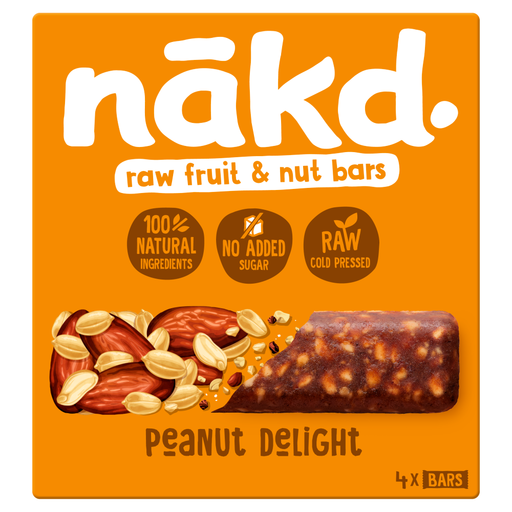
Four 35g bars provide a smaller stated portion than the 40g and 50g packs shown here. Check this Peanut Delight flavour’s total sugars, ingredients and allergen statement; a range-level no-added-sugar claim does not replace those figures.
 No image available
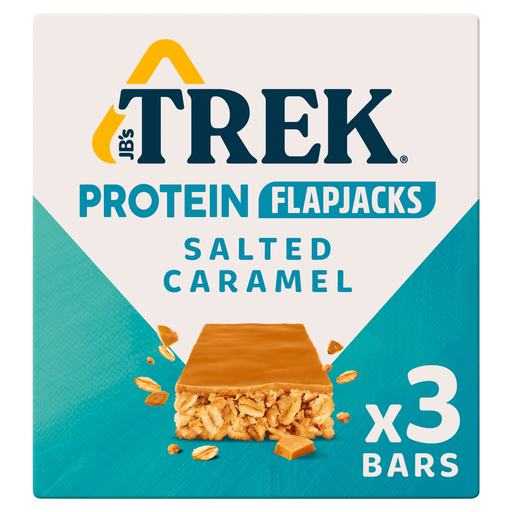
This three-pack contains 50g flapjacks for shoppers considering an oat-based bar. Use the Salted Caramel flavour’s own nutrition panel and allergen statement rather than figures from another TREK flapjack.
 No image available
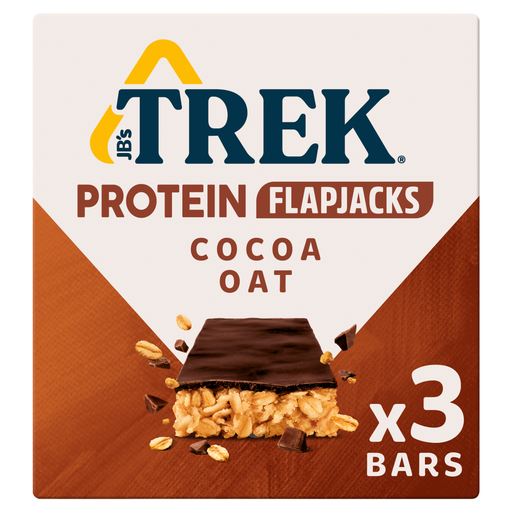
A three-pack of 50g oat-based flapjacks. TREK lists 9g protein, 14g sugars and 5g saturated fat per Cocoa Oat bar; check its ingredients and allergen statement against your requirements.
Use both: per 100g makes differently sized bars easier to compare, while per-bar figures describe the stated portion. NHS food-label guidance notes that the manufacturer’s portion may differ from the amount you eat.
No. Ingredients can contribute sugars even when none is added. Read the total “of which sugars” figure per 100g and per bar for the exact product.
No. If protein content matters to your choice, compare its stated amount per bar alongside portion size, sugars, saturated fat and allergens. A protein claim describes one aspect of the product, not the whole nutrition panel.
No. Read the exact bar’s ingredients, highlighted allergens and any “may contain” statement. Nature Valley’s gluten-free Protein Peanut & Chocolate bar, for example, lists peanuts, soya and milk.
Check how many bars it contains, the weight of each bar and whether they are individually wrapped. Then check the current pack or product listing for the flavour’s nutrition, ingredients and storage instructions.